
What is the Rule of 3 in Flooring? (And Why It Changes Everything)
Rule of 3 flooring is a design principle that limits your home to no more than three flooring types, tones, or surface variations to create visual harmony and avoid a cluttered, patchwork look.
Quick answer: How does the Rule of 3 work in flooring?
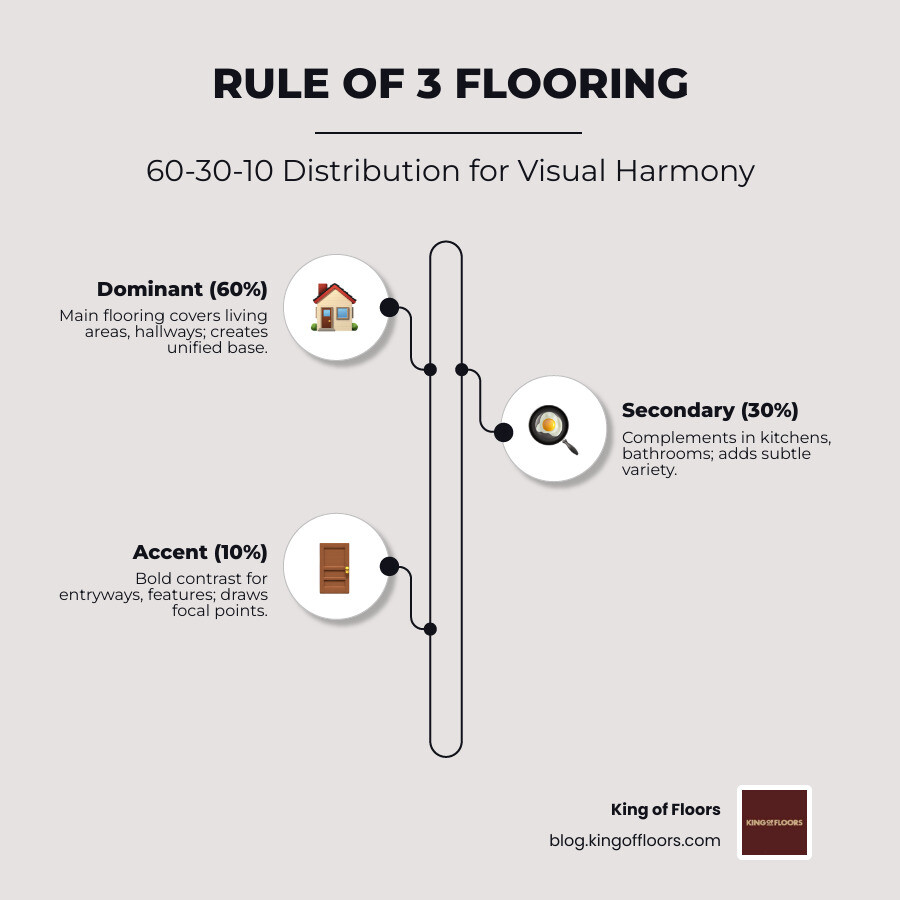
- Dominant material (60%): Your hero floor, used across living areas and hallways
- Secondary material (30%): A complementary option for kitchens, bathrooms, or transition zones
- Accent material (10%): A bold or contrasting choice for entryways, bathrooms, or feature areas
Walk through a professionally designed home and you will almost always feel a sense of calm flow between rooms, even if you cannot immediately explain why. That feeling rarely happens by accident. It is the result of intentional restraint: fewer flooring choices, better coordinated. Most homeowners start a renovation excited by options, then quickly find themselves overwhelmed by samples, colours, and competing textures. The Rule of 3 cuts through that noise with a simple framework that works whether you are renovating a townhouse in Guildford or a family home in South Surrey.
I’m Lesley Upton, Inventory Control Manager at King of Floors, and with over 15 years of helping BC homeowners source and select flooring from factories around the world, I have seen first-hand how applying the rule of 3 flooring principle transforms a stressful renovation into a confident, cohesive result. Let’s walk through exactly how to use it.
What is the Rule of 3 in Flooring?
At its core, the rule of 3 flooring is an organisational tool rooted in the idea that things arranged in odd numbers are more appealing, memorable, and effective than even-numbered groupings. In interior design, this “triad” approach prevents a home from feeling either too monotonous (one single floor everywhere) or too chaotic (a different floor in every room).
When we talk about “three elements,” we aren’t just talking about the physical materials. We are looking at:
- Material Type: For example, choosing a high-quality laminate flooring for the main floor, a plush carpet for bedrooms, and a durable tile for bathrooms.
- Colour and Tone: Sticking to a palette of three shades—perhaps a warm oak, a creamy beige, and a deep charcoal.
- Texture and Pattern: Balancing a smooth finish with a hand-scraped texture and a patterned accent.
By foundational elements, we mean that floors are the largest surface area in your home besides the walls. If the floor is a “patchwork” of five or six different materials, the rest of your furniture and decor will never look quite right. Limiting your palette to three choices ensures that the floor supports the space rather than dominating it with visual noise.
Applying the Rule of 3 Flooring to Materials

When applying this rule to materials, we recommend mapping out your home based on functional zones. In a typical Surrey renovation, this might look like:
- The Hero (60%): A durable, water-resistant European laminate that runs through the entryway, living room, and kitchen. This creates an unbroken sightline that makes the home feel larger.
- The Support (30%): A secondary material like engineered hardwood flooring in the master suite or upstairs bedrooms to add warmth and a premium feel.
- The Accent (10%): A specific “wet zone” material, such as a high-end tile in the ensuite or a bold pattern in the laundry room.
By using our quality laminate flooring guide, you can find materials that mimic natural wood or stone so closely that your secondary and accent materials blend seamlessly with your primary choice.
The Difference Between Design and Sales Strategies
It is important to distinguish the “Design Rule of 3” from the “Sales Rule of 3.” In our Surrey showroom, we often use the sales strategy to help you make a choice. This involves presenting three curated options at different price points:
- Budget-friendly: High-value options like our clearance lot deals or warehouse specials in CAD, perfect for rentals or quick refreshes.
- Mid-range: The “anchor” products, often our 8mm or 10mm European laminates that offer the best balance of durability and style.
- Premium investment: Top-tier European brands like Kronoswiss or Kronopol, or our wide-plank engineered hardwood.
While the design rule helps you plan the layout, the sales strategy helps you stay within your budget. Because we are direct importers, we cut out the middlemen, allowing us to offer these premium European materials at a much lower markup than traditional retailers in the City Centre or Whalley.
Why the Rule Works: Psychology and Visual Flow
Why does the human brain love the number three? It comes down to “processing fluency.” Our brains are wired to recognise patterns, and three is the smallest number required to create a pattern. Two elements feel like a pair; four elements feel like a crowd. Three elements create a “visual triangulation” that guides the eye naturally through a room.
In a home, this creates a predictable rhythm. When you walk from a hallway in Fleetwood into a living room in Newton, your brain subconsciously looks for continuity. If the flooring changes abruptly in every room, your brain has to “re-process” the space every time you cross a threshold. This leads to visual fatigue. By sticking to the rule of 3 flooring, you create a calming environment where the floors provide a steady background beat rather than a series of jarring interruptions.
Using the 60-30-10 Rule for Flooring Distribution
This classic decor ratio is your best friend when implementing the rule of 3 flooring.
- 60% Dominant: This should be your most versatile floor. We often suggest a medium-toned textured laminate flooring because it hides dust and scratches while providing a neutral base for any furniture style.
- 30% Secondary: This provides a transition. If your main floor is a light oak laminate, your secondary could be a slightly darker engineered wood or a large-format tile in a complementary warm grey.
- 10% Accent: This is where you can have fun. Think of a herringbone pattern in the foyer or a unique grain pattern in a home office.
This distribution ensures that no two materials are “fighting” for dominance. It creates a hierarchy that feels intentional and expensive.
Avoiding the “Too Matchy” or Chaotic Look
One of the biggest mistakes we see in Surrey home renovations is the “too matchy” look—trying to find three materials that are identical in colour but different in type. This almost always fails because different materials reflect light differently. A “grey oak” laminate will never perfectly match a “grey oak” tile.
Instead, use the rule of 3 flooring to embrace intentional contrast. Pair a light-coloured European laminate with a darker accent. As we discuss in our laminate flooring colours guide, contrast creates depth. Design restraint is about choosing a limited palette and sticking to it globally across the whole house, rather than making room-by-room decisions that lead to a “patchwork” house.
Practical Strategies for Implementing the Rule of 3 Flooring

Implementation starts with your samples. We always encourage our customers in Cloverdale and Elgin Chantrell to take at least three samples home. Lay them out in natural light—the light in our warehouse is different from the light in your North-facing living room.
Mapping the Rule of 3 Flooring to Home Zones
To successfully map your home, divide it into three usage categories:
- High-Traffic/Wet: Entryways, kitchens, and mudrooms. These need the highest durability. Our waterproof laminate flooring is an excellent choice here.
- Living/Social: Living rooms, dining areas, and hallways. This is usually your 60% dominant material.
- Quiet/Private: Bedrooms and dens. This is where you might switch to a secondary texture, like a softer bedroom laminate or engineered wood.
By assigning one material to each zone type, you satisfy the functional needs of the home while staying within the Rule of 3.
Ensuring Smooth Transitions and Vertical Coordination
Transitions are where the rule of 3 flooring is won or lost.
- T-Mouldings: Use colour-matched transition strips to bridge the gap between different materials. This prevents tripping hazards and creates a clean visual break.
- Plank Direction: To maintain flow, try to keep your laminate or wood planks running in the same direction throughout the house. Usually, this means running them parallel to the longest wall or towards the primary light source.
- Vertical Coordination: Don’t forget your walls and trim. Your flooring should coordinate with your baseboards. If you are using a premium AC5 laminate from brands like Kronoswiss, the realistic grain often looks best with a crisp white baseboard to make the colours pop. You can learn more about these ratings in the great laminate debate: AC4 vs AC5.
When to Break the Rule and Common Mistakes to Avoid

While we advocate for the rule of 3 flooring, there are times when “less is more.”
Limiting Choices in Small Rooms and Open Layouts
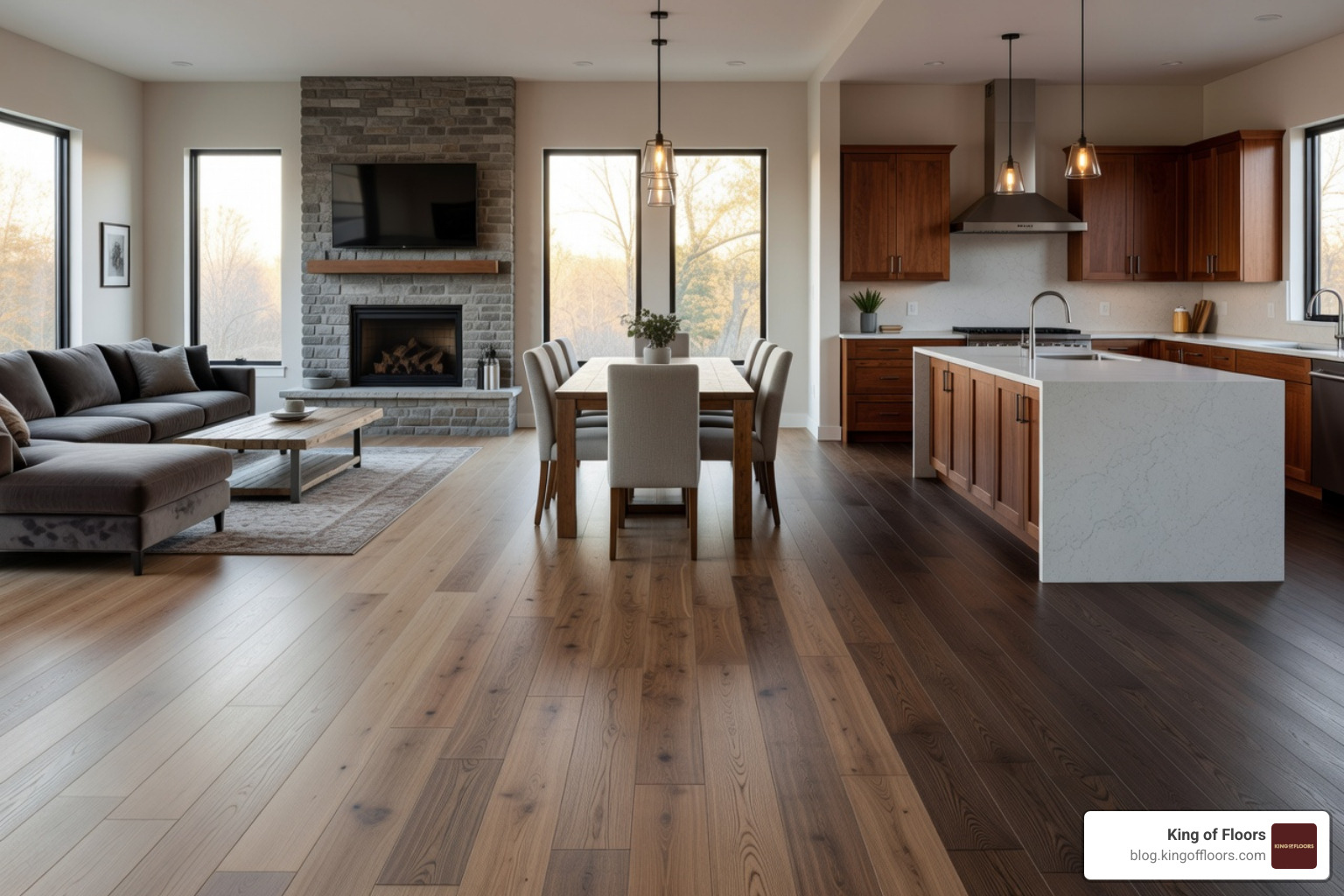
In modern open-concept homes—common in newer developments in Grandview Heights or Ocean Park—you should often limit yourself to just one or two flooring types. If your kitchen, dining, and living areas are all visible at once, having three different floors will create “visual noise” that makes the space feel chopped up and smaller.
In these cases, use one single floor for 90% of the area and save your third material for a completely enclosed space like a bathroom or a laundry room. This maintains the “predictable rhythm” that increases the perceived value of your home. If you’re on a budget, check out our low-cost laminate guide for options that look premium even in large open spaces.
Common Pain Points: Clashing Undertones and Textures
The most common mistake is mixing warm and cool undertones. If your dominant laminate has a warm, honey-toned oak finish, don’t choose a cool, blue-grey tile for the kitchen. They will clash every time you look at the transition.
- Tip: Keep your undertones consistent (all warm or all cool) across all three materials.
- Texture Clashes: Avoid pairing two different “busy” grain patterns. If your main floor has a lot of knots and character, your secondary floor should be smoother and more subtle.
- Height Mismatches: Ensure your subfloor is prepared so that your laminate, tile, and carpet all sit at the same height. Nothing ruins the “premium feel” faster than a clumsy, uneven transition.
Frequently Asked Questions about the Rule of 3
How does the Rule of 3 improve home resale value?
Homes that follow the rule of 3 flooring feel “designed” rather than “assembled.” Potential buyers in the Surrey real estate market subconsciously appreciate the cohesion and flow. A house with a unified flooring plan looks larger, cleaner, and better maintained, which directly translates to a higher perceived value and a faster sale. It suggests that the renovation was done with a professional eye for detail.
Can I use three different textures of the same material?
Absolutely! This is a sophisticated way to use the rule. For example, you could use a smooth-finish European laminate in the bedrooms, a registered-embossed (textured) version of the same colour in the living room, and a chevron-patterned version in the entryway. This keeps the colour palette identical but uses texture to define the different “zones” of the home.
What are the best flooring combinations for Surrey homes?
Given the BC coastal climate and our local humidity, we often recommend this “Surrey Trio”:
- Dominant (60%): A high-quality, 10mm or 12mm waterproof laminate for the main living areas. It handles the rain and mud tracked in from the garden.
- Secondary (30%): A durable engineered hardwood for the bedrooms to provide natural warmth.
- Accent (10%): A stone-look laminate or luxury tile for the bathrooms and laundry.
This combination balances the “European quality” look with the practical needs of a busy Canadian household.
Conclusion
Designing a balanced home doesn’t require a degree in architecture; it just requires a bit of restraint and the rule of 3 flooring. By selecting a dominant hero material, a supporting secondary material, and a carefully placed accent, you create a home that feels harmonious, spacious, and intentionally designed.
At King of Floors, we have been a family-owned staple in the Surrey community since 1984. We pride ourselves on being more than just a warehouse; we are your partners in design. Our current team of experts is here to help you navigate the thousands of options in our showroom. Whether you are looking for the latest 2026 flooring trends or a timeless European classic, we have the stock and the expertise to make your vision a reality.
Ready to see these combinations in person?
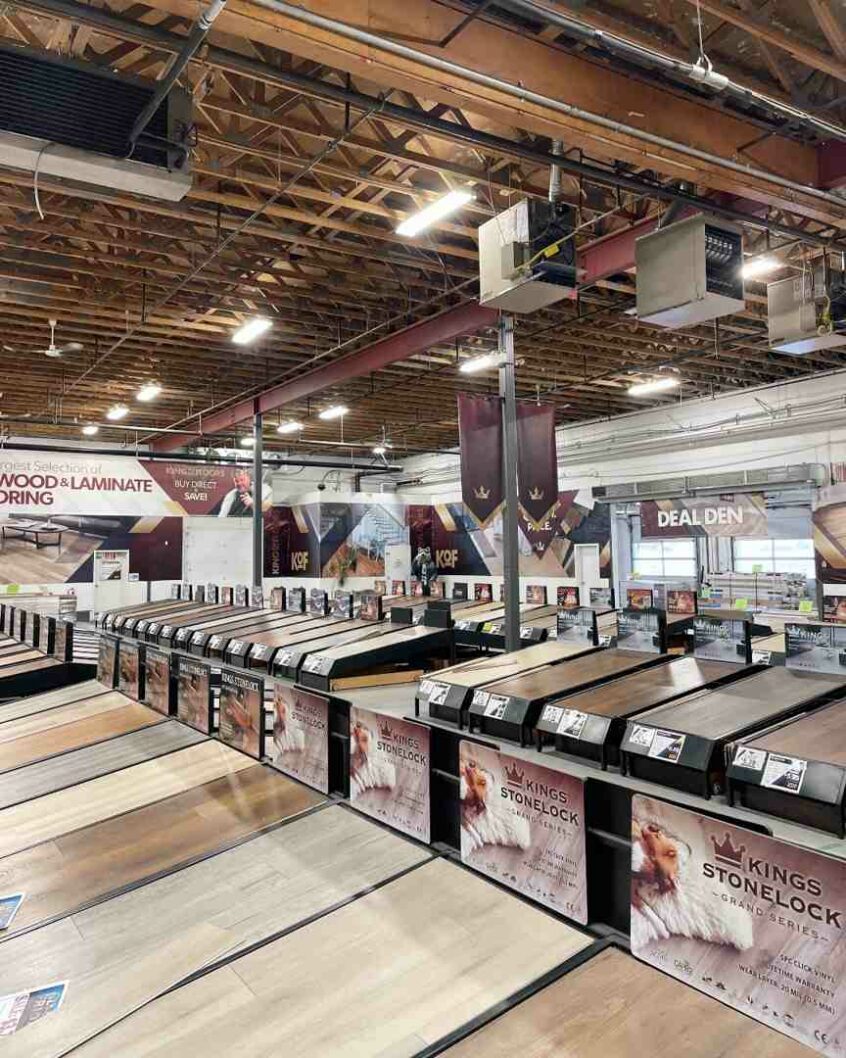
Visit our Surrey showroom today to explore the largest selection of European laminate flooring in stock and get expert flooring advice for your next project. We cut out the middleman so you can get the home you deserve at a price that makes sense.