
Is Engineered Flooring or Laminate Right for Your Home?
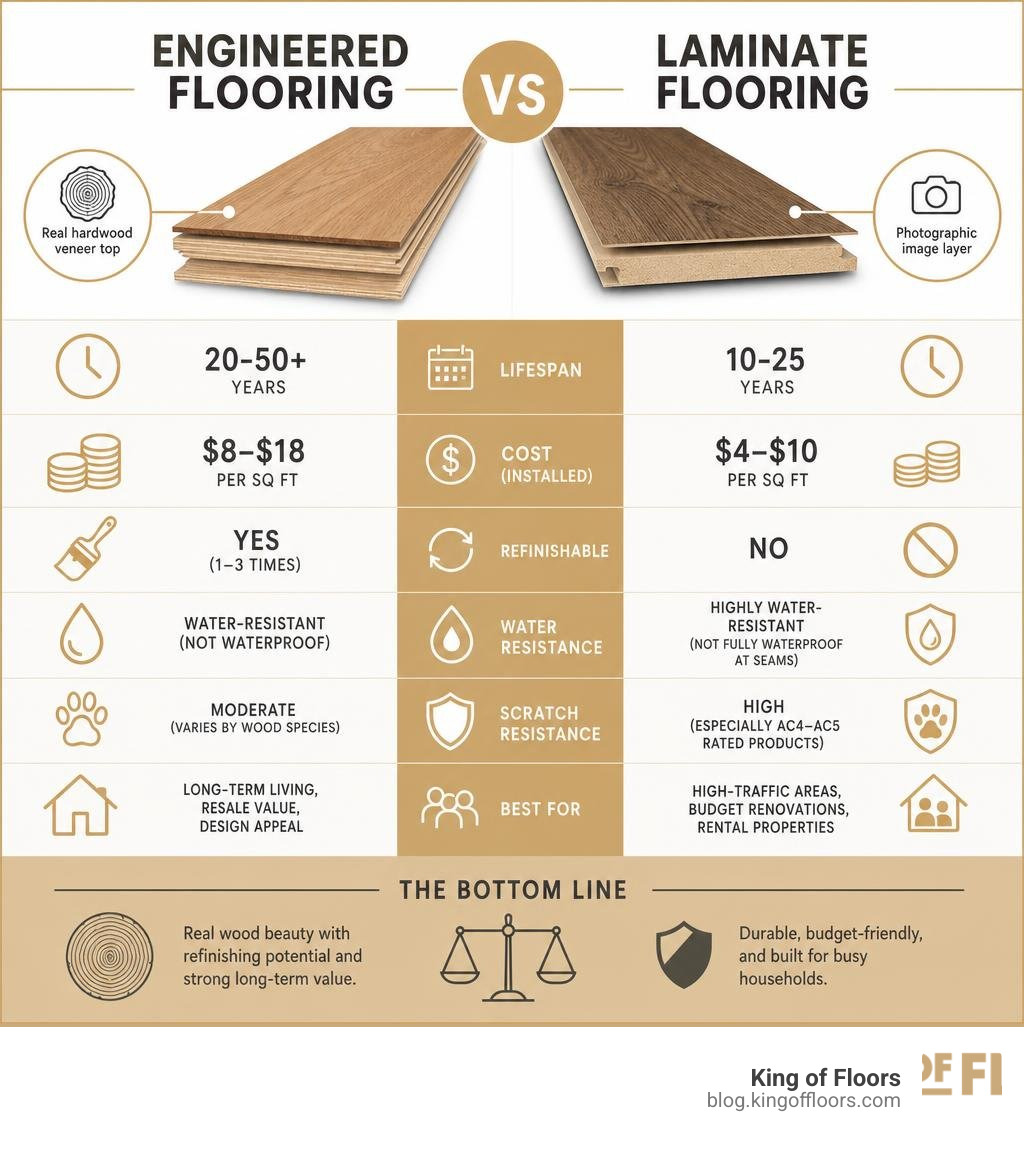
When comparing engineered flooring vs laminate, the short answer is: engineered hardwood gives you a real wood surface with refinishing potential and stronger resale appeal, while laminate offers impressive durability and a lower upfront cost. Neither is universally “better”; it comes down to your budget, lifestyle, and how long you plan to stay in your home.
Here is a quick breakdown to help you orient yourself:
| Factor | Engineered Hardwood | Laminate |
|---|---|---|
| Surface material | Real hardwood veneer | Photographic image layer |
| Lifespan | 20-50+ years | 10-25 years |
| Refinishable | Yes (1-3 times depending on wear layer) | No |
| Installed cost (CAD) | $8-$18 per sq ft | $4-$10 per sq ft |
| Water resistance | Water-resistant (not waterproof) | Highly water-resistant (not fully waterproof at seams) |
| Scratch resistance | Moderate (varies by wood species) | High (especially AC4-AC5 rated products) |
| Best for | Long-term living, resale value, design appeal | High-traffic areas, budget renovations, rental properties |
Here is the thing most flooring ads will not tell you: no floor is completely immune to scratches. Not laminate, not engineered hardwood, not anything short of concrete. Both options are scratch-resistant in the sense that they hold up well against everyday wear like pet paws, grit, and furniture movement, but both will show signs of life over time. That is not a flaw; that is just flooring being flooring.
Choosing between the two is less about finding a winner and more about matching the right product to your home, your household, and your budget.
In 2026, both categories have come a long way, and the gap in appearance has narrowed considerably, but the differences in construction, longevity, and long-term value are still very real.
I’m Lesley Upton, Inventory Control Manager at King of Floors, and after more than 15 years of helping homeowners across BC navigate the engineered flooring vs laminate decision, I can tell you the right choice almost always comes down to an honest conversation about how you actually live in your home. Let’s walk through everything you need to know so you can choose with confidence.
Engineered vs Laminate in Plain English
To understand the core differences between these two popular flooring options, it helps to strip away the marketing jargon.
When you choose engineered hardwood flooring, you are buying real wood. The top layer of every plank is a genuine slice of timber, known as a veneer. Underneath that beautiful surface is a structural core made of layered wood composite or plywood. When you look at it from above, walk on it, or touch it, you are experiencing the authentic warmth, texture, and grain of a real tree.
On the other hand, laminate flooring is a completely manufactured product designed to mimic wood. It does not have a real wood surface. Instead, its realistic appearance comes from a high-resolution photographic design layer. This photo is bonded to a core of high-density fibreboard and sealed under a tough, transparent protective wear layer. Modern manufacturing has made laminate look incredibly realistic, but underneath the surface, it is a synthetic creation.
Core Construction Differences
The differences in how these floors perform on a daily basis come down to their physical anatomy. Let us take a closer look under the hood of both options.
Engineered hardwood utilises a clever cross-layered construction. The real wood veneer on top is bonded to multiple layers of backing wood (often birch or pine plywood) that are stacked in alternating, perpendicular directions. This cross-ply lattice structure is a game changer for stability. Wood naturally wants to expand and contract when the humidity changes. By gluing the layers in opposing directions, they physically restrict each other from moving. This means engineered planks are far less likely to cup, gap, or warp than solid wood boards.
Laminate flooring is built on a foundation of high-density fibreboard, which is made from highly compressed wood fibres and resin. On top of this dense core sits the decorative paper layer, which features a high-definition image of wood grain. To protect this image from fading, scratches, and stains, a melamine-based protective wear layer is applied. Some premium European laminates also feature embossed-in-register textures, where the surface texture perfectly matches the grain of the printed image, giving it a much more authentic feel underfoot.
Cost Breakdown in Real Terms
Budget is usually the loudest voice in any renovation planning meeting. When looking at the bottom line, factor in materials, installation, trim, underlay, and long-term maintenance so your project planning stays realistic.
Laminate is the undisputed champion of upfront affordability. On average, high-quality laminate materials cost between $1 to $3 per square foot. Professional installation typically ranges from $2 to $4 per square foot, bringing your total installed cost to approximately $4 to $10 per square foot.
Engineered hardwood is a more premium investment. The materials generally start at $4 per square foot and can easily reach $10 or more for wide-plank, premium wood species. Professional installation for engineered wood typically runs between $4 to $8 per square foot, resulting in a total installed cost of $8 to $18 per square foot.
To put this into perspective, let us look at a standard 1,000 square foot home:
- A quality laminate installation will cost roughly $4,000 to $10,000.
- An engineered hardwood installation for the same space will cost between $8,000 to $18,000.
While laminate offers fantastic upfront savings, engineered flooring represents a higher initial investment that delivers excellent long-term value and home equity.
Durability and Lifespan Over Time
How long do you want your new floors to last? This is where the long-term value of your investment comes into focus.
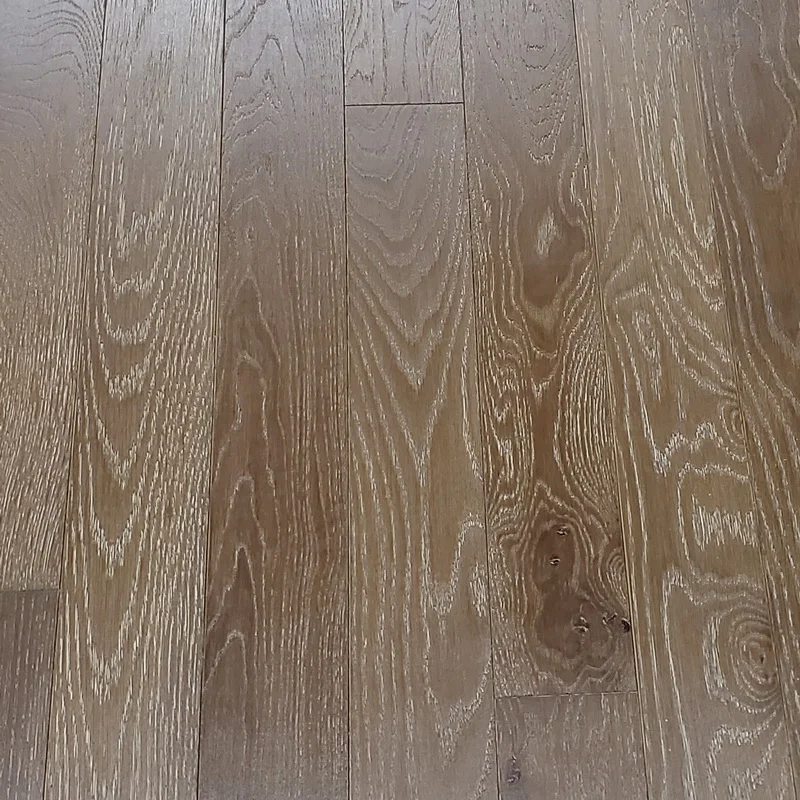
The defining advantage of engineered hardwood is that it is renewable. Because the top layer is real wood, it can be sanded and refinished. The number of times you can refinish it depends entirely on the thickness of the wear layer. A floor with a thin 2mm veneer can generally only be lightly recoated, while a premium plank with a 4mm to 6mm wear layer can be fully sanded and refinished 1 to 3 times. This refinishing capability allows engineered floors, such as durable Oak engineered floors, to easily last 20 to 50 years or more.
Laminate is highly durable on a day-to-day basis, but it is ultimately non-renewable. Once the protective melamine wear layer is worn through or the photographic image is deeply gouged, you cannot sand it down or refinish it. If a section of laminate is severely damaged, those specific planks must be replaced. With proper care and high-quality materials, a premium laminate floor will typically last 10 to 25 years before needing a full replacement.
Real-World Performance in Busy Homes
If you have a home filled with active kids, large dogs, or frequent dinner parties, you need to think about how your floors will handle the chaos of daily life.
Laminate is built for high-traffic environments. Its tough melamine surface is exceptionally scratch-resistant and dent-resistant. Dropped heavy mugs, plastic toys scraped across the floor, and the claws of excited pets rarely leave a permanent mark on a high-quality laminate surface. It is the worry-free choice for busy households that want beautiful floors without having to police everyone’s footwear.
Engineered hardwood is a softer, more natural material. While modern protective finishes help shield the wood, it is still susceptible to scratches and dents. Heavy furniture, dropped objects, and pet claws can leave marks over time. However, many homeowners do not mind this because real wood ages gracefully. Over the years, these minor blemishes blend into a natural patina that adds character and warmth to the home, much like a piece of antique furniture.
Moisture and Climate Considerations
The Lower Mainland climate presents some unique challenges for flooring. We experience humid summers and dry, cold winters, which can cause indoor relative humidity levels to swing significantly.
Engineered hardwood is highly stable, making it an excellent choice for our local climate. Its cross-ply construction allows it to handle normal seasonal humidity changes without warping or gapping. However, it is still real wood, meaning it is water-resistant but definitely not waterproof. Standing water from a leaking dishwasher or a wet dog must be wiped up quickly to prevent moisture from seeping into the wood fibres and causing permanent damage.
Laminate flooring handles humidity swings beautifully because its dense fibreboard core is highly stable. Modern manufacturing has also vastly improved laminate water resistance, with many premium European brands offering advanced surface protection that prevents water from penetrating the seams for up to 24 to 72 hours. However, laminate is still vulnerable if water manages to bypass the surface and soak into the fibreboard core from below, which can cause the seams to swell and buckle.
Maintenance and Everyday Care
Keeping your floors looking brand new does not require a closet full of expensive specialty products. In fact, when it comes to cleaning both laminate and engineered hardwood, less is almost always more.
For everyday maintenance, regular sweeping or vacuuming is your best friend. Dust and outdoor grit act like sandpaper underfoot, slowly wearing down the protective finish of your floors over time. When vacuuming, always use a bare-floor setting or a soft brush attachment to prevent the vacuum’s beater bar from scratching the surface.
When it is time to mop, put away the heavy bucket. We highly recommend using a slightly damp microfibre mop rather than a soaking wet mop. Excess water is the natural enemy of both flooring types. You should also completely avoid steam mops. The intense heat and moisture from a steam cleaner can easily force water deep into the seams, breaking down adhesive bonds and causing wood veneers to delaminate or fibreboard cores to swell. Stick to gentle, pH-neutral cleaners designed specifically for your flooring type.
AC Ratings for Laminate Explained
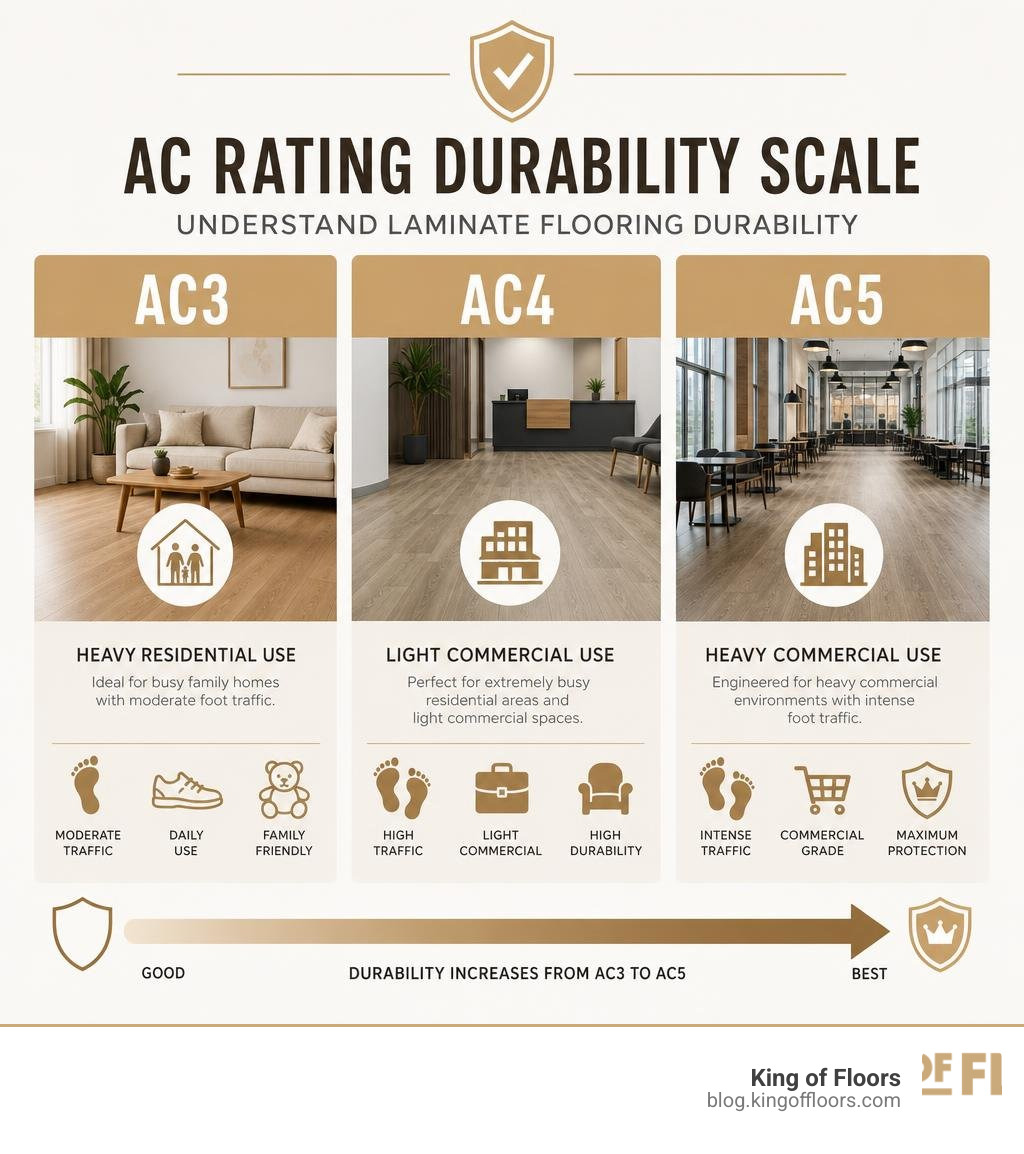
When shopping for laminate, you will frequently see references to “AC ratings.” This is an industry-standard durability classification system established by European manufacturers to help consumers understand exactly how much wear a laminate floor can handle.
AC ratings range from AC1 to AC5, with higher numbers indicating stronger surface durability:
- AC3: Designed for heavy residential use. This is the standard recommendation for busy family homes with moderate foot traffic.
- AC4: Approved for light commercial spaces and extremely busy residential areas. It offers excellent resistance to scratches and heavy traffic.
- AC5: Engineered for heavy commercial use. This is the gold standard of durability, offering incredible resistance to abrasion and impact.
At King of Floors, we specialise in premium European laminate flooring imported directly from top-tier manufacturers in Switzerland, Germany, and Poland. Brands like Kronoswiss, Kronopol, and Artureon offer outstanding AC4 and AC5 rated products that provide excellent peace of mind for active households.
Resale Value and Long-Term Investment
If you plan to sell your home in the next few years, your choice of flooring can have a direct impact on your listing price and buyer interest.
Engineered hardwood is highly coveted by home buyers. Because the surface is genuine timber, real estate agents and buyers view it as a premium, high-value feature. Installing engineered hardwood can add substantial resale appeal to your property, often yielding a positive return on investment that can increase your home’s selling price by thousands of dollars.
Laminate flooring is a highly practical, clean, and modern finish that buyers appreciate. However, because it is a synthetic product, it generally has a neutral impact on home resale value. It makes your home highly liveable and attractive, but it does not carry the same premium real estate prestige as genuine wood.
Choosing the Right Flooring for Your Home
Making the final decision comes down to matching your personal priorities with the strengths of each flooring type.
Choose Engineered Hardwood If:
- You want the authentic look, warmth, and prestige of genuine wood.
- You plan to stay in your home for many years and want a floor that can be renewed.
- You want to maximize your home’s resale value and real estate appeal.
- You prefer a floor that ages naturally and develops a unique character over time.
Choose Laminate If:
- You want a highly budget-friendly option with lower upfront material and installation costs.
- You have a busy home with large pets, active kids, and heavy foot traffic.
- You want maximum resistance to scratches, dents, and daily wear.
- You are looking for a highly durable, low-maintenance product that is easy to clean.
Frequently Asked Questions
What is the main difference in engineered flooring vs laminate?
Engineered flooring features a top layer of genuine hardwood veneer bonded to a stable plywood core, offering the authentic look and feel of real wood. Laminate is a synthetic floor made of a compressed fibreboard core topped with a high-resolution photographic image of wood and a protective wear layer.
Which is more cost-effective: engineered flooring vs laminate?
Laminate is more cost-effective upfront, costing about $4 to $10 per square foot fully installed (CAD). Engineered flooring is a larger initial investment at $8 to $18 per square foot installed, but it offers better long-term value because it can be refinished and lasts up to 50 years.
Can engineered hardwood be installed in basements?
Yes. Unlike solid hardwood, the cross-ply construction of engineered hardwood provides excellent dimensional stability, allowing it to be installed in below-grade basements. However, you must install a proper vapour barrier over the concrete subfloor and ensure the basement has no history of moisture issues.
Is laminate flooring better for homes with large dogs?
Yes, laminate is generally better for homes with large pets because its tough melamine wear layer is highly scratch-resistant and dent-resistant. While engineered wood looks beautiful, large dog claws can scratch the real wood surface over time, requiring more frequent maintenance.
Can you sand and refinish laminate floors?
No. Laminate flooring cannot be sanded or refinished because it does not contain real wood. The surface is a thin photographic layer protected by a clear wear layer, and attempting to sand it will permanently destroy the design. Damaged laminate planks must be replaced.
Final Thoughts on Choosing Flooring in Surrey Homes
There is no single “perfect” flooring option, only the option that is perfect for your specific home, lifestyle, and budget. Whether you fall in love with the authentic character of engineered hardwood or the worry-free durability of premium European laminate, both choices will beautifully transform your living space.
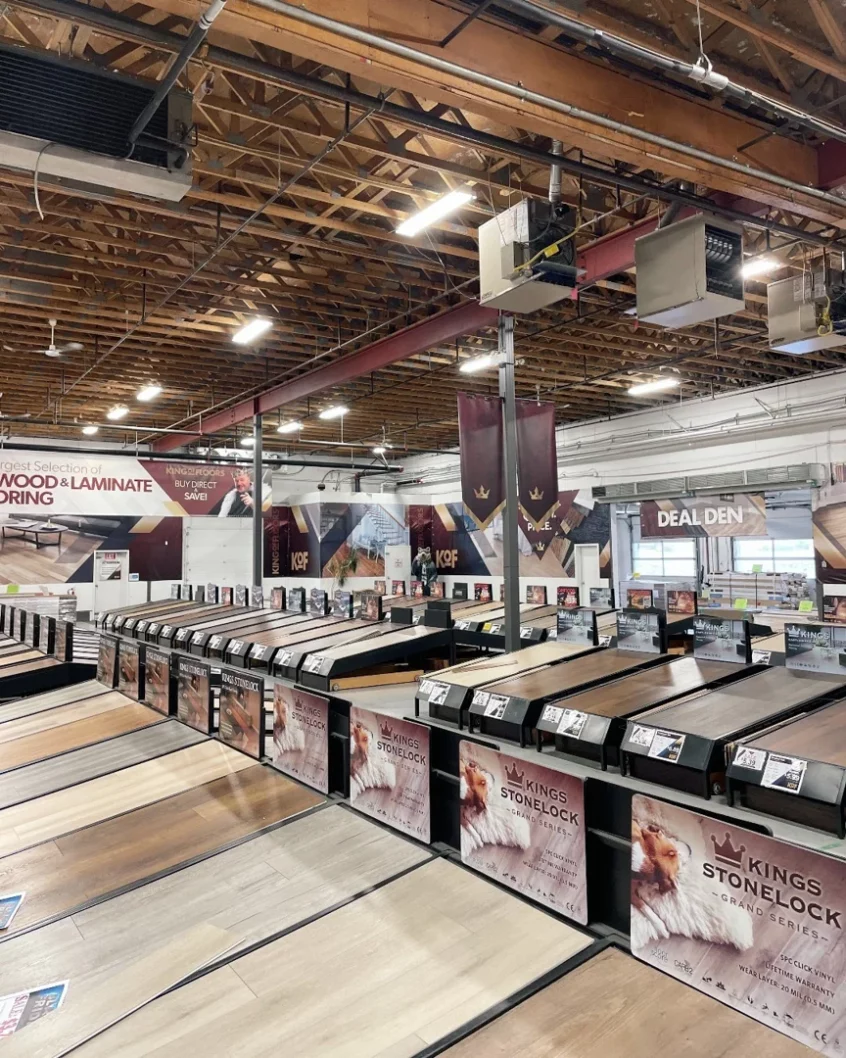
If you are planning a renovation in Surrey or anywhere in the Lower Mainland, make the trip to our showroom! Based in Surrey, King of Floors has become a premier destination showroom for homeowners across BC who are willing to travel for the absolute best selection, expert advice, and highly competitive pricing.
Ready to see the options in person?
- Come visit our showroom in Surrey, BC to feel the textures underfoot.
- Explore our massive selection of in-stock European laminate brands like Kronoswiss, Kronopol, and Artureon.
- Reach out to our friendly team of flooring experts through our contact page to get your project started today!