
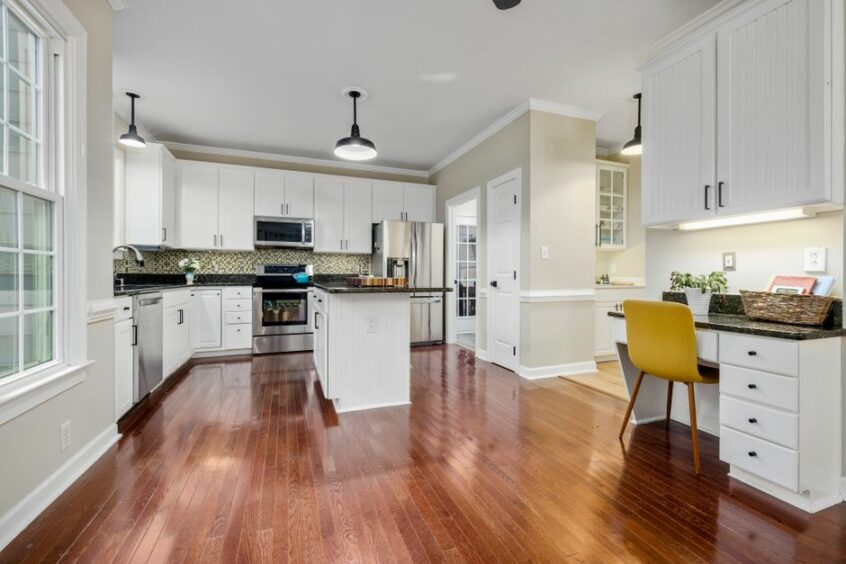
The Honest Guide to Durable Kitchen Floor Options in 2026
When it comes to durable kitchen floor options, most homeowners are searching for the same thing: a floor that looks great, handles spills and pet claws without flinching, and does not need replacing every few years. The good news is that in 2026, both engineered hardwood and laminate flooring deliver on that promise in different ways. The not-so-good news? Neither one is completely immune to scratches, and any flooring company that tells you otherwise is not being straight with you.
Here is a quick look at how the two main options compare before we dig into the details:
| Feature | Laminate Flooring | Engineered Hardwood |
|---|---|---|
| Material type | HDF core with printed wood layer | Real hardwood veneer over layered wood core |
| Lifespan | 15-25 years | 25-50+ years |
| Refinishing | Not refinishable | Yes, 1-3 times depending on veneer thickness |
| Cost range (CAD installed) | $4-$8 per sq ft | $8-$15 per sq ft |
| Water resistance | High (not fully waterproof at seams) | Moderate (protect from standing water) |
| Scratch resistance | Very good | Good (develops natural patina over time) |
| Ideal for | High-traffic kitchens, rental properties, budget renovations | Long-term family homes, resale value, design appeal |
Your kitchen is likely the hardest-working room in your home. Dropped pots, wet shoes tracked in from a rainy Lower Mainland afternoon, the dog skidding around the corner for dinner, it all adds up. A floor that looks stunning on day one but scuffs and warps by year three is not a bargain, it is a headache. The real question is not which floor is toughest on paper, it is which one suits how you actually live.
I’m Lesley Upton, Inventory Control Manager at King of Floors in Surrey, BC, and I have spent over 15 years helping homeowners across the Lower Mainland find durable kitchen floor options that match their lifestyle, budget, and design vision. Let’s walk through what actually matters when choosing between laminate and engineered hardwood for your kitchen.
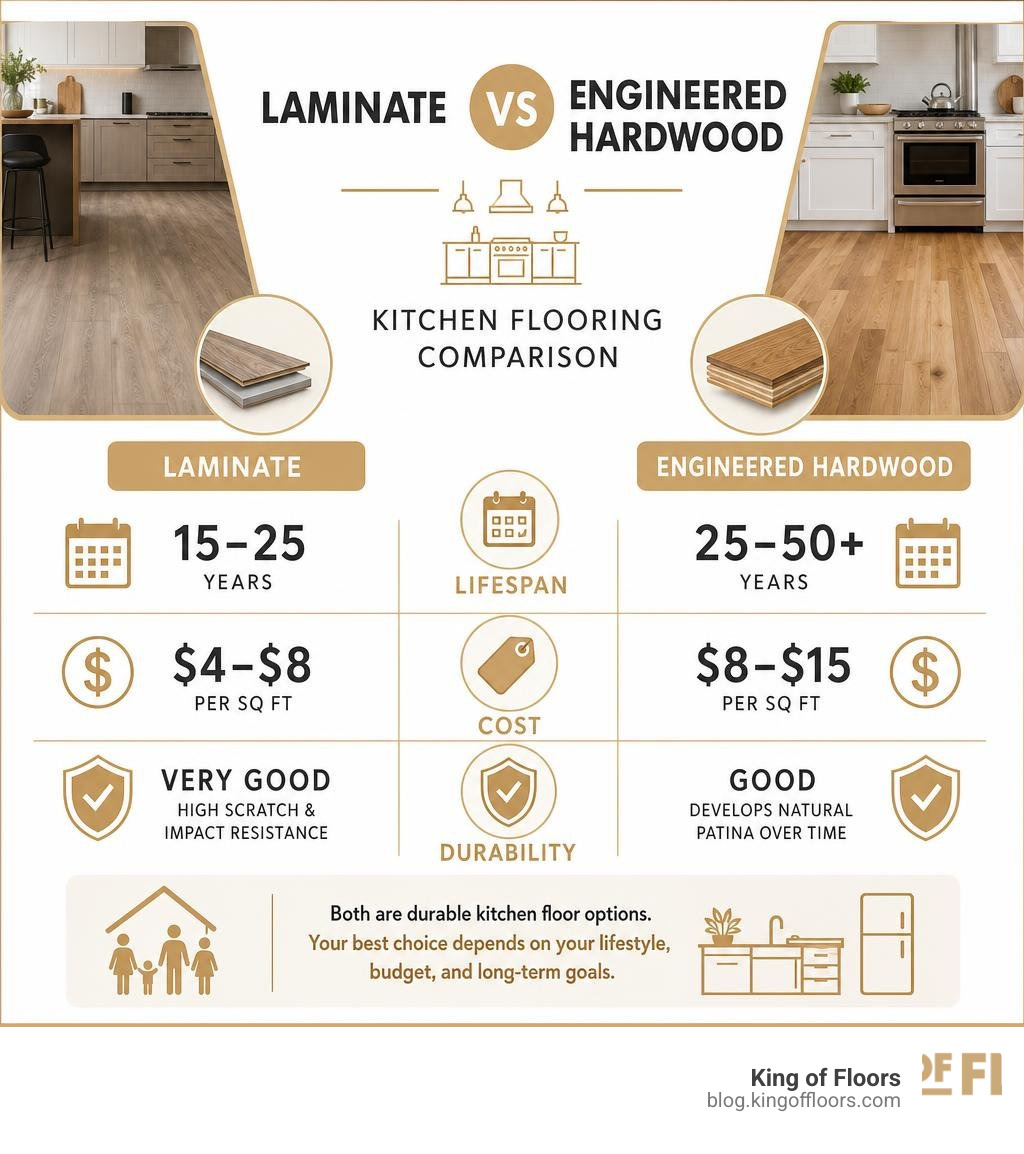
Which Is Better: Engineered Flooring or Laminate?
Choosing between engineered hardwood and laminate for your kitchen comes down to a balance of lifestyle, budget, and long-term expectations. Both materials are outstanding durable kitchen floor options that can withstand the daily chaos of a busy home, but they excel in different areas.
If your kitchen is the central hub for a household filled with active pets, busy teenagers, and frequent spills, laminate flooring is often the most practical choice. It offers exceptional surface hardness and resistance to impact. On the other hand, if you want the warmth, prestige, and long-term resale value of genuine timber, engineered hardwood is the superior option. It brings real wood into your kitchen with a construction designed to handle the temperature and humidity shifts typical of the climate in British Columbia.
We always recommend looking at your household habits first. A floor should work for you, not the other way around. If you do not want to worry about a dog skidding across the room or a dropped can of soup, laminate provides incredible peace of mind. If you appreciate the natural ageing process of wood and want a floor that can be refreshed in the future, engineered hardwood is worth the investment.
Engineered vs Laminate in Plain English
To make an informed decision, it helps to understand exactly what you are putting underfoot without getting bogged down in industry jargon.
Engineered hardwood is real wood through and through. The surface you see and step on is a genuine slice of timber, such as oak or maple. Underneath that beautiful top layer is a core made of multiple layers of wood pressed together in alternating directions. This sandwich construction gives it the stability to resist expanding and contracting when the weather changes.
Laminate flooring is a highly durable, multi-layered synthetic floor. Instead of a real wood top layer, it features a high-definition photograph of wood printed onto a dense fibreboard core. This photographic layer is sealed beneath an incredibly tough, transparent protective wear layer made of melamine. In plain English: engineered hardwood gives you the authentic look and feel of real wood because it is real wood, while laminate gives you a highly realistic wood look with a surface that is exceptionally difficult to dent or scratch.
Core Construction Differences
The secret to how these materials perform as durable kitchen floor options lies deep within their construction.
Laminate flooring starts with a core of High-Density Fibreboard (HDF), which is made from compressed wood fibres and resin. On top of this core sits the decorative design layer, followed by a clear, hard wear layer. This outer shield is what protects the floor from fading, stains, and daily wear. High-quality European laminate is engineered to be incredibly dense, giving it excellent resistance to impacts from dropped kitchen utensils.
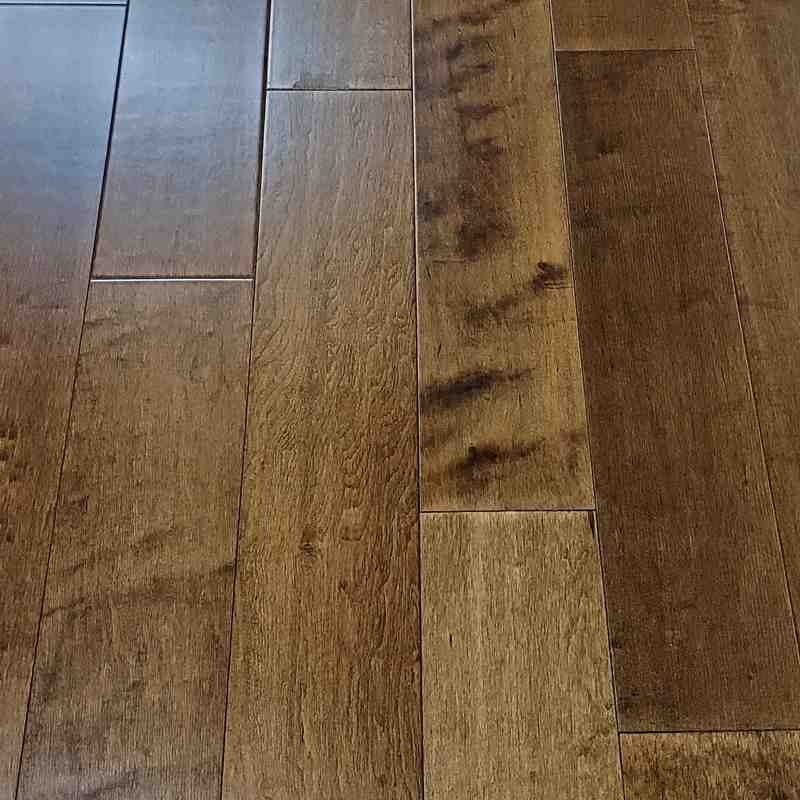
In contrast, engineered hardwood flooring consists of a real hardwood veneer, often called the wear layer, bonded to a core of cross-layered plywood or high-density board. This cross-grain construction is crucial. Because wood naturally expands and contracts with changes in humidity, layering the core in alternating directions minimises this movement. This makes engineered hardwood much more stable than solid wood, allowing it to perform beautifully in kitchen environments where moisture levels fluctuate.
Cost Breakdown in Real Terms
When planning a kitchen renovation in Surrey or the surrounding Lower Mainland, understanding the real-world costs in Canadian Dollars (CAD) is essential for budgeting.
Laminate flooring is highly cost-effective. For a standard kitchen size of approximately 150 to 200 square feet, high-quality European laminate materials typically cost between $3.00 and $5.00 per square foot. When you factor in professional installation and underlayment, the total installed cost generally ranges from $4.00 to $8.00 per square foot. This makes laminate an incredibly high-ROI choice, giving you a beautiful, resilient floor without a massive upfront investment.
Engineered hardwood represents a larger initial investment. The material cost for premium engineered hardwood usually ranges from $6.00 to $10.00 per square foot, depending on the wood species and veneer thickness. Professional installation for engineered wood is also more specialized, bringing the total installed cost to about $8.00 to $15.00 per square foot. While the upfront cost is higher, engineered hardwood offers exceptional long-term value because it can last for generations and directly increases the resale appeal of your home.
Durability and Lifespan Over Time
Durability is not just about resisting scratches, it is also about how long the floor remains functional and attractive in your home.
Engineered hardwood is built for the long haul. Because the top layer is genuine wood, it can often be sanded and refinished. Depending on the thickness of the real wood veneer, an engineered floor can be refinished one to three times over its lifespan. This means if the floor accumulates wear, dents, or scratches after fifteen or twenty years of family life, a professional can sand it down and apply a fresh finish, making it look brand new. With proper care, engineered hardwood can easily last 50 years or more.

Laminate flooring is highly durable and resists daily wear exceptionally well, but it is a non-renewable surface. Once the protective melamine wear layer eventually wears through after decades of heavy use, the floor cannot be sanded or refinished. When laminate reaches the end of its lifespan, which is typically 15 to 25 years in a busy kitchen, the entire floor must be replaced. However, the lower initial cost and high scratch resistance make it a very attractive option for homeowners who want hassle-free performance for a couple of decades.
Real-World Performance in Busy Homes
Let’s address the biggest concern for families and pet owners: scratches and dents.
First, we must emphasise that no flooring is completely immune to scratches. Over time, all flooring will show signs of life. However, laminate flooring is highly scratch-resistant. The tough melamine wear layer acts as a shield against dog claws, heavy vacuum cleaners, and sliding bar stools. It is incredibly difficult to dent, making it the ideal choice if you have large pets or kids who like to play in the kitchen.
Engineered hardwood is more vulnerable to scratching and denting because it has a real wood surface. Harder wood species like maple and oak offer better resistance than softer woods, but they can still be marked by sharp objects or heavy dropped items. Many homeowners actually appreciate this quality, as high-quality wood floors develop a natural patina over time, blending minor marks into the character of the wood. If you prefer a pristine, flawless look under heavy household traffic, laminate is the more forgiving choice.
Moisture and Climate Considerations
The Lower Mainland climate presents unique challenges for residential flooring. From rainy winters in North Vancouver to humid summer days in Surrey, homes across British Columbia experience significant seasonal moisture shifts.
Engineered hardwood is designed to handle these environmental changes. Its cross-layered plywood core prevents the wood from warping, cupping, or gapping when humidity levels rise and fall. However, it is still real wood. It requires protection from standing water. A leaking dishwasher or a pet bowl that sits wet for hours can eventually damage the wood fibres, so prompt cleanup of major spills is essential.
Modern laminate flooring has made incredible leaps in water resistance. High-quality European laminates feature advanced core boards that resist swelling. When installed with tight, precision click joints, they offer excellent protection against everyday kitchen spills. While no laminate is fully waterproof if water seeps underneath the planks through the perimeter walls, a quality water-resistant laminate will easily handle standard kitchen spills if they are wiped up within a reasonable timeframe. You can learn more about these advancements by exploring our guide on laminate water resistance.
Maintenance and Everyday Care
Keeping your kitchen floors clean should not feel like a second job. Fortunately, both of these options are incredibly low-maintenance when compared to older flooring styles.
For daily care, both laminate and engineered hardwood only require regular sweeping or vacuuming with a soft brush attachment. This removes grit and dirt that can act like sandpaper underfoot. For deeper cleaning, a damp microfibre mop is all you need.
The golden rule for both materials is to avoid wet mops and standing water. Never flood your floors with water, as excess moisture can seep into the joints and cause the edges to swell. We also advise homeowners to avoid steam mops entirely, as the heat and pressure can force moisture deep into the core of both laminate and engineered wood, leading to irreversible damage. Stick to speciality wood or laminate cleaners and a lightly damp mop for a beautiful, long-lasting finish.
AC Ratings for Laminate Explained
When shopping for laminate flooring, you will frequently see references to “AC ratings.” This is an international grading system used to measure the durability and wear resistance of laminate surfaces.
The scale runs from AC1 to AC5, with higher numbers indicating greater durability:
- AC3: Designed for heavy residential use. This is suitable for all areas of a home, including kitchens and hallways.
- AC4: Approved for general commercial use, meaning it can easily handle the busiest residential kitchens.
- AC5: The gold standard, designed for heavy commercial traffic.
For outstanding durability in a kitchen, we highly recommend choosing an AC5-rated laminate. Premium European brands like Kronoswiss, Kronopol, and Artureon, which are manufactured to strict Swiss, Polish, and German standards, offer incredible AC5 options. These floors provide maximum resistance to surface wear, ensuring your kitchen floor looks fantastic even after years of heavy foot traffic and cooking disasters.
Resale Value and Long-Term Investment
If you plan to sell your home in the future, your choice of flooring can play a significant role in attracting buyers and securing a higher selling price.
Engineered hardwood is a premium product that adds tangible equity to your property. Homebuyers in British Columbia actively look for real wood floors, and listing a home with engineered hardwood immediately elevates its market appeal. It signals quality, luxury, and longevity. If you want to explore some of our most popular real wood options, check out our engineered best sellers.
Laminate flooring is highly practical and provides a clean, modern aesthetic that appeals to many buyers, but it does not carry the same financial weight as real wood. It is viewed as a durable, budget-friendly finish rather than a luxury upgrade. If your primary goal is maximising your home’s resale value, engineered hardwood is the clear winner. If your priority is immediate durability and cost-effectiveness while you live in the home, laminate is an excellent choice.
Choosing the Right Flooring for Your Home
To make your final decision, consider which of these scenarios matches your home life best:
Choose Engineered Hardwood if:
- You want the unmatched beauty, warmth, and texture of genuine wood in your kitchen.
- You are planning to stay in your home long-term and want a floor that can be refinished in the future.
- You want to maximize your home’s resale value and appeal to premium buyers.
- You do not mind a floor that naturally develops a unique character and patina over time.
Choose Laminate Flooring if:
- You have an active household with large pets, young children, and heavy daily foot traffic.
- You want maximum resistance to scratches, dents, and impact from dropped kitchen items.
- You are working within a specific budget and want the best possible durability for your dollar.
- You want a low-maintenance, highly water-resistant floor that requires minimal worry.
Frequently Asked Questions
Can laminate flooring handle kitchen spills?
Yes, high-quality laminate flooring easily handles typical kitchen spills. Modern options feature tight click-lock joints and water-resistant cores that prevent immediate penetration. Provided you clean up spills promptly and avoid letting large pools of water sit on the seams, your laminate floor will remain in excellent condition.
Is engineered hardwood good for kitchens with pets?
Engineered hardwood is highly stable, but pet owners should take precautions. While the cross-layered core handles temperature shifts beautifully, claws can scratch the real wood surface. We recommend keeping nails trimmed and placing protective mats under water bowls and high-traffic pivot points to keep the wood looking its best.
What is the difference between scratch-resistant and scratch-proof?
Scratch-resistant means the material withstands everyday wear like sliding chairs and pet claws without easily marking. Completely scratch-proof flooring does not exist. Extremely sharp objects, heavy dragged furniture, or trapped rocks under shoes can scratch any surface, meaning proper care and maintenance are always necessary for your floors.
How long do these durable kitchen floor options last?
Laminate flooring typically lasts between 15 and 25 years in a busy kitchen before it needs to be replaced. Engineered hardwood can last 25 to 50 years or even longer because the real wood veneer can be sanded down and refinished several times, effectively resetting its lifespan.
Do I need a professional to install kitchen flooring in Surrey?
While modern click-lock systems make DIY tempting, professional installation is highly recommended for kitchens. This space requires precise subfloor preparation, careful sealing around cabinets, and proper expansion gaps to handle seasonal humidity shifts. Professional installers ensure your floor is laid correctly to maintain its warranty and durability.
Final Thoughts on Choosing Flooring in Surrey Homes
Finding the perfect kitchen floor does not have to be overwhelming. At King of Floors, we believe in giving you honest, practical advice based on how you actually live. Whether you decide on the high-traffic resilience of a premium European laminate or the timeless luxury of engineered hardwood, our team is here to guide you every step of the way.
Based in Surrey and serving homeowners across BC, King of Floors has become a go-to destination for customers willing to travel for better flooring options, pricing, and expert advice. We invite you to visit our Surrey showroom to feel the textures, compare the materials in person, and make the best decision for your home.
Ready to transform your kitchen? You can contact our flooring experts today to ask questions, request samples, or plan your visit to our destination showroom.