
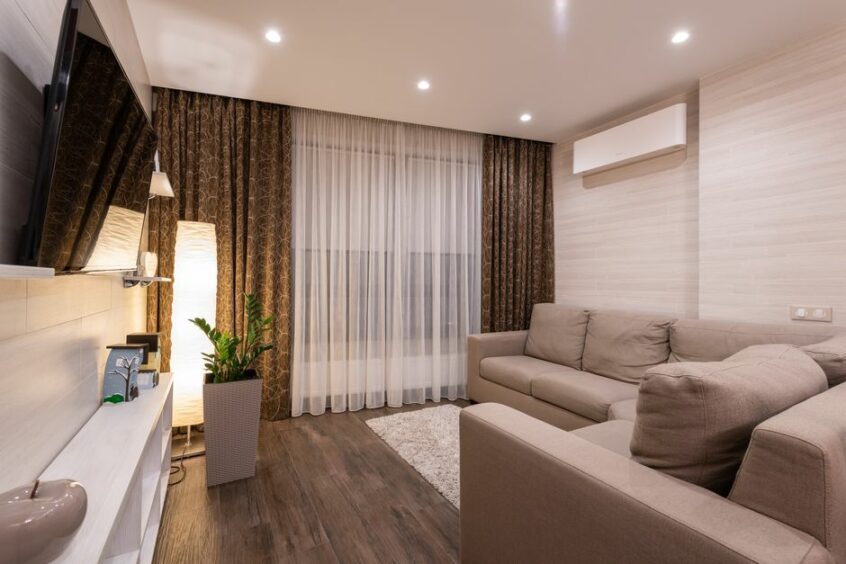
Is Engineered Flooring Right for Your BC Home?
Quick Answer: What Is Engineered Flooring?
Engineered flooring is a real wood floor made from a genuine hardwood veneer bonded to multiple layers of plywood or cross-laminated wood. Here is what you need to know at a glance:
- Construction: A real hardwood wear layer sits on top of a stable multi-ply core
- Total thickness: Usually 7mm to 20mm depending on the product
- Best for: Basements, kitchens, concrete slabs, radiant heating systems, and rooms with humidity fluctuations
- Installation methods: Nail-down, glue-down, or floating
- Can it be refinished? Yes, depending on wear layer thickness (3mm or more is recommended)
- How it compares to solid hardwood: More dimensionally stable in variable conditions, though solid hardwood typically allows more refinishing cycles over its lifetime
Engineered flooring is one of the most versatile real-wood options available to homeowners today, and if you live in the Lower Mainland, that versatility genuinely matters. BC homes deal with damp winters, humidity swings, and the kind of busy household traffic that puts any floor through its paces.
Here is the honest truth that does not always get said upfront: no floor is completely immune to scratches. Highly scratch-resistant? Absolutely. But resistant means it handles everyday wear from pets, grit tracked in from outside, and furniture movement better than most options. It does not mean immune. A good engineered floor will look great for decades if you choose the right one for your lifestyle and look after it properly. That is exactly what this guide helps you do.
I am Lesley Upton, Inventory Control Manager at King of Floors in Surrey, and I have spent well over a decade sourcing engineered flooring from factories around the world, helping homeowners across BC find floors they genuinely love. Let’s walk through everything you need to compare your options with confidence.
Why We’re Worth the Drive to Surrey
When you are planning a home renovation in 2026, it is easy to get overwhelmed by the sheer volume of choices. Many homeowners across BC, from Vancouver to Langley, find themselves searching local boutiques only to face limited stock, high markups, and long backorder wait times.
Based in Surrey and serving homeowners across BC, King of Floors has become a go-to destination for customers willing to travel for better flooring options, pricing, and expert advice. We position ourselves as a destination showroom because we believe you should be able to see, touch, and compare your choices in person without the high-pressure sales pitch.
By focusing on direct sourcing and keeping a massive inventory of high-quality products right here in the Lower Mainland, we make sure you get the best value for your Canadian Dollars (CAD). If you want real-world advice on what will perform best in your specific home, you can Contact our flooring experts to get your project moving in the right direction.
Understanding Engineered Flooring: Construction and Core Stability
To understand why engineered hardwood flooring has become so popular, we have to look beneath the surface. Many people assume that because it is not a solid block of wood from top to bottom, it must be an imitation. That is a myth. When you walk across an engineered floor, your feet are touching the exact same real hardwood as they would on a solid timber floor.
The difference lies entirely in how the rest of the plank is built.
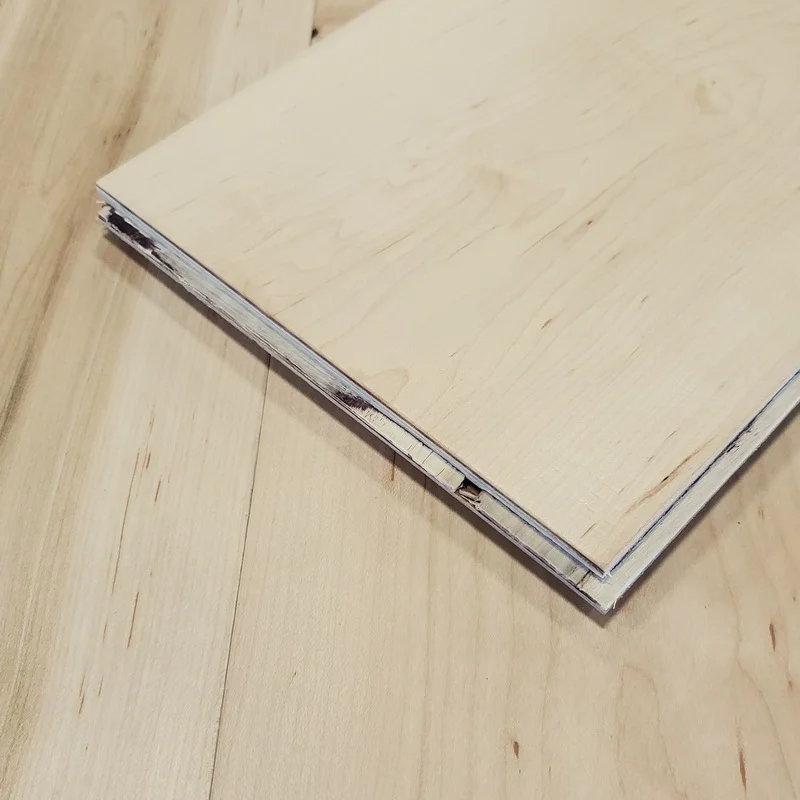
The Anatomy of Engineered Flooring Planks
An engineered plank is a sandwich of high-performance materials:
- The Wear Layer: This is the top surface made of real premium hardwood, such as oak or maple. Its thickness varies by product, and King of Floors carries engineered flooring with wear layers up to 4mm.
- The Core: Beneath the wear layer is a multi-ply core made of high-quality plywood or high-density fibreboard (HDF). Plywood cores are generally preferred for wider planks because they offer superior stability.
- The Backing Layer: A stabilizing bottom veneer that seals the plank and prevents warping.
These layers are bonded together under immense heat and pressure, with the wood grain of each layer running perpendicular to the one above it. This cross-laminate construction is the secret to its strength.
Why Core Stability Matters for BC Homes
Solid hardwood is beautiful, but it acts like a sponge. When the humid air of a Lower Mainland winter hits, solid wood expands. When our dry summer weather arrives, it shrinks. This constant movement leads to cupping, crowning, and unsightly gaps between your floorboards.
Engineered flooring solves this problem. Because the layers run in opposing directions, they restrict the natural movement of the wood. This dimensional stability means you can install engineered planks in areas where solid wood would fail, such as over concrete slabs, in basements, and in kitchens. It is also highly compatible with radiant underfloor heating systems, which are increasingly common in modern BC homes.
If you are looking for a floor that delivers the authentic warmth of real wood without the constant worry of moisture movement, exploring Premium engineered hardwood flooring options is a smart place to start.
Engineered Hardwood vs Laminate Flooring for Your Lifestyle
At King of Floors, we focus strictly on two primary options for hard-surface flooring: engineered hardwood and laminate. Both are excellent choices, but they serve different lifestyles and budgets.

Engineered hardwood is the choice for homeowners who want the unmatched, organic beauty of real timber. No two planks are identical, and the floor will develop a rich character over time. It is an investment that adds long-term value to your property, and because it can be sanded and refinished, it can last for generations.
On the other hand, high-quality laminate flooring is an incredibly practical, cost-effective alternative. Modern European laminates use advanced printing and embossing technologies to mimic the grain and texture of real wood with surprising accuracy.
If you have a busy home with large, active pets, or if you are working with a tighter budget, laminate offers incredible durability and topical water resistance. To see how these options compare visually, you can Explore our laminate flooring selection to find the right fit for your home.
Durability, Lifespan, and the Reality of Scratch Resistance
Let us bust a common sales myth right now: no real wood floor is completely immune to scratches. Wood is a natural, organic material. If you drag a heavy metal appliance across it or let your large dog run wild with untrimmed claws, it will scratch.
However, high-quality engineered flooring is highly scratch-resistant. This resistance comes down to two main factors: the hardness of the wood species itself and the quality of the protective factory finish. Most premium engineered floors are finished with multiple coats of UV-cured polyurethane or aluminum oxide, which acts as a tough shield against everyday wear, grit, and minor scuffs.
Oak and Maple Engineered Hardwood Durability
When selecting your floor, the Janka hardness rating is a helpful tool. This rating measures the force required to embed a small steel ball into the wood, indicating its resistance to dents and wear.
- Oak: Both Red Oak (Janka rating around 1290 lbf) and White Oak (around 1360 lbf) offer an excellent balance of beauty and strength. Oak has a prominent, textured grain pattern that naturally helps hide minor scratches and dents, making it a favourite for active households. If you love timeless style, you can view our selection of Oak engineered floors to see the range of warm and cool tones available.
- Maple: Maple is even harder (around 1450 lbf) with a much smoother, more uniform grain. While it is highly dent-resistant, its clean, minimalist look means that any scratches that do occur may be slightly more visible than they would be on a highly textured oak floor.
Choosing Flooring for Lower Mainland Conditions
Living in regions like Surrey, Langley, or Vancouver means preparing your home for a unique coastal climate. We experience mild, wet winters and warm, dry summers. This seasonal shift causes indoor relative humidity to fluctuate, which is the number-one enemy of solid wood floors.
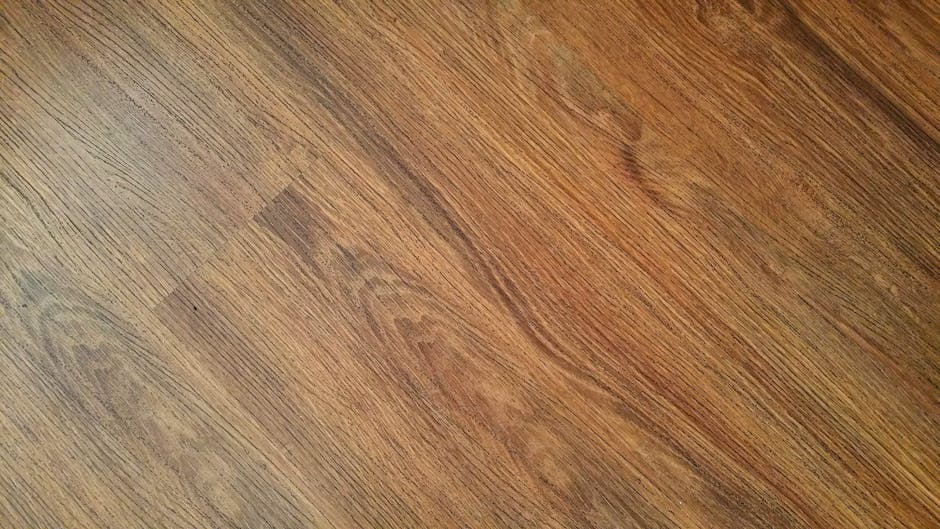
Because engineered planks are structurally designed to resist this seasonal movement, they perform exceptionally well in BC homes. Here is how they handle different spaces:
- Basements: Solid wood cannot be installed below grade because of concrete moisture. Engineered flooring, when paired with a high-quality vapour barrier underlayment, can safely be floated or glued down over concrete slabs.
- Kitchens: Spills happen. While you should never let standing water sit on a wood floor, engineered planks can easily handle the occasional kitchen splash as long as they are wiped up promptly.
- Radiant Heating: The dry heat from in-floor heating can cause solid wood to shrink and crack. The cross-laminated core of engineered wood allows heat to transfer efficiently without damaging the structural integrity of the planks.
FAQ About Engineered Hardwood Flooring in Surrey
Can engineered hardwood be installed in basements?
Yes, engineered flooring is highly stable and approved for below-grade installations. However, you must install a high-quality vapour barrier or premium underlayment over the concrete subfloor. This essential step prevents ground moisture from rising into the wood and causing structural damage over time.
How many times can you sand and refinish engineered hardwood?
This depends entirely on the thickness of the top wear layer. Planks with a thin 2mm wear layer can generally only be lightly buffed. However, premium planks with a 3mm to 4mm wear layer can typically be professionally sanded and refinished up to three times, extending their lifespan.
Is engineered hardwood suitable for homes with pets?
Yes, but you need to set realistic expectations. We recommend choosing a harder wood species like white oak or maple, opting for a wire-brushed texture that hides wear, and keeping your pets’ claws trimmed. Any real wood floor will show some natural character marks over time.
Can you use steam mops on engineered hardwood floors?
No, you should never use steam mops on engineered wood. The combination of intense heat and pressurised moisture can break down the adhesives bonding the wood layers together. This forces water deep into the wood fibres, causing permanent warping. Instead, use a damp, well-wrung microfibre mop.
What is the difference between laminate and engineered wood water resistance?
Premium laminate floors often feature advanced topical water resistance, protecting against spills for hours. Engineered hardwood is real wood and more sensitive to moisture. While it handles humidity changes beautifully, you must clean up standing water or major spills immediately to prevent staining or swelling.
Final Thoughts on Choosing Flooring in Surrey Homes
Choosing the right floor is all about balancing your personal style, budget, and daily lifestyle. There is no single “perfect” floor, only the floor that is perfect for your home.
If you want the unmatched prestige and natural variation of real timber that can be refinished in the future, engineered wood is a fantastic investment. If durability, low maintenance, and budget are your top priorities, a high-quality European laminate will serve you incredibly well.
At King of Floors, we’ll help you navigate these choices with honest, straightforward advice. Make the drive to our Surrey showroom, where you can see these beautiful materials side by side.
Ready to find your next floor? You can browse our engineered flooring sale to see what is currently in stock and ready for your home.