
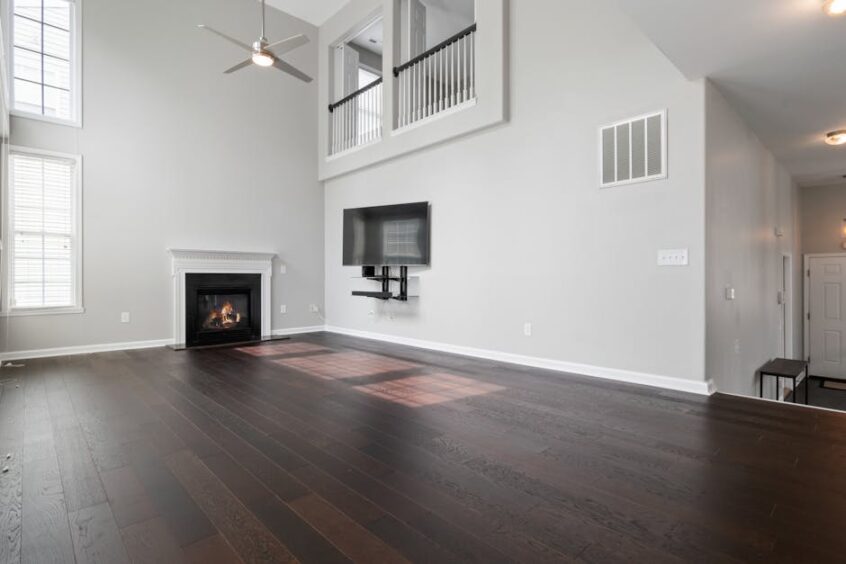
Why High Quality Engineered Wood Flooring Is the Smart Choice for Your Home
High quality engineered wood flooring gives you the warmth and beauty of real hardwood with added structural stability that solid wood simply cannot match. Whether you are renovating a basement suite in Surrey, upgrading a kitchen in the Lower Mainland, or refreshing your main living area, engineered hardwood is built to handle the challenges that come with real Canadian homes.
Here is a quick summary of what makes engineered hardwood a top choice:
- Real wood wear layer: A genuine hardwood surface (typically 2mm to 4mm thick) that looks and feels identical to solid wood
- Multi-ply core: Cross-grained plywood layers resist warping and expansion caused by moisture and humidity
- Versatile installation: Suitable above, on, and below grade, including over concrete slabs and radiant heat systems
- Refinishable: A 4mm wear layer can be sanded and refinished up to two times, extending the floor’s lifespan significantly
- Cost-effective: Generally ranges from around $4 to $10+ CAD per square foot depending on species, wear layer, and core quality
- Certifications to look for: CARB Phase 2 compliance, FSC-certified cores, and FloorScore certification indicate a safer, more sustainable product
The result is a floor that performs better in humidity-prone spaces, installs more flexibly, and still delivers the timeless aesthetic that makes hardwood so desirable in the first place. It is no surprise that engineered hardwood has become one of the most popular flooring choices for homeowners across British Columbia.
I’m Lesley Upton, Inventory Control Manager at King of Floors, and after more than a decade of sourcing high quality engineered wood flooring directly from factories around the world, I have seen what separates a floor that lasts from one that disappoints. In this guide, I will walk you through everything you need to know to make a confident, informed decision.
High quality engineered wood flooring word roundup:
What Defines High Quality Engineered Wood Flooring?
When we talk about high quality engineered wood flooring, we aren’t just talking about a pretty face. While the top layer provides the aesthetic, the “quality” is found in the engineering beneath the surface. At King of Floors, we’ve spent decades educating our neighbours in Whalley, Newton, and Cloverdale on what actually makes a plank “premium.”
A premium engineered flooring product is defined by three main pillars: the thickness of the real wood lamella, the composition of the core, and the safety of the adhesives used. High-quality options utilise FSC-certified cores, ensuring the wood is sourced from responsibly managed forests. Furthermore, they must be CARB Phase 2 compliant. This means the flooring meets strict California Air Resources Board standards for formaldehyde emissions, ensuring your indoor air quality remains healthy for your family and pets.
The Importance of Wear Layer Thickness
The “wear layer” or lamella is the slice of real hardwood on top of the plank. This is what you see, walk on, and touch. In high quality engineered wood flooring, thickness is king.
Budget-friendly options often feature a paper-thin veneer (less than 1mm), which can never be sanded. However, a high-quality plank typically offers a 2mm to 4mm wear layer. A 4mm lamella is particularly desirable because it allows the floor to be lightly re-sanded and refinished up to two times. This effectively gives the floor a lifespan comparable to solid hardwood—often 50 years or more with proper care.
We also look at how that wood is cut. “Sawn-cut” veneers are the hallmark of quality; they are sliced straight off the log, preserving the natural grain patterns and “cathedral” peaking of the wood, unlike “rotary-peeled” veneers which can look like giant sheets of plywood.
| Wear Layer Thickness | Refinishing Potential | Estimated Lifespan |
|---|---|---|
| 1mm – 1.2mm | None (Screen and recoat only) | 15 – 20 Years |
| 2mm | 1 Light Sanding | 30 – 40 Years |
| 4mm | 2 Full Refinishes | 50 – 80 Years |
Multi-Ply Core Stability and Construction
The “engineered” part of the name comes from the core. High-quality planks use a multi-ply construction, usually consisting of 5 to 11 layers of cross-grained plywood. Birch is a preferred substrate because of its density and resistance to moisture.
By stacking these layers with the grain running in alternating directions, the layers “lock” each other in place. If the top layer tries to expand due to a humid Surrey summer, the layer below it pulls in the opposite direction. This prevents the warping, cupping, and gapping common in solid wood. For those looking for technical specifics on how these layers interact during setup, you can review these W LUXURY GENUINE HARDWOOD INSTALLATION INSTRUCTIONS.
The Advantages of Choosing Engineered Hardwood for Your Surrey Home
Living in the Lower Mainland means dealing with a specific set of environmental factors. From the damp winters in Crescent Beach to the humid summers in Guildford, our homes go through a lot. Choosing high quality engineered wood flooring offers several pros and cons, but for BC residents, the pros heavily outweigh the cons.
The primary advantage is dimensional stability. Because of that cross-ply core, engineered wood is far more resistant to moisture and temperature fluctuations. It is also the only real wood option compatible with radiant heat systems, which are increasingly popular in new builds across South Surrey and Grandview Heights.
The Benefits of High Quality Engineered Wood Flooring in Humid Climates
Humidity is the enemy of wood. In a high-humidity environment, solid wood planks swell and can “cup” (the edges become higher than the centre). In dry winters, they shrink, leaving unsightly gaps.
High quality engineered wood flooring is designed to mitigate this. It is the ideal choice for “below-grade” installations—meaning your basement. Whether you’re converting a garage into a legal suite or finishing a basement in Fleetwood, engineered hardwood provides the luxury of real wood over concrete slabs where solid wood would fail. To see these benefits in action, you can WATCH VIDEO W Luxury Genuine Engineered Hardwood Series to understand how modern performance meets natural beauty.
Selecting the Best Species, Textures, and Finishes
Choosing the right look is the fun part! When browsing our 85,000 sq ft warehouse, you’ll find that European Oak is currently the most popular choice for high quality engineered wood flooring. It offers a neutral palette that fits everything from “modern farmhouse” to “minimalist chic.”
Other premium species include:
- Walnut: Known for its rich, dark tones and elegant grain.
- Hickory: One of the hardest North American woods, perfect for high-traffic areas in active homes.
- Maple: Offers a cleaner, more uniform look with less grain variation.
Premium Finishes for Daily Durability
The finish is your floor’s suit of armour. High-quality products often feature UV-cured urethane finishes, sometimes enhanced with additives like aluminium oxide for superior scratch protection.
Texture also plays a role in durability. A wire-brushed texture is fantastic for families with pets or children in Newton or Elgin Chantrell. By brushing away the softer springwood, the harder grain is exposed, making the floor more slip-resistant and much better at hiding the inevitable small scratches of daily life. Hand-scraped finishes offer a more rustic, artisan feel that adds instant character to a room.

Installation and Care: Maximising Your Investment
Even the highest quality floor will fail if it isn’t installed correctly. High quality engineered wood flooring offers more versatility than any other wood product. Depending on your subfloor and the specific product, you can use:
- Glue-Down: The most stable method, common over concrete slabs. It provides a “solid” feel underfoot and reduces sound transmission.
- Floating: The planks are clicked or glued to each other but not the subfloor. This is a great DIY-friendly option and allows the floor to expand and contract as a single unit.
- Nail/Staple-Down: Used over plywood subfloors, similar to traditional hardwood installation.
Before you start, ensure your subfloor is flat, dry, and clean. For a step-by-step breakdown of the process, refer to our engineered-hardwood-ultimate-guide.
How to Maintain High Quality Engineered Wood Flooring for Decades
Maintenance for engineered wood is surprisingly simple, but consistency is key. We always recommend our customers in White Rock and Ocean Park keep a few “golden rules” in mind:
- Control Humidity: Aim to keep your home’s relative humidity between 35% and 55%. If it gets too dry in the winter, use a humidifier to prevent the wood from becoming brittle.
- Use the Right Tools: Use a soft-bristle broom or a vacuum with the beater bar turned OFF.
- Damp Mop Only: Never use a dripping wet mop. Use a microfibre mop and a pH-neutral cleaner specifically designed for hardwood.
- Protect the Surface: Use felt pads under all furniture legs and place mats at exterior entrances to catch grit and moisture.
For a detailed checklist, you can download the W ENGINEERED WOOD – CARE & MAINTENANCE guide.
Frequently Asked Questions
Can high quality engineered wood flooring be refinished?
Yes, provided the wear layer is thick enough. As a rule of thumb, you need at least a 2mm wear layer for a light professional sanding. Planks with a 4mm wear layer can typically be fully refinished twice. This is a major advantage of high quality engineered wood flooring over cheaper “commodity” products that must be replaced if they become scratched or stained.
Is engineered hardwood suitable for kitchens and basements?
Absolutely. In fact, it is often the best real wood choice for these areas. Its structural stability makes it resistant to the minor moisture fluctuations found in kitchens. In basements, it can be installed directly over concrete (with an appropriate moisture barrier), making it a much warmer and more inviting option than laminate.
How much does premium engineered hardwood cost per square foot?
In the Canadian market, you can expect high quality engineered wood flooring to range from $4.00 to $10.00 CAD per square foot for the material. Factors that influence this price include the wood species (Walnut is more expensive than Oak), the width of the planks (wider is usually pricier), and the thickness of the wear layer. While the upfront cost is higher than laminate, the long-term ROI is significant, as real wood floors consistently increase a home’s resale value in the Surrey real estate market. Further discounts may be available, please call for details.
Find the Perfect Engineered Wood Floors at King of Floors
At King of Floors, we believe that your home deserves a foundation that is as durable as it is beautiful. Choosing high quality engineered wood flooring is an investment in your property’s future and your family’s comfort. Since 1984, our family-owned business has been helping residents across the City Centre, Guildford, and beyond find the perfect floors at the best possible prices.
Because we are direct importers, we cut out the middleman, allowing us to stock premium products in our massive 85,000 sq ft Surrey warehouse. Whether you need a wide-plank European Oak for a grand living room or a tough Hickory for a busy hallway, we have it in stock and ready to go. Plus, with our 90-day return policy, you can shop with total peace of mind.
Ready to transform your space? Visit us in Surrey to see our samples in person, or explore our full collection of high quality engineered wood flooring online today!