
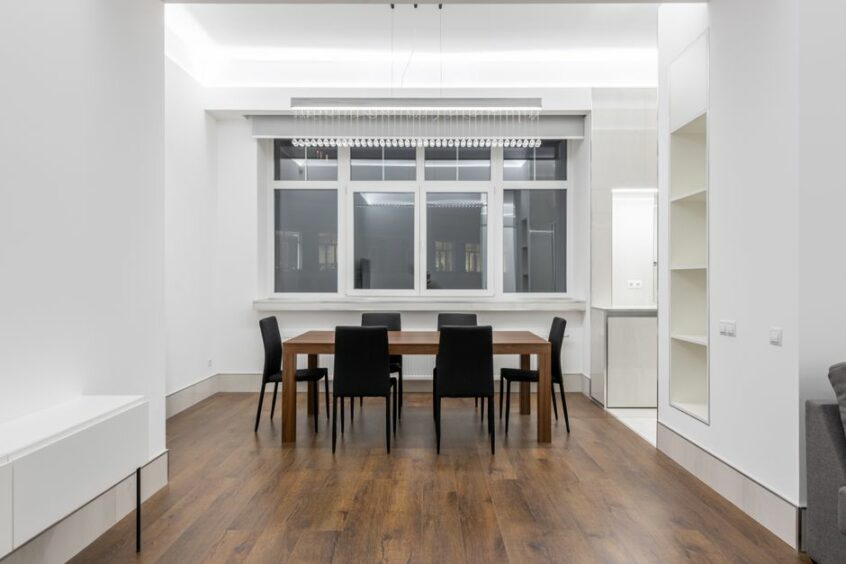
What Is Residential Laminate Flooring and Why Does It Matter for Your Home?
Residential laminate flooring has come a long way from the flat, plasticky planks of the 1990s. Today’s options deliver realistic wood visuals, tough scratch-resistant surfaces, and moisture-resistant locking systems that genuinely hold up to the chaos of everyday life.
Your floors take more daily punishment than almost any other surface in your home, from muddy boots and pet claws to spilled coffee and dragged furniture. Getting the right floor means finding something that handles all of that without making you feel like you’re living in a showroom you’re afraid to use.
Modern laminate is one of the most versatile residential flooring options available right now, and it is especially popular with families, pet owners, and anyone renovating on a realistic budget.
Kitchens need moisture resistance and easy cleanup. Living rooms need something that looks great and handles foot traffic. Bedrooms need comfort and quiet. The good news is that laminate can tick all three boxes, depending on the product you choose.
Many homeowners start their search by browsing modern laminate collections that combine realistic wood visuals with improved scratch and moisture resistance, and the range of options available in 2026 is genuinely impressive.
Quick answer: What is residential laminate flooring?
Residential laminate flooring is a multi-layer synthetic flooring product designed to replicate the look of hardwood, stone, or tile at a lower cost. Here is how it breaks down:
| Feature | Detail |
|---|---|
| Construction | Four layers: backer, high-density fibreboard core, photographic design layer, protective wear layer |
| Typical cost | Starting from around CAD $1 to $3 per sq ft for materials |
| Lifespan | 15 to 25 years with proper care |
| Best for | Kitchens, living rooms, bedrooms, hallways |
| Durability rating | AC3 (heavy residential) to AC5 (heavy commercial) |
| Installation | Floating click-lock system, no glue or nails required |
| Water resistance | Water-resistant standard; waterproof options available |
I’m Lesley Upton, Inventory Control Manager at King of Floors, and after more than 15 years of sourcing and recommending residential laminate flooring from factories around the world, I can tell you that choosing the right product for the right room genuinely makes all the difference. Let me walk you through everything you need to know.
What Residential Flooring Needs to Handle in Real Homes
When we talk about the best residential flooring for home use, we have to talk about the “stress test” your house goes through every single day. In the Lower Mainland, we aren’t just dealing with indoor dust; we are dealing with wet paws from a rainy walk in Stanley Park and grit tracked in from the driveway.

In real homes, flooring needs to manage:
- Heavy Foot Traffic: Hallways and entryways are high-speed lanes for your family.
- Pet Activity: Claws can act like little needles on softer surfaces.
- Accidental Spills: Whether it is a dropped glass of juice or a leaky dishwasher, moisture is the enemy of many floors.
- Furniture Movement: Dining chairs sliding back and forth can quickly dull a finish if it isn’t tough enough.
- Cleaning Routines: You want a floor that looks clean after a quick sweep, not one that requires a four-step polishing process every Saturday.
Why Laminate Works Well for Residential Spaces
We often recommend residential laminate flooring because it offers a superior balance of price and performance. It is significantly more scratch-resistant than natural hardwood, which can dent if you so much as look at it wrong. It also provides the look of expensive timber at a fraction of the cost, usually ranging from $1 to $3 per sq ft for the materials.
Laminate is a “floating floor,” meaning it isn’t nailed down. This makes it a favorite for DIYers in Surrey and Langley who want to save on labor costs. Plus, because it uses a photographic layer, you get consistent color and grain patterns that are hard to find in natural wood.
European Laminate Quality Standards
Not all laminate is created equal. At King of Floors, we specialize in European-made products because their manufacturing standards are incredibly high. These floors often feature better locking systems and more realistic textures.
We carry a massive selection of trusted European brands, including Kronoswiss, KronoPol and Artureon. These manufacturers use precision engineering to ensure the planks click together tightly, which is vital for preventing moisture from seeping into the core.
Room-Specific Guides for Kitchens, Living Rooms, and Bedrooms
Every room has a different “personality” and different requirements. You wouldn’t wear a tuxedo to a mud run, and you shouldn’t put a delicate, non-water-resistant floor in a kitchen.

What Kitchen Flooring Needs to Handle
The kitchen is the heart of the home, but it is also a splash zone. You need a floor that can handle dropped cookware, food stains, and the occasional “oops” with the kitchen sink. For this area, we strongly suggest a waterproof laminate flooring guide to find options with treated edges.
Kitchen Best Practices:
- Choose AC4 or AC5: These ratings ensure the surface can handle heavy traffic.
- Matte Finishes: These are excellent at hiding footprints and water spots.
- Wipe Spills Quickly: Even with water-resistant floors, don’t let puddles sit for hours.
- Use Felt Pads: Protect your floor from heavy appliances and kitchen chairs.
What Works Best in Living Rooms
In the living room, aesthetics take center stage. This is where you want wider planks and realistic textures like “Embossed in Register” (EIR), where the surface texture perfectly matches the wood grain image. Thicker boards (10mm to 12mm) are great here because they feel more substantial underfoot and provide better sound reduction.
Bedroom Flooring Priorities
Bedrooms are low-traffic zones where comfort is king. You can often get away with an AC3 rating here. We recommend choosing lighter natural tones to make the space feel airy and restful. A bedroom laminate flooring guide will tell you that the secret to a great bedroom floor isn’t just the plank—it’s the underlayment. A high-quality underlayment makes the floor quieter and warmer for those cold Metro Vancouver mornings.
Lifestyle Considerations for Families and Pet Owners
If your home sounds like a stampede at 4:00 PM when the kids get home, your flooring needs to be tough.
Laminate Flooring for Homes With Kids
Kids don’t just walk; they run, slide, and drop heavy plastic toys. For high-energy households, look for durable AC4 and AC5 ratings. These floors have a thicker wear layer that resists the “micro-scratches” that can dull a floor over time. Textured finishes are also a win because they provide extra grip for little feet in socks.
Laminate Flooring for Pet Owners
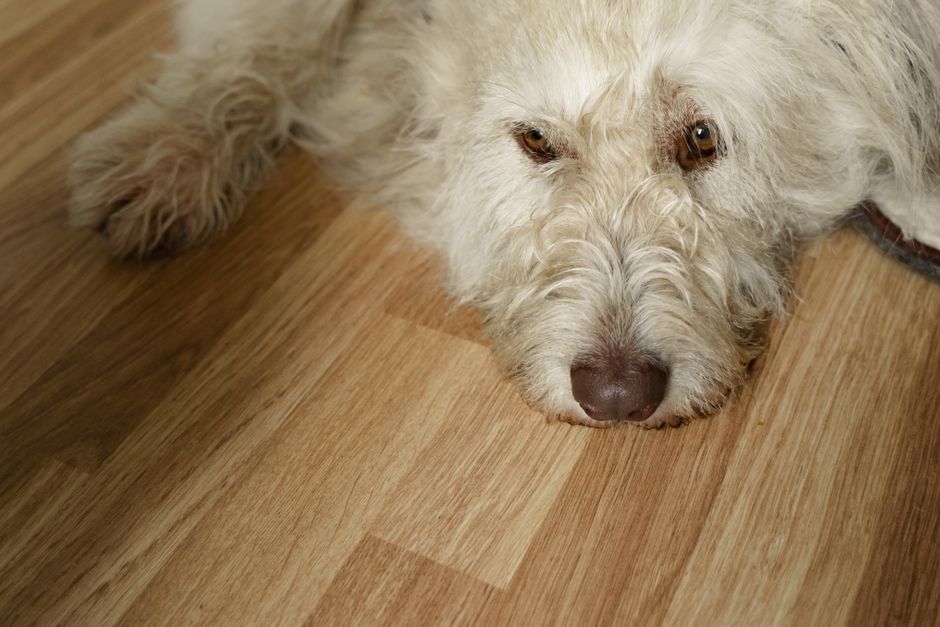
Pets bring joy, but they also bring claws and sheds. Laminate is generally better for pets than hardwood because it is much harder to scratch. However, traction can be an issue. Choosing a floor with a matte or textured finish helps Fido keep his footing. For more tips, check out the ultimate guide to laminate flooring for pets.
Technical Features to Compare Before Buying
Before you pull the trigger on a purchase, you need to understand the “spec sheet.”
What AC rating is best for residential laminate flooring?
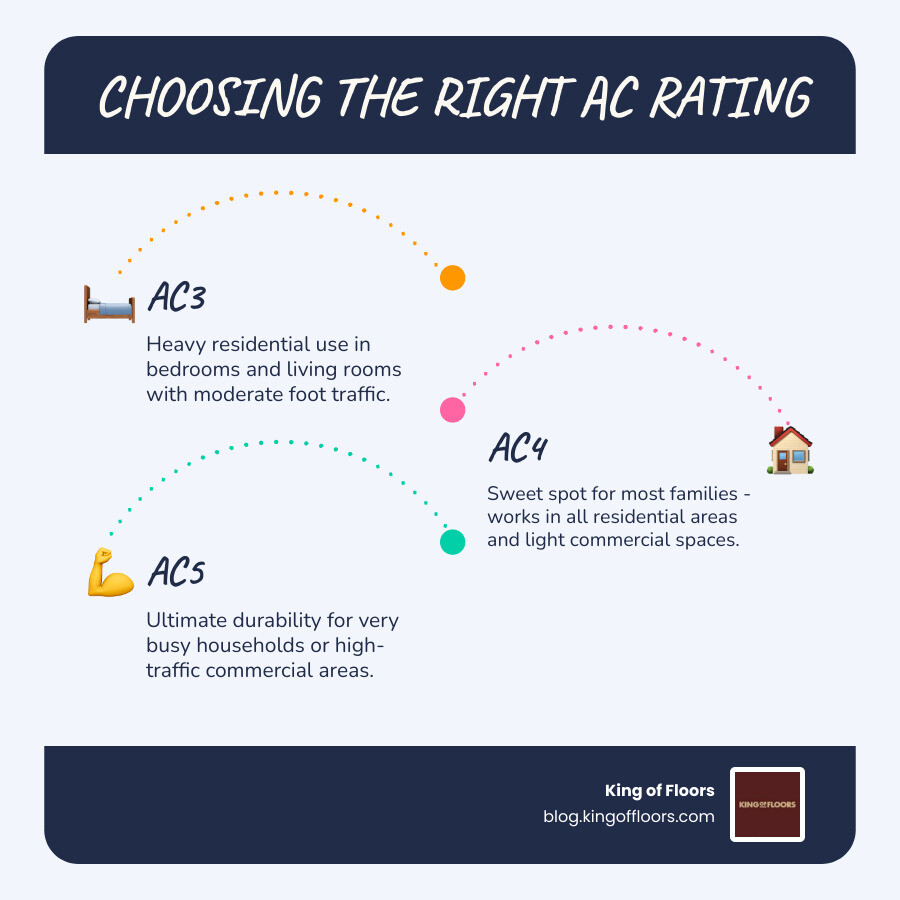
The Abrasion Class (AC) rating tells you how much wear the floor can take.
- AC3: Perfect for heavy residential use (bedrooms, living rooms).
- AC4: The “Sweet Spot.” Suitable for all residential areas and light commercial use.
- AC5: The “Tank.” Best for very busy households or commercial spaces.
How long does residential laminate flooring last?
With proper care, you can expect your residential laminate flooring to last between 15 and 25 years. The longevity depends heavily on:
- Installation Quality: Ensuring the subfloor is level.
- Maintenance: Avoiding excessive water and using the right cleaners.
- Traffic: An AC5 floor in a guest room will last forever, while an AC3 in a mudroom might wear out faster.
Underlayment and Subfloor Preparation
Never skimp on underlayment. It acts as a moisture barrier, a sound dampener, and a cushion. If you are installing over concrete in a basement in Cloverdale or Whalley, a moisture barrier is non-negotiable to prevent the planks from warping.
Common Mistakes to Avoid
- Buying on Color Alone: A floor might look beautiful, but if it’s an AC2 rating in a kitchen, you’ll regret it in two years.
- Poor Subfloor Prep: If your subfloor isn’t flat, your click-lock joints will eventually creak or break.
- Steam Mopping: Most laminate manufacturers explicitly forbid steam mops. The heat and moisture can force water into the joints, causing “peaking.”
- Ignoring Expansion Gaps: Laminate expands and contracts with the humidity in the Lower Mainland. You must leave a gap around the perimeter of the room.
Frequently Asked Questions About Residential Laminate Flooring
Is laminate flooring good for homes with pets?
Yes! It is one of the best options due to its high scratch resistance. Just ensure you choose a textured finish for better traction.
What laminate flooring is best for kitchens?
Look for “Waterproof” or “Water-Resistant” labels with an AC4 rating. Our European collections, such as those from Kronoswiss or Artureon, feature tight locking systems and treated edges that are ideal for kitchen environments.
Is laminate flooring waterproof?
Standard laminate is water-resistant. However, modern “waterproof” laminate uses special resins and tight locking systems to protect the core for a set amount of time (usually 24 to 72 hours).
Does laminate flooring scratch easily?
No, especially compared to hardwood. However, it is not “scratch-proof.” Dragging heavy metal furniture can still cause damage.
What colour laminate flooring hides dirt best?
Medium oak tones with a matte finish are the best at concealing dust, pet hair, and minor debris.
Can laminate flooring increase home value?
Absolutely. A consistent, modern floor throughout the home is a major selling point for buyers in the Metro Vancouver real estate market.
How do I clean laminate floors without streaking?
Use a damp (not dripping) microfiber mop and a dedicated laminate cleaner. Avoid soaps or waxes, which leave a dull film.
Do I need a moisture barrier for laminate?
If you are installing over concrete or in a basement, yes. Many high-end European laminates come with an attached pad, but a 6-mil poly film is often still required over concrete.
Choosing the Right Residential Laminate Flooring
Choosing the right residential laminate flooring is about balancing your “dream look” with your “real life.” Whether you are renovating a kitchen in South Surrey or updating bedrooms in a Langley townhouse, there is a laminate product designed for your specific needs.
By focusing on AC ratings, moisture resistance, and high-quality European manufacturing, you can ensure your floors look as good in ten years as they do the day they are installed.

Explore Residential Laminate Flooring Collections
- Browse best sale laminate flooring options for value-focused residential projects.
- Shop Kronoswiss European laminate flooring for refined wood visuals and reliable performance.
- Shop KronoPol European laminate flooring for durable everyday residential use.
- Shop Artureon European laminate flooring for modern interior styles.
Visit our showroom in Surrey to compare textures, tones, and plank sizes in person.