
Is Hardwood Flooring in Kitchens a Smart Choice?
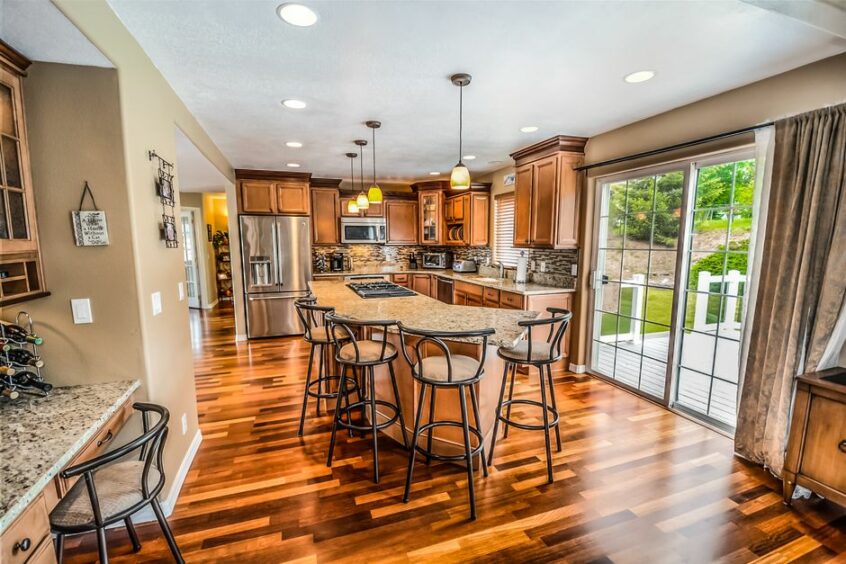
Hardwood flooring in kitchens can absolutely work, and work beautifully. But it rewards homeowners who go in with clear expectations, not those hoping for a zero-effort surface.
Here is a quick summary to answer the most common questions upfront:
| Question | Short Answer |
|---|---|
| Is hardwood suitable for kitchens? | Yes, with the right species, finish, and maintenance habits |
| Engineered or solid hardwood for kitchens? | Engineered hardwood is the better choice for most homes |
| Best species for kitchens? | White oak, hard maple, and hickory |
| Biggest risk? | Standing water and undetected appliance leaks, not everyday spills |
| Does it hurt resale value? | No. Continuous hardwood into the kitchen is generally seen as a premium feature |
| Best alternative? | High-performance European laminate with a strong AC rating |
Hardwood brings genuine warmth, design continuity, and comfort underfoot that is genuinely hard to replicate. In many Lower Mainland homes, it creates that seamless flow from the living area straight through to the kitchen that makes a space feel cohesive and considered. The trade-off is honest: wood is not waterproof, it can scratch, and it does ask something of you in return. Wipe spills promptly, keep humidity stable between 35 and 55 per cent, and stay on top of the finish, and your kitchen floor will look better with age rather than worse.
I’m Lesley Upton, Inventory Control Manager at King of Floors in Surrey, BC, and over my 15-plus years helping customers choose the right floors, hardwood flooring in kitchens is one of the questions I get asked most. I have seen it installed beautifully and I have seen it go wrong, and the difference almost always comes down to product choice and realistic expectations, not the wood itself.
When you are planning a kitchen renovation in 2026, the flooring decision often comes down to a battle between emotional appeal and practical panic. We all want that magazine-worthy look, but we also worry about dropped pots, spilled spaghetti sauce, and dishwasher disasters.
Let us look at why so many homeowners in Surrey and the wider Lower Mainland choose real wood for their kitchens, alongside the very real challenges they must prepare for.
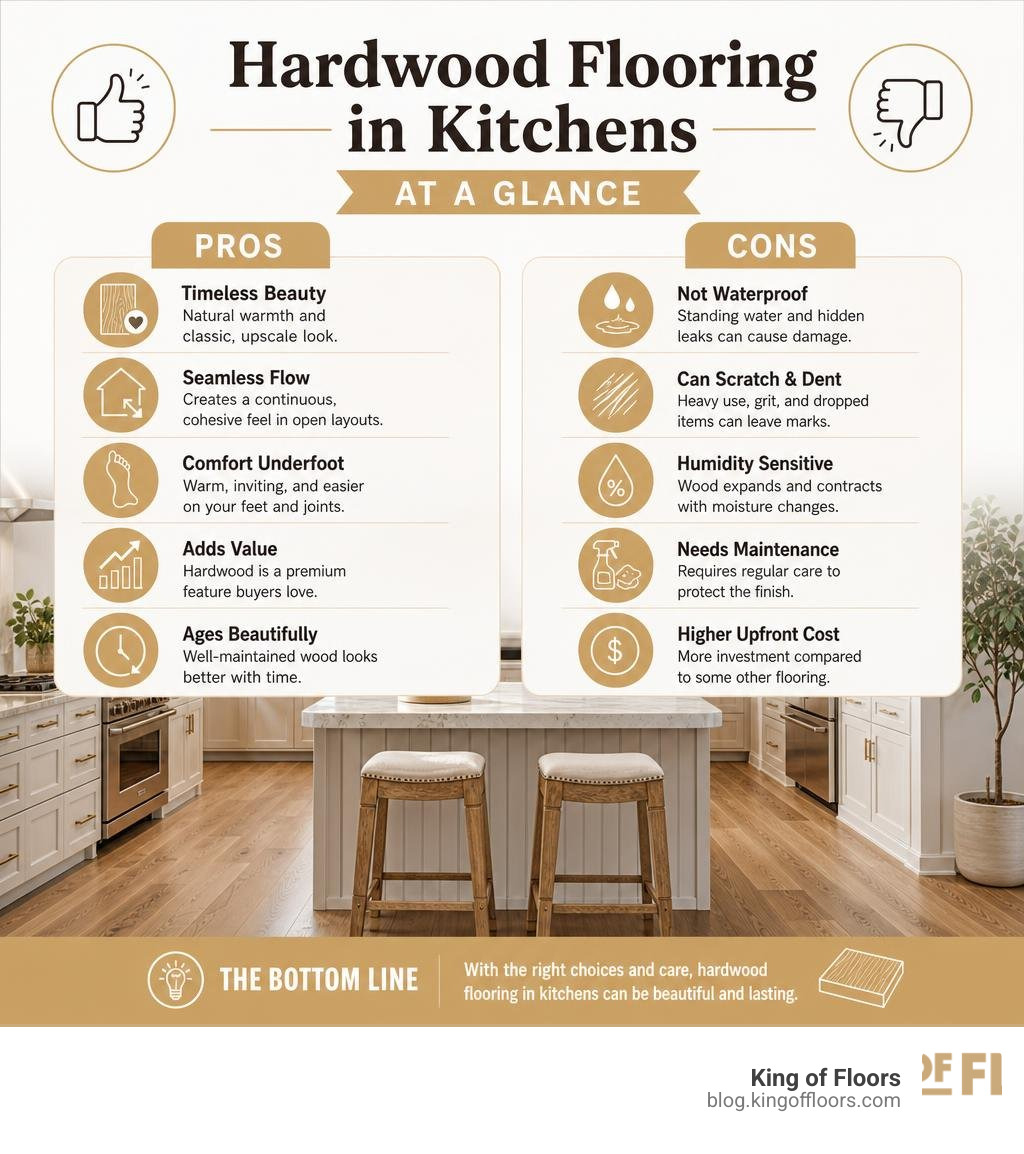
First, the benefits are undeniable. Wood flooring provides a level of visual warmth that cold, hard surfaces simply cannot match. If you have an open-concept home where the kitchen flows directly into the dining and living spaces, running the same flooring throughout makes your home feel much larger and more cohesive.
There is also the physical comfort to consider. Kitchens are high-traffic workspaces where you spend hours standing while prepping meals, washing dishes, and entertaining. Wood is naturally more forgiving than stone-hard alternatives, meaning less joint fatigue for your knees, hips, and back. If you drop a favourite ceramic mug on a wood floor, there is a decent chance it might survive. On a harder surface, it is highly likely to shatter into a million pieces.

The trade-off, of course, is that wood is a natural, porous material. It reacts to its environment. Liquid spills left unattended can seep between the joints, leading to swelling, cupping, or staining. Dropped knives can leave permanent battle scars, and sliding heavy barstools can leave scratches.
However, we believe that these risks are often exaggerated. Hardwood is highly durable if you choose the right product and commit to a basic level of mindful maintenance. It is not about keeping your floor in a sterile, showroom-perfect state. It is about understanding how wood wears and letting it develop a beautiful, lived-in character over the decades.
Engineered Hardwood vs. Solid Hardwood for Kitchen Use
If you have decided that you want the beauty of real timber underfoot, the next major decision is choosing between solid hardwood and engineered hardwood. While solid wood has a historic charm, we almost always recommend engineered hardwood for kitchen spaces, especially given our unique climate in the Lower Mainland.
Solid hardwood is milled from a single, thick piece of timber. Because it is solid wood all the way through, it can be sanded down and completely refinished multiple times over its lifespan. However, because it is a single piece of organic material, it behaves like a sponge. When humidity rises, solid wood expands across its width. When the air dries out, it contracts.
In a kitchen, where you have steam from boiling pots, heat from the oven, and water splashes from the sink, these humidity swings are localized and frequent. Over time, this constant movement can lead to gaps between the planks or cupping, where the edges of the boards rise higher than the center.
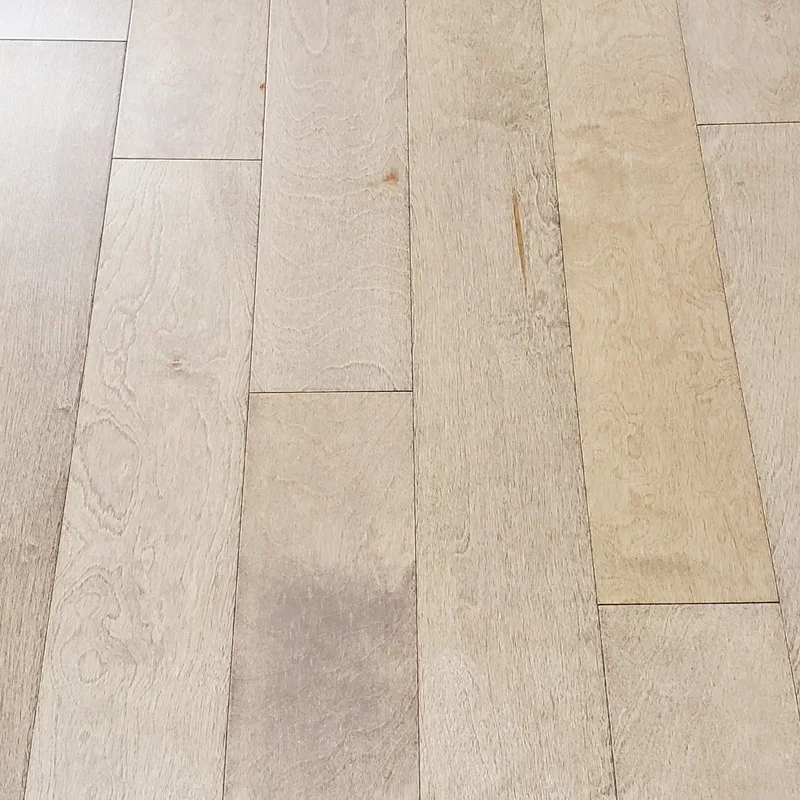
Engineered hardwood is designed specifically to solve this problem. It features a top wear layer of genuine hardwood (such as oak or maple) bonded to a multi-layer plywood or high-density core. These underlying layers are stacked in alternating directions (cross-ply construction).
When moisture or temperature changes try to make the wood expand, the layers pull against each other, neutralizing the movement. This gives engineered hardwood exceptional dimensional stability. It is far less likely to warp, cup, or gap when exposed to the daily realities of kitchen life.
For homes in Surrey, White Rock, and Langley, this stability is crucial. Our coastal climate brings damp, humid winters and drier summers, which can play havoc with solid wood. Engineered hardwood handles these seasonal transitions beautifully, making it the superior structural choice for the heart of your home.
Choosing Engineered Hardwood Flooring in Kitchens
When choosing engineered hardwood for your kitchen, the thickness of the top wear layer is the most important specification to look for. A quality engineered floor with a wear layer of 3mm or thicker can still be professionally sanded and refinished once or twice in the future if it ever shows heavy wear. This gives you the long-term longevity of solid wood with the structural peace of mind that only engineered construction can provide.
To explore our curated selection of species and styles built for modern living, browse our full range of engineered flooring options online or visit us in Surrey to see the cross-ply construction up close.
Engineered Hardwood Best Sellers at King of Floors
If you want the seamless design and comfort of hardwood flooring in kitchens, engineered hardwood is the category we recommend looking at first. It gives you a real wood surface with better stability than solid hardwood, which makes it a smarter fit for busy kitchen spaces and Lower Mainland humidity changes.
King of Floors carries one of the largest selections of in-stock engineered floors in the Lower Mainland. Although we have one showroom and warehouse location, we are absolutely worth travelling to because we import directly and focus on strong value, reliable quality, and ready-to-go inventory. Before buying engineered hardwood anywhere else, it is worth visiting our massive Surrey warehouse and showroom to compare products in person.
Here are four current King of Floors engineered hardwood best sellers to consider for a kitchen project:
| KOF Best Seller | Current Price | Regular Price | Why it works well in kitchens |
|---|---|---|---|
| 190mm Astoria Maple Distressed Engineered T&G | $5.59/sqft. | $6.59/sqft. | A distressed maple look helps disguise everyday scuffs, chair movement, and family wear. |
| 190mm Tofino Maple Distressed Engineered T&G | $5.79/sqft. | $6.59/sqft. | Wide 190mm planks create a clean, open flow between the kitchen, dining, and living areas. |
| 190mm Natural Maple Distressed Engineered T&G | $5.89/sqft. | $6.59/sqft. | Natural maple brings a bright, versatile wood tone that suits modern and traditional kitchens. |
| 189mm Chalet Blanc Oak Brushed Engineered T&G | $5.99/sqft. | $6.49/sqft. | A brushed oak surface adds texture, helping minor marks blend into the natural grain. |
For kitchen use, pay close attention to surface texture as well as colour. Distressed, brushed, wire-brushed, and low-sheen finishes are more forgiving than smooth, glossy floors because they do not highlight every footprint, water spot, or fine scratch. That makes these best-selling engineered hardwood options especially practical for homeowners who want real wood beauty without a high-maintenance, showroom-perfect look.
Practical Maintenance and Moisture Management
We want to be entirely honest with you: if you choose real wood for your kitchen, you must change your cleaning habits slightly. You cannot treat a wood floor like ceramic tile.
The single most important rule of kitchen hardwood maintenance is the ten-minute rule. Occasional spills, splashes from the sink, or ice cubes dropped from the fridge door are not going to ruin your floor if they are wiped up promptly. It is standing water left to sit for hours (or worse, days) that causes serious damage.
To protect your investment and keep your kitchen looking beautiful, we recommend adopting these simple, proactive habits:
- Place Strategic Mats: Use breathable, non-rubber-backed mats in high-splash zones, specifically in front of the kitchen sink, the dishwasher, and the stove. Avoid solid rubber or vinyl backings, which can trap moisture underneath and discolour the wood.
- Ditch the Wet Mop: Never, ever use a soaking wet mop or a steam mop on real wood. Steam mops force moisture deep into the wood joints under pressure, which can destroy the finish and cause the wood to swell. Instead, use a microfiber dust mop for daily cleaning and a barely damp mop with a pH-neutral wood cleaner for deeper cleans.
- Monitor Your Humidity: Wood thrives in the same conditions that humans do. We recommend keeping your home’s relative humidity between 35 and 55 per cent year-round. In the Lower Mainland, this means using a dehumidifier or running your range hood fan while cooking during our damp winters, and potentially using a humidifier during dry summer stretches. A simple, inexpensive digital hygrometer kept in the kitchen will help you monitor this easily.
- Protect Against Scrapes: Apply heavy-duty felt pads to the legs of all kitchen chairs and barstools. Clean or replace these pads every six months, as they can trap grit and act like sandpaper against your floor’s finish.
By understanding how wood reacts to moisture and taking these simple precautions, you can enjoy the incredible comfort of real timber without stress.
For more expert tips on why engineered options are so successful in modern culinary spaces, read our article on Why Engineered Wood is the Secret Ingredient for Modern Kitchens.
The Best Alternative: High-Performance European Laminate
While we love engineered hardwood, we also know that real wood is not the right fit for every home. If you have a busy household with large, active pets, young kids who treat the kitchen like a splash park, or if you simply want a floor that requires absolutely zero worry, there is a brilliant alternative: high-performance European laminate.
Laminate flooring has come an incredibly long way. Today’s premium European laminates feature stunning, high-definition wood-grain imagery and deep, registered-in-embossing textures that make them look and feel remarkably like real timber.
For a kitchen, laminate offers several massive practical advantages:
- Exceptional Scratch Resistance: Laminate is finished with a tough wear layer infused with aluminum oxide. It is rated using the AC (Abrasion Class) system. For a busy kitchen, we recommend an AC5 rating, which is durable enough to withstand heavy residential and even commercial traffic. It resists scratches from pet claws, dragged chairs, and dropped utensils far better than real wood.
- Water-Resistant Technology: Modern European laminates are engineered with highly water-resistant core boards and tight, locking joint systems. These systems prevent water from penetrating between the planks for up to 24 or even 72 hours, giving you plenty of time to clean up spills without any risk of warping or swelling.
- Incredible Cost-Effectiveness: Real engineered hardwood is a premium investment, typically costing between $7.00 and $15.00 CAD per square foot for materials alone, plus installation. High-performance European laminate offers a highly durable, beautiful look for a fraction of that cost, typically ranging from $3.00 to $6.00 CAD per square foot. This offers an incredible return on investment for budget-conscious renovations.
At King of Floors, our unique specialty is offering the largest selection of in-stock European laminate flooring in BC, imported directly from leading manufacturers in Switzerland, Germany, and Poland. If you want the look of wood but the ultimate peace of mind, explore our laminate flooring collection to find the perfect match for your busy kitchen.
Frequently Asked Questions about Kitchen Wood Floors
Does wood flooring in the kitchen hurt resale value?
No, continuous flooring throughout the main level is highly desirable in 2026. Running the same engineered hardwood from the living room straight into the kitchen makes the entire home feel larger, more upscale, and cohesive, which increases overall home appeal and resale value.
How do you handle transitions around kitchen islands and cabinets?
We recommend installing engineered hardwood before cabinets and islands are put in place. This allows the flooring to run continuously under the bases for a clean look. Ensure your installer leaves a proper expansion gap around the perimeter, which is hidden by baseboards.
When should you avoid wood flooring in the kitchen?
Avoid real wood in unsupervised rental properties where tenants may not clean spills, or in households with high-moisture lifestyles. If you prefer cleaning with heavy pools of water or have active plumbing concerns, high-performance laminate is a much safer choice.
Hardwood Flooring in Kitchens: Final Advice and Next Steps
At the end of the day, choosing hardwood flooring in kitchens is not a decision about what is objectively “best” on paper. It is about what is right for your home, your family, and your daily lifestyle in 2026. If you value seamless design, natural beauty, and warm comfort underfoot, and you do not mind wiping up spills as they happen, engineered hardwood is a magnificent choice that will elevate your home for decades.
If you prefer a completely hands-off, durable surface that can handle the chaotic energy of a busy, spill-prone family home on a budget, then a premium European laminate is an incredibly smart, beautiful alternative.
At King of Floors, we believe in giving you honest, realistic advice based on how you actually live. Our showroom in Surrey is a destination worth travelling for, serving homeowners across Vancouver, Langley, White Rock, and the entire Lower Mainland with the largest selection of high-quality flooring in stock.
Ready to see these beautiful options in person and get friendly, expert advice for your kitchen project?
- Browse engineered hardwood flooring to compare real wood options that bring seamless design and comfort into kitchens.
- Explore laminate flooring alternatives if you want the wood-look style with extra scratch resistance and low-maintenance peace of mind.
- Contact the Surrey showroom to ask questions, get product guidance, or plan your kitchen flooring project with the King of Floors team.