
Understanding Engineered Wood Construction
Engineered wood kitchen floors are a top choice for BC kitchens, blending real timber beauty with the moisture stability busy households need.
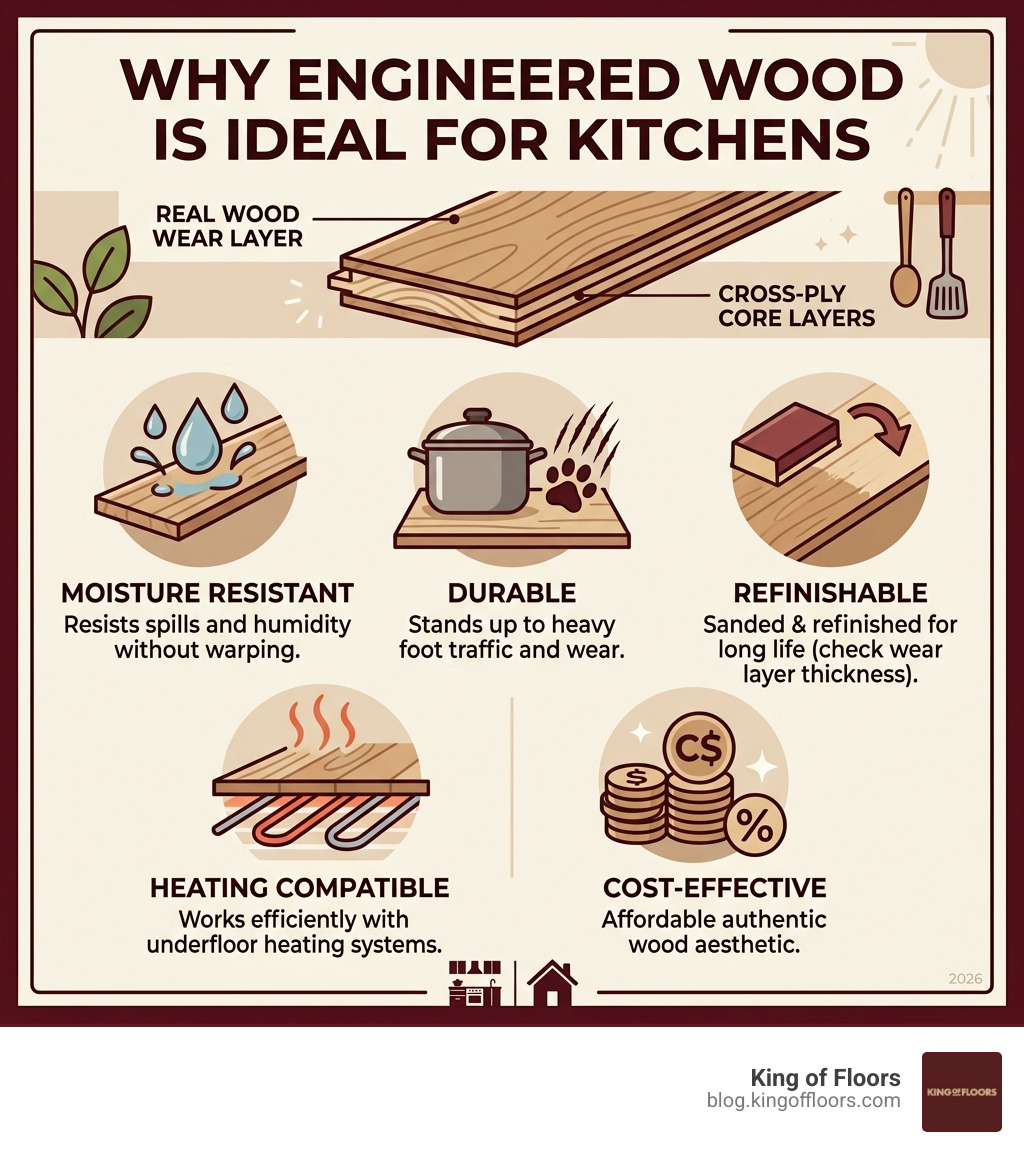
Here is why engineered wood works so well:
- Moisture resistant: Resists warping from spills and humidity better than solid hardwood.
- Durable: Hard species like oak and hickory stand up to heavy traffic and pets.
- Radiant heat compatible: Works perfectly with underfloor heating systems.
- Refinishable: Wear layers of 3mm+ can be sanded to extend lifespan.
- Real wood aesthetics: Genuine timber character increases home resale value.
- Flexible installation: Can be floated, glued, or nailed over various subfloors.
- Cost-effective: Quality options range from $4 to $10 CAD per square foot.
The kitchen is your home’s hardest-working room. From Sunday dinners to morning chaos, your floor takes a beating. Traditional hardwood often struggles with the Lower Mainland’s year-round humidity and rain.
Engineered wood changes that. It offers the warmth of real timber without the vulnerability of solid planks. I’m Lesley Upton, Inventory Control Manager at King of Floors. With 15 years helping BC homeowners, I highly recommend these floors.
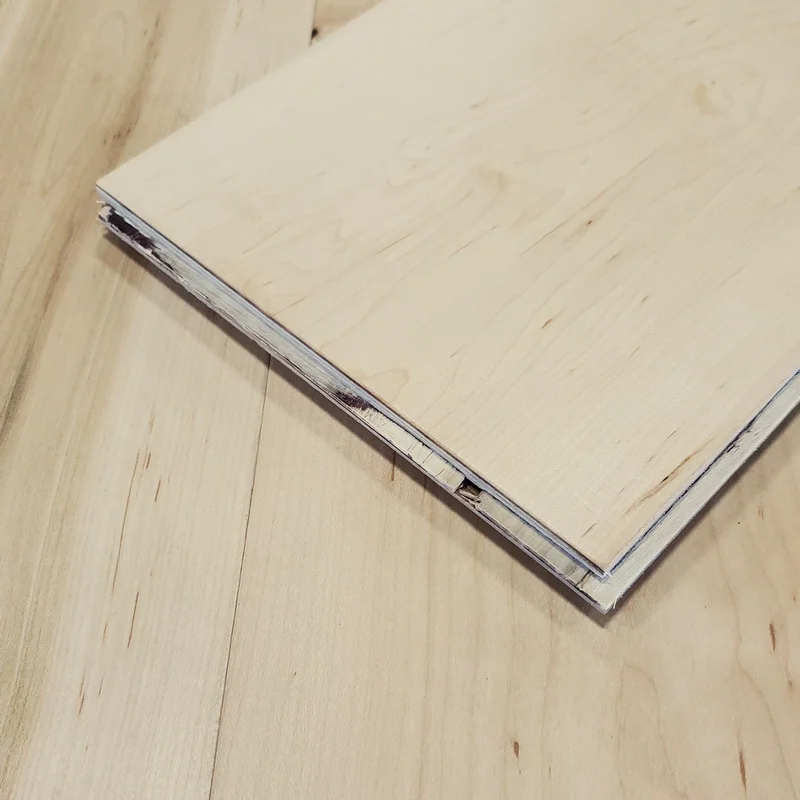
To understand why engineered wood kitchen floors excel, look beneath the surface. Unlike solid hardwood, engineered wood is a masterpiece of modern construction designed to prevent warping when wet or cold.
The construction involves multiple layers bonded under pressure. The top is a genuine hardwood veneer (Oak, Maple, or Hickory). Below, core layers are stacked in a cross-grain pattern, where each layer runs perpendicular to the one above.
This cross-grain stability is the ‘secret sauce’. By alternating grain directions, layers lock each other in place, preventing shifting. Our premium Corlee series features an eucalyptus core up to 15mm thick for maximum stability.
Pro Advice: Check the wear layer. A 1.2mm layer is budget-friendly, but look for 3mm to 5mm if you want the option to sand and refinish later.
The Practical Magic of Engineered Wood Kitchen Floors
Kitchens are ‘wet zones’ where dishwashers leak and pasta water splashes. Humidity fluctuates every time you boil a kettle or preheat the oven.
Solid hardwood often fails here, absorbing moisture and buckling. Engineered wood kitchen floors offer high moisture tolerance. This stability is why Vancouver and Surrey designers now prefer the warmth of engineered timber over cold tile.
Moisture Stability in BC Kitchens
In the Lower Mainland, climate dictates flooring performance. From damp North Vancouver winters to humid Langley summers, wood floors face constant pressure. Engineered wood is built to handle these shifts.
While not 100% waterproof like tile, many products are remarkably water-resistant. Some collections offer a 72-hour waterproof warranty, giving you time to catch spills before they cause damage.
For BC kitchens, we recommend a plywood or eucalyptus core. These provide a true seal when combined with advanced edge coatings.
Learn more in our guide: Are Hardwood Floors Good In The Kitchen.
European Manufacturing and Sustainable Cores
King of Floors prides itself on European-manufactured products. Brands like KronoSwiss and Kronopol lead in precision engineering, often exceeding North American standards for air quality and VOC emissions.
Many options use sustainable cores from FSC-certified materials. Using eucalyptus or high-density fiberboard (HDF) preserves slow-growing forests while ensuring stability.
Read our Essential Guide To High Quality Engineered Wood Flooring.
Durability and Style for High-Traffic Kitchens
Kitchens are high-traffic hubs. Between kids running for snacks and pets waiting for treats, your floor needs to be tough. Durability is measured by the Janka Rating, determining the force needed to dent the wood.
| Wood Species | Janka Rating (lbf) | Best For |
|---|---|---|
| Hickory | 1820 | Busy family kitchens with large pets |
| Maple | 1450 | High-traffic areas, modern aesthetics |
| White Oak | 1360 | Traditional styles, excellent stability |
| Walnut | 1010 | Low-traffic, formal dining areas |
For busy Surrey homes, we suggest species with a Janka rating of 1200 or higher. Hickory and White Oak are fantastic choices as they resist denting from dropped pots.
Scratch Resistance and Surface Protection
It isn’t just the species; it is the finish. Most of our engineered wood kitchen floors feature a UV-hardened aluminium oxide finish. This acts as a shield against micro-scratches from grit and pet claws.
If you worry about visible wear, consider a wire-brushed or distressed texture. These surfaces naturally hide small scuffs. See our resource on Why You Should Choose Distressed Engineered Hardwood.
Popular Styles for Surrey Homes
We see a huge trend toward wide-plank European Oak in Fleetwood and South Surrey. Wide planks (7 inches+) create an airy feel, making smaller kitchens feel spacious.
Lighter tones like sand or natural oak are popular for hiding dust. Conversely, dark walnuts provide stunning contrast against white cabinetry. From Cloverdale farmhouses to City Centre condos, there is a design that fits.
How to Maintain Engineered Wood Kitchen Floors
Maintaining your floors doesn’t have to be a chore. In fact, if you follow a simple routine, your engineered wood kitchen floors will look stunning for decades.
- Daily Sweep: Use a soft-bristle broom or a vacuum with the beater bar turned off. This removes grit that can act like sandpaper on your finish.
- Weekly Clean: Use a microfibre mop dampened with a pH-neutral wood cleaner.
- Spill Response: Wipe up liquids immediately. Even though these floors are moisture-resistant, standing water is never a friend to wood.
- Protection: Use felt pads under chair legs and kitchen islands.

Pro Advice:
Never use a steam mop on engineered wood. The high-pressure steam can force moisture into the layers and damage the bond between the core and the veneer. Stick to a damp (not dripping) microfibre mop. For more tips, read our Things To Know Before Buying Engineered Flooring.
Installation Methods for Surrey Kitchen Renovations
One of the reasons homeowners in the Lower Mainland love engineered wood is the flexibility of installation. Whether you are doing a DIY weekend project in Whalley or hiring a pro for a full renovation in White Rock, you have options:
- Floating: The planks click together without being attached to the subfloor. This is fast, budget-friendly, and allows the floor to expand and contract naturally.
- Glue-down: Planks are adhered directly to the subfloor (usually concrete). This creates a very solid feel underfoot and reduces the “hollow” sound sometimes associated with floating floors.
- Nail-down: Best for installations over a wooden subfloor.
For kitchens, the glue-down method is often preferred as it provides the most stability and helps prevent moisture from seeping under the planks.
Is Engineered Wood Compatible with Radiant Heating?
Yes! In fact, engineered wood is the best timber option for radiant heating. Solid wood is prone to drying out and cracking when placed over heat, but the layered construction of engineered wood handles the temperature changes beautifully. It allows the heat to transfer efficiently into the room while remaining structurally sound. This makes it a perfect choice for those chilly Vancouver mornings when you want a warm floor under your feet while making coffee.
Engineered Wood vs Laminate for Kitchens
We are often asked if a homeowner should choose engineered wood or a high-quality European laminate for their kitchen. Both are excellent choices available at King of Floors, but they serve different needs.
| Feature | Engineered Wood | European Laminate |
|---|---|---|
| Material | Real Hardwood Veneer | High-Density Fiberboard (HDF) |
| Aesthetics | Unique, natural variation | Authentic photo-realistic patterns |
| Water Resistance | High (with proper care) | Very High (AC5/Waterproof options) |
| Durability | High (can be refinished) | Extremely High (scratch/dent resistant) |
| Resale Value | Highest ROI (up to 2.5% home value) | Good |
| Price (CAD) | $4 – $10 per sq ft | $2 – $6 per sq ft |
The Verdict: Choose engineered wood for the prestige of real timber and higher resale value. Choose laminate for tight budgets or high-energy pets needing the scratch resistance of an AC5-rated floor. Browse our Laminate Flooring options to see the difference.
Is Engineered Wood Worth It for Modern Kitchens?
Absolutely. For BC homeowners, engineered wood kitchen floors balance luxury and logic. You get authentic grain and warmth with the peace of mind that your floor won’t fail during a spill.
While the upfront cost is higher than vinyl, the long-term value is undeniable. Real wood increases home sales prices by up to 2.5% in the BC market. A high-quality floor lasting 50 years makes the investment pay for itself many times over.
FAQs: Engineered Wood Kitchen Flooring (BC Homeowners)
Is engineered wood good for kitchens?
Yes, engineered wood is one of the best kitchen flooring options because it resists moisture better than solid hardwood. At King of Floors, most Surrey homeowners choose engineered wood for its balance of durability and real timber appearance.
Is engineered wood waterproof or water-resistant?
Engineered wood is typically water-resistant, meaning it can handle spills if cleaned quickly. King of Floors also offers advanced options with enhanced moisture protection for busy kitchens.
How long does engineered wood flooring last?
High-quality engineered wood can last 20 to 50 years depending on the wear layer thickness. Many King of Floors products can also be refinished to extend their lifespan.
Can engineered wood be refinished?
Yes, engineered wood can be refinished if the wear layer is thick enough. Premium options at King of Floors allow multiple refinishing cycles.
Is engineered wood better than laminate for kitchens?
Engineered wood offers real timber and higher resale value, while laminate provides stronger water resistance at a lower cost. King of Floors helps customers choose based on budget and lifestyle needs.
What is the best thickness for engineered wood flooring?
A total thickness of 10mm to 14mm with a wear layer of at least 3mm is ideal for kitchens. King of Floors recommends thicker options for high-traffic Surrey homes.
Can engineered wood be used with underfloor heating?
Yes, engineered wood is one of the best flooring types for radiant heating systems. Its layered construction allows better heat stability compared to solid hardwood.
Buy Direct and Save at King of Floors
When you are ready to transform your kitchen, come visit us at our massive Surrey showroom. Because we import our flooring directly from the best manufacturers in Europe and around the world, we can offer pricing that big-box stores simply cannot match.
We have been family-owned since 1984, and we know exactly what BC homeowners need to survive our unique climate. Whether you are in Newton, Fleetwood, or Cloverdale, our team is here to help you find the “secret ingredient” for your dream kitchen.
- Shop Today’s Specials
- Explore New Arrivals
- Browse Best Sellers
- View 8mm Premium Laminate
- View 10mm Premium Laminate
- View 12mm Premium Laminate
- Discount Engineered Wood Guide
Visit us today at our Surrey location or request a quote online to start your kitchen renovation journey!