
Why Proper Engineered Hardwood Floor Care Keeps Your Investment Looking Beautiful
Engineered hardwood floor care comes down to a handful of consistent habits that protect your real wood veneer from everyday wear, moisture, and grit. Here is what you need to know right away:
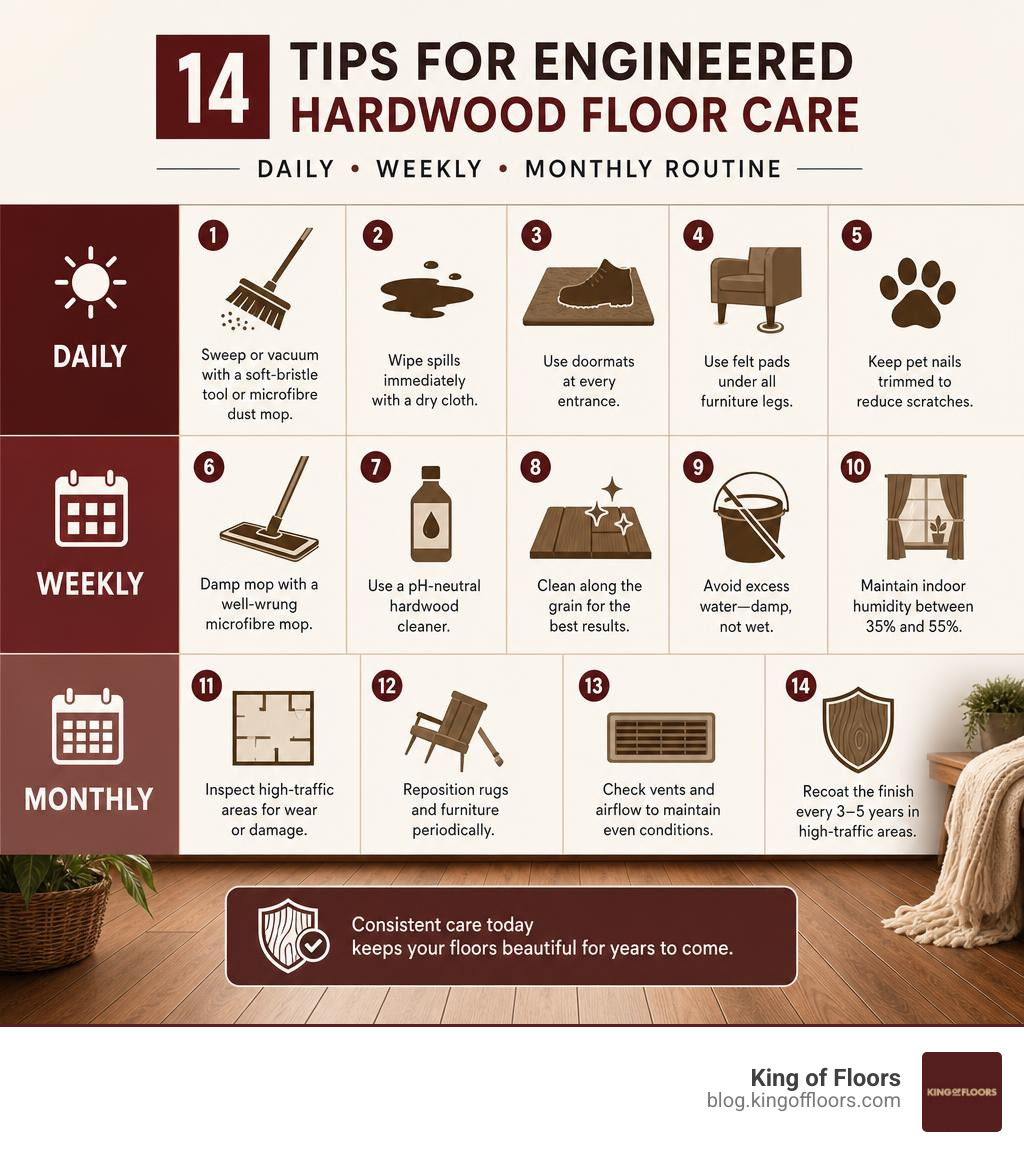
- Sweep or vacuum daily using a soft-bristle tool or microfibre dust mop (no beater bar)
- Damp mop weekly with a well-wrung microfibre mop and a pH-neutral hardwood cleaner
- Wipe spills immediately using a dry cloth, blotting rather than rubbing
- Keep indoor humidity between 35% and 55% year-round to prevent gapping and cupping
- Use felt pads under all furniture legs and place doormats at every entrance
- Avoid steam mops, vinegar, ammonia, and excess water at all times
- Recoat the finish every three to five years in high-traffic areas before wear becomes visible
If you follow those steps consistently, your engineered hardwood floors can look great for 25 years or more.
I’m Lesley Upton, Inventory Control Manager at King of Floors, and after more than 15 years of helping Surrey and Lower Mainland homeowners source the right flooring and care for it correctly, engineered hardwood floor care is one of the most common topics I help customers navigate. Let’s walk through the 14 most practical tips that will genuinely extend the life of your floors.
Understanding Engineered Hardwood Floor Care and Construction
To take care of your floors properly, you first need to understand how they are built. Unlike solid wood planks, which are cut from a single piece of timber, engineered wood flooring is a marvel of modern design. It features a top layer of genuine hardwood veneer bonded securely to a multi-layer plywood or high-density fibreboard (HDF) core. This cross-grain construction is incredibly beneficial for homeowners in Surrey and the wider Lower Mainland.
Our local climate is notoriously damp, with humid summers and rainy, wet winters. Solid wood reacts to these seasonal moisture shifts by expanding and contracting rapidly, which often leads to cupping, warping, or unsightly gaps. The cross-ply core of engineered wood counters this movement, providing excellent dimensional stability.
However, because the top layer is real timber, it requires the exact same finish-level protection as solid wood. If you use the wrong cleaning methods, you can easily ruin that precious top veneer. Understanding this structure is the key to mastering cleaning engineered hardwood floors without accidentally stripping away its natural beauty or voiding your manufacturer warranty.
Laminate vs Engineered Hardwood: A Lifestyle-Based Comparison
When you visit our showroom, one of the most common questions we hear is whether you should install laminate or engineered wood. The answer always comes down to your household lifestyle and your personal expectations for wear and tear.
For busy homes in the Lower Mainland with large dogs, active kids, and high foot traffic, high-quality Laminate flooring is often the most practical choice. Modern European laminates are incredibly tough, offering superb resistance to scratches and impact. If you want a floor that can handle dropped toys and muddy paws with minimal fuss, laminate is a fantastic, cost-effective option.
On the other hand, if you love the prestige, warmth, and natural variation of genuine timber, Engineered hardwood flooring is unmatched. It is a premium material that adds significant value to your home. While it does require a bit more attention and care to prevent surface scratches, it ages beautifully and can be refreshed over time.
What Scratch-Resistant Flooring Actually Means for Surrey Homeowners
We need to be completely honest here: “scratch-resistant” is not the same as being completely immune to scratches. When a flooring product is described as scratch-resistant, it means the top finish is designed to withstand normal, everyday wear. It will resist the sliding of soft felt pads, light pet traffic, and general footfall.
However, no wood floor can resist the gouging power of a tiny stone trapped in a shoe tread, or the sharp claws of an unclipped dog running to the front door. Over time, all real wood floors will show signs of life. Accepting this natural wear, which often develops into a beautiful character patina, is part of owning a real timber floor.
AC Ratings Explained in Real-World Terms
If you are looking at laminate options, you will frequently see AC ratings ranging from AC3 to AC5. These ratings are standard European durability indicators that tell you how well the floor resists abrasion and impact.
An AC3 rating is perfect for normal residential use, while AC4 and AC5 ratings are designed to withstand heavy residential and even commercial traffic. In busy Lower Mainland homes with multiple pets and direct outdoor access, choosing an AC5 laminate can provide incredible peace of mind, though even the toughest AC5 surface can still show wear if subjected to extreme abuse.
14 Practical Tips for Engineered Hardwood Floor Care
Daily and Weekly Routines for Engineered Hardwood Floor Care
1. Sweep or Dust Mop Daily The single most effective way to prevent scratches is to remove grit before it gets ground into the finish. Use a soft-bristle broom or a microfibre dust mop daily to pick up loose dirt, dust, and pet hair.
2. Vacuum with the Right Settings Did you know that vacuuming is one of the most effective ways to clean wood floors, reducing bacteria by up to 99%? However, you must turn off the rotating beater bar. A spinning beater bar with stiff bristles can easily scratch and dull your floor’s finish. Always use the bare floor setting or a soft brush attachment.
3. Damp Mop with Care Never flood your wood floors with water. When mopping, use a microfibre mop that is only slightly damp to the touch. Wring it out thoroughly until it is almost dry before touching the floor.
4. Clean in the Direction of the Grain When sweeping or mopping, always work in the direction of the wood grain. This helps lift dust and dirt out of the natural textures of the wood rather than packing it deeper into the grain.

Safe Cleaning Products for Engineered Hardwood Floor Care
5. Use pH-Neutral Hardwood Cleaners Always use a dedicated, pH-neutral hardwood floor cleaner. Standard household detergents, dish soaps, and multi-purpose sprays often have high pH levels or contain surfactants that leave a dulling residue behind.
6. Avoid Vinegar, Ammonia, and Lemon Juice Many online DIY cleaning guides recommend using vinegar or lemon juice mixed with water. This is terrible advice for wood floors. Vinegar is highly acidic and will slowly eat away at your floor’s protective finish, leaving it dull, dry, and vulnerable to moisture.
7. Say No to Steam Mops We cannot stress this enough: never use a steam mop on engineered hardwood. The combination of intense heat and forced moisture will penetrate the wood layers, weaken the glue bonds, cause delamination, and completely void your warranty.
8. Choose the Right Products for Your Finish Oiled floors and lacquered floors require different maintenance products. Oiled floors need specialised wood soaps and periodic re-oiling (usually every 12 to 18 months) to keep the timber nourished. Lacquered floors, on the other hand, benefit from lacquer refreshers that restore the protective top sheen.
Managing Spills, Stains, and Pet Accidents
9. Blot Spills Immediately When a liquid spill occurs, act quickly. Use a clean, dry paper towel or microfibre cloth to blot the liquid immediately. Do not rub the spill, as this can push the liquid deeper into the joints between the planks.
10. Treat Pet Accidents with Enzyme Cleaners Pet urine is highly acidic and can permanently stain wood if left to sit. Clean the area immediately and use a wood-safe, pH-neutral enzymatic cleaner designed to break down the odour-causing proteins without stripping the finish.
11. Soften Hard Water Spots If you live in an area with hard water, mineral buildup can leave dull spots on your floor. Use softened water or a manufacturer-approved mineral remover to clean these spots gently without scratching.
Environmental Controls and Humidity Management
12. Monitor Relative Humidity (RH) Wood is a natural material that breathes. To prevent your floors from shrinking, gapping, or swelling, you must maintain indoor relative humidity between 35% and 55% at all times.
13. Use Humidifiers and Dehumidifiers Seasonally During our wet Surrey winters, home heating systems can dry out the indoor air, causing wood to shrink and form small gaps. Using a humidifier in the winter and running your air conditioner or a dehumidifier during humid summer days will keep your floors perfectly stable.
Preventive Measures to Extend Floor Lifespan
14. Use Protective Pads and Entry Mats Place high-quality, non-rubber-backed mats at every exterior entrance to trap dirt and moisture before it reaches your wood. Additionally, attach thick felt pads to the bottom of all furniture legs and replace them every six months to prevent deep scratches.
FAQ About Laminate and Engineered Hardwood Flooring in Surrey
What does an AC rating actually mean for my home?
AC ratings from AC3 to AC5 are durability indicators that show how well a laminate floor resists wear, helping you choose the right option for high-traffic areas. For busy Lower Mainland homes with pets and active families, an AC5 rating offers the highest level of wear resistance.
Can engineered hardwood floors be sanded and refinished?
It depends entirely on the thickness of the real wood veneer wear layer. Thicker veneers can be sanded down once or twice, whereas thin veneers cannot. If your wear layer is under one millimetre, it can only be screened and recoated to refresh the finish.
How does the humid Lower Mainland climate affect engineered wood?
Engineered wood is highly stable, but extreme indoor humidity shifts can still cause expansion and contraction, which is why keeping your home between 35% and 55% relative humidity is ideal. Using a simple household hygrometer will help you track these levels easily.
Are engineered hardwood floors suitable for homes with pets and kids?
Yes, they are an excellent choice, provided you keep pet nails trimmed, clean up spills immediately, and accept that all wood floors characteristically show some wear over time. If you want a completely worry-free surface, a high-quality laminate might be a better fit for your lifestyle.
Why should I avoid using a steam mop on engineered flooring?
Steam mops force high-temperature moisture deep into the timber layers and core, which can cause delamination, warping, and ultimately void your flooring warranty. We recommend sticking to a dry sweep and a lightly damp, well-wrung microfibre mop instead to keep your floors safe.
Final Thoughts on Choosing Flooring in Surrey Homes
Selecting the right flooring for your home is all about balancing your personal style with the practical realities of your daily life. Whether you fall in love with the natural character of engineered oak or the rugged durability of a premium Swiss laminate, understanding how to care for your choice ensures it remains beautiful for decades.
At King of Floors, we believe in giving you honest, straightforward advice without any high-pressure sales tactics. We want to help you find a floor that fits your budget, your aesthetic, and your busy Lower Mainland lifestyle.
If you have questions about which material is right for your home, or if you want to see our extensive collection in person, please stop by our showroom or get in touch with our team.
- Explore laminate flooring options: Laminate flooring
- View best-selling engineered hardwood floors: Engineered best sellers
- Talk to our flooring team: Contact page