
Cleaning engineered hardwood floors correctly comes down to one simple rule: use less moisture, gentler products, and more consistency. Sweep or vacuum daily to remove grit, damp mop weekly with a well-wrung microfibre mop and a pH-neutral cleaner, and always wipe up spills immediately before they reach the seams.
Quick answer: how to clean engineered hardwood floors
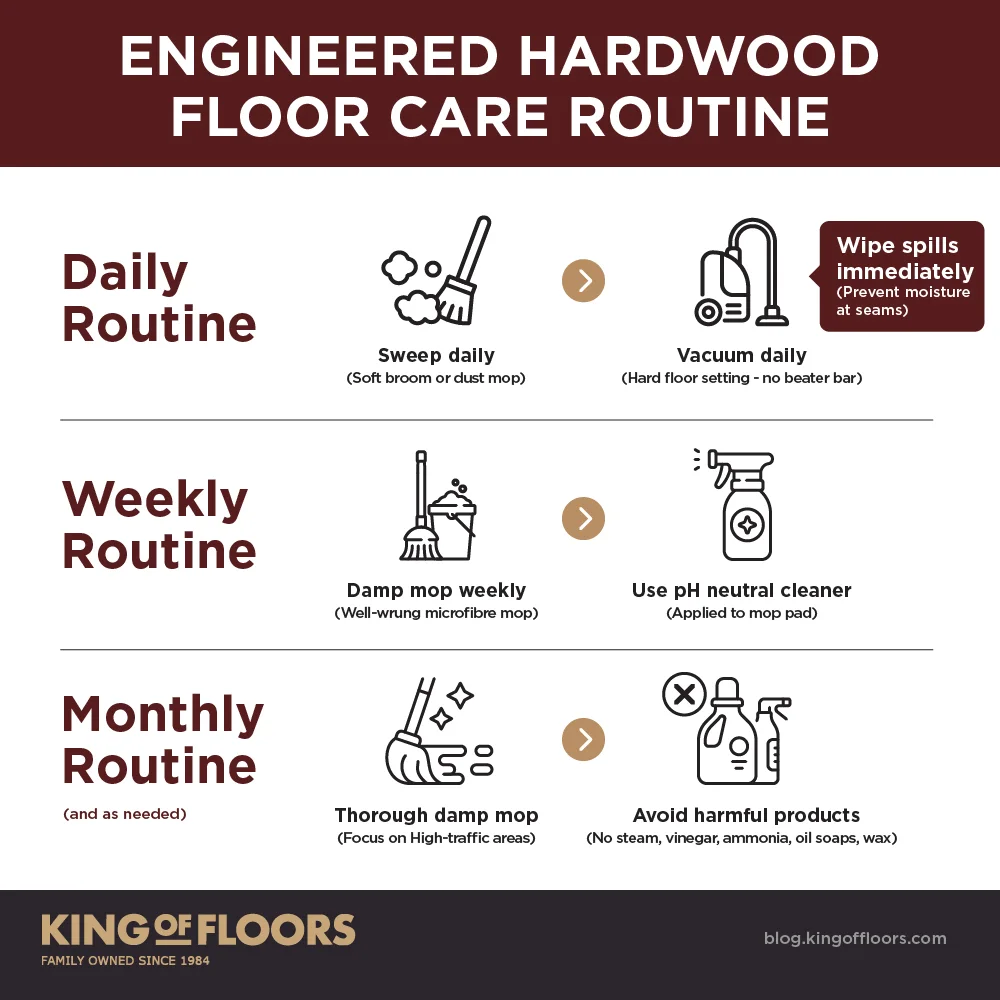
- Sweep or vacuum daily using a soft-bristle broom or vacuum on the hard floor setting (no beater bar)
- Damp mop once a week with a well-wrung microfibre mop, always mopping along the direction of the boards
- Use a pH-neutral cleaner designed for hardwood, applied to the mop, not the floor
- Wipe up spills immediately, every time, without exception
- Avoid steam mops, vinegar, ammonia, oil soaps, and wax-based products entirely
Why does this matter so much? Engineered hardwood has a real wood veneer, typically between 2 and 6 mm thick, layered over a plywood or HDF core. That construction makes it more stable than solid hardwood, but also more sensitive to moisture at the seams. The wrong cleaner or too much water can dull the finish, cause warping, or even void your manufacturer’s warranty, often within months of installation.
The good news is that engineered hardwood floor care is genuinely straightforward once you know what to avoid. Most damage comes not from neglect, but from well-meaning homeowners using the wrong products or over-mopping.
I’m Lesley Upton, Inventory Control Manager at King of Floors, and after more than 15 years helping BC homeowners choose and care for their floors, cleaning engineered hardwood floors is one of the most common topics I walk customers through. Let’s make sure your investment stays looking beautiful for decades.
The Ultimate Guide to Cleaning Engineered Hardwood Floors

When it comes to how to clean engineered wood floors, we always tell our customers in Surrey and Langley that “less is more.” You are not cleaning a tile floor; you are cleaning a natural wood surface that breathes and reacts to its environment.
The goal is to remove dirt and grit before they can act like sandpaper on your finish. If you use too much water, it can seep between the planks and cause the layers to separate—a process called delamination.
We recommend using a pH-neutral solution. Most “all-purpose” cleaners are too acidic or too alkaline, which gradually etches the protective coating. By sticking to a premium engineered flooring routine, you ensure the floor looks as good in April 2026 as it did on day one.
Daily and Weekly Maintenance for Cleaning engineered hardwood floors
Daily cleaning is your floor’s best friend. In high-traffic areas like your kitchen or entryway, dust and pebbles are the primary enemies.
- Daily: Use a soft-bristle broom or a microfibre dust mop. This is the single most effective way to prevent micro-scratches.
- 2-3 Times a Week: Vacuum using the “hard floor” setting. Pro Advice: Ensure the beater bar (the rotating brush) is turned off, as those stiff bristles can leave swirl marks on your wood.
- Weekly: This is when you perform a damp mop. Wring your microfibre mop until it is barely damp to the touch. If you see puddles or visible streaks of water, the mop is too wet.
Always mop in the direction of the wood grain. This prevents moisture from being pushed into the side seams of the planks. Your floor should be dry within two to three minutes of mopping. If it takes longer, you’re using too much liquid. For more details on the basics, check out our engineered hardwood ultimate guide.
Identify Your Floor Finish Before Cleaning engineered hardwood floors

Before you grab a bottle of cleaner, you must know what is on top of your wood. Most modern floors we sell at King of Floors feature a urethane or lacquer finish (often reinforced with aluminum oxide). These are “sealed” floors.
However, some maple engineered flooring or European oak products use an oiled finish. These require very different care.
- Urethane/Lacquer: Use a pH-neutral hardwood cleaner (like Bona). Avoid anything with wax or oil, as it will create a cloudy buildup that is nearly impossible to remove.
- Oiled Finishes: These floors are “open-pore.” You must use brand-specific soaps (like WOCA) that contain a small amount of oil to replenish the finish as you clean. Using a standard degreasing cleaner on an oiled floor will strip the protection away.
If you aren’t sure which finish you have, refer to your things to know before buying engineered flooring guide or contact our team in South Surrey for help.
Long-Term Maintenance and Protection Tips
In the Lower Mainland, our humidity fluctuates significantly between the damp winters and dry summers. Wood is hygroscopic, meaning it expands and contracts.
- Humidity Control: Aim to keep your home between 35% and 55% relative humidity. This prevents the wood from checking (small cracks) or gapping.
- Sunlight Protection: UV rays can cause a “patina” or fading. Use curtains or rotate your rugs every few months to ensure the wood ages evenly.
- Furniture Pads: Use heavy-duty felt protectors on all chair and table legs. Replace them every six months, as they trap grit that can scratch the floor.
- Pet Care: Keep your pets’ nails trimmed. Sir Scruffy, our late mascot, was a legend around the showroom, but even he knew that long claws and hardwood don’t mix!
Investing a few dollars in a hygrometer and some felt pads provides a massive ROI by protecting your high quality engineered wood flooring.
Comparing Engineered Hardwood Care with Other Flooring Types
It helps to understand how engineered wood stacks up against other popular options in our Vancouver warehouse.
| Feature | Engineered Hardwood | European Laminate | Luxury Vinyl (LVP) |
|---|---|---|---|
| Moisture Tolerance | Moderate (Barely damp) | Moderate to High | High (Waterproof) |
| Cleaning Tool | Microfibre Mop | Microfibre / Damp Mop | Damp Mop / Neutral Soap |
| Refinishing | Yes (1-2 times) | No | No |
| Primary Risk | Standing Water / Grit | Edge Swelling | Scratches from Grit |
| Best Cleaner | pH-Neutral Wood Soap | Laminate-Specific | pH-Neutral Multi-Surface |
While engineered hardwood vs vinyl plank is a common debate, wood offers a unique warmth and value that synthetic floors can’t quite match.
Common Mistakes and FAQs for Cleaning Engineered Hardwood Floors

We see it all the time: a homeowner buys a beautiful new floor in Surrey, and six months later, it looks dull. Usually, it’s not the floor’s fault—it’s the cleaning routine.
The biggest mistake is over-wetting. Water is the natural enemy of wood. When moisture sits on the surface, it finds its way into the seams and can cause the plywood core to swell, leading to permanent “cupping” or “peaking” at the edges.
Avoiding Damage and Common Cleaning Mistakes
To keep your floors in top shape, avoid these common pitfalls:
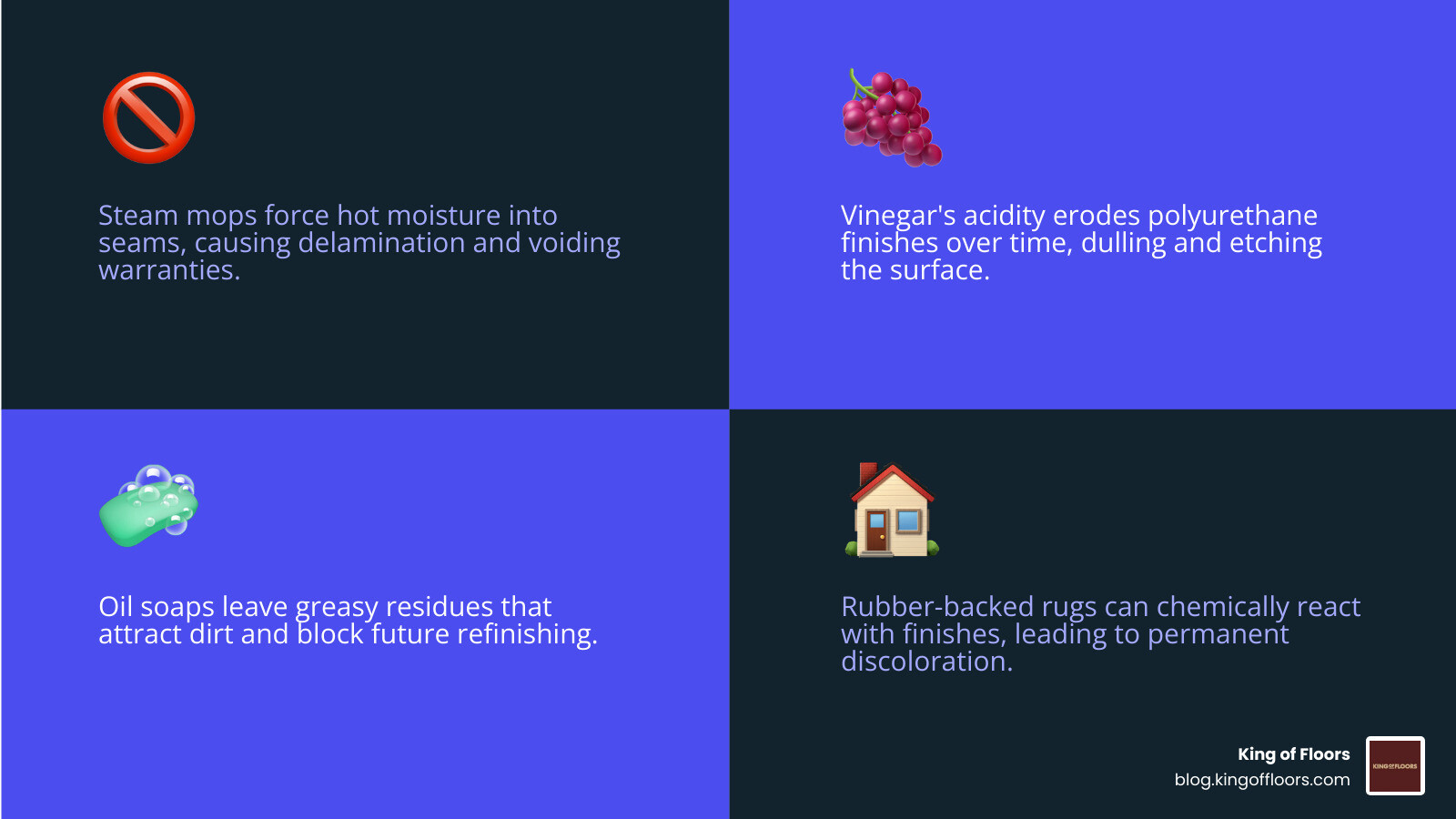
- Steam Mops: Never use them. Steam forces hot moisture deep into the wood grain and through the seams. This can melt the glues holding the layers together and will almost certainly void your warranty.
- Vinegar and Ammonia: These are acidic. While they are great for windows, they will slowly eat away at your floor’s finish, leaving it looking dull and “etched” over time.
- Oil Soaps and Waxes: Products like Murphy’s Oil Soap leave a greasy residue. This residue attracts dirt, making your floors get dirty faster, and creates a film that prevents future recoating.
- Rubber-Backed Rugs: Some rubber or latex backings can chemically react with the floor finish, causing permanent discolouration. Use a non-slip pad specifically rated for hardwood.
If you are looking for the best quality engineered hardwood floors for every budget, maintenance is the key to that “budget” lasting a lifetime.
Frequently Asked Questions About Cleaning Engineered Hardwood Floors
Are steam mops safe for engineered hardwood floors?
No, steam mops are dangerous for engineered wood because they force moisture and heat into the seams, leading to delamination and warping. Most manufacturers will void your warranty if they detect steam mop damage.
Can you use vinegar on engineered wood floors?
We strongly advise against it. Vinegar is acidic and will gradually break down the polyurethane finish, causing your floors to lose their shine and become susceptible to damage.
What is the best cleaner for engineered hardwood floors?
The best option is a pH-neutral cleaner specifically formulated for hardwood, such as Bona or a manufacturer-recommended product. These clean effectively without leaving a residue or damaging the finish.
How do you clean pet urine on engineered hardwood floors?
Blot the area immediately with a soft cloth. Use a wood-safe enzymatic cleaner to neutralize the uric acid, then dry the area thoroughly with a fan if necessary.
Can engineered hardwood floors be refinished?
Yes, provided the wear layer (the top real wood part) is at least 3mm thick. Most engineered floors can be lightly sanded and refinished once or twice in their lifetime.
Keep Your Engineered Hardwood Floors Looking New for Years
Maintaining your floors doesn’t have to be a chore. By sticking to a dry-dusting daily routine and a “barely damp” weekly mop, you can protect your investment for decades. Whether you are in Whalley, Fleetwood, or Cloverdale, the same rules apply: keep it dry, keep it grit-free, and keep it neutral.
If you’re ready to upgrade your home, we invite you to explore our engineered hardwood flooring collection or check out our European laminate selection for high-traffic areas.
Buy Direct and Save at King of Floors
- Visit our showroom in Surrey to see the largest selection of European flooring in stock.
- Request a quote for your next project.
- Browse our laminate flooring range for waterproof options.
- Check out our good engineered wood flooring guide for more expert tips.