
Is Engineered Hardwood Suitable for Kitchens?
Engineered hardwood kitchen floor options have become one of the most searched topics among Lower Mainland homeowners in 2026, and it is easy to see why. Kitchens are the busiest rooms in most homes, and finding a floor that handles spills, foot traffic, dropped utensils, and still looks stunning is genuinely hard. The good news is that engineered hardwood hits that sweet spot between real wood beauty and practical, everyday durability.
Is engineered hardwood a good choice for a kitchen floor? Yes, for most kitchens it is an excellent choice. Here is a quick summary:
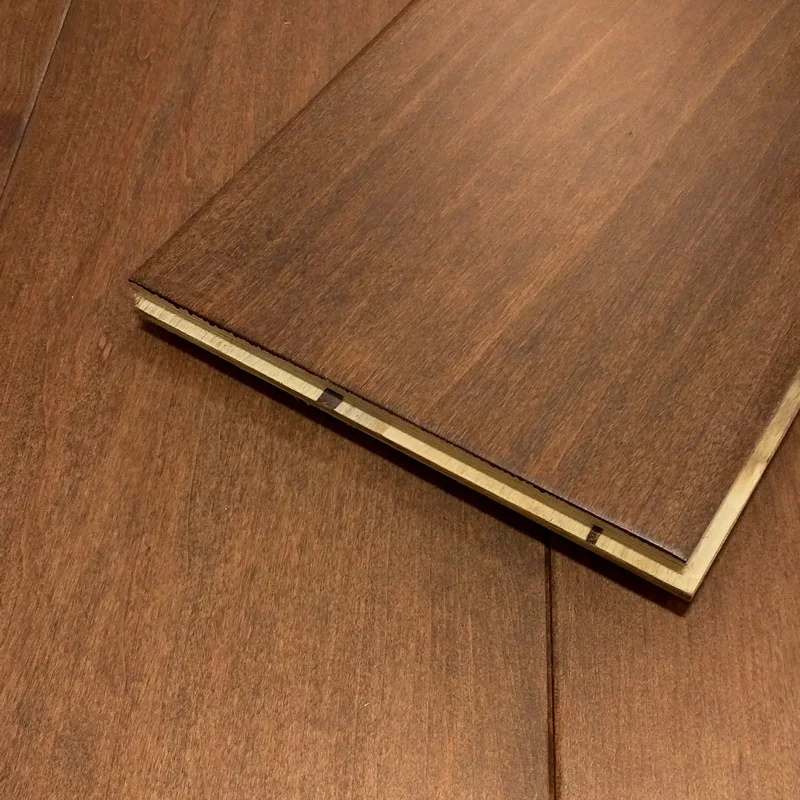
- Moisture resistance: Engineered hardwood uses a layered plywood or HDF core topped with a genuine hardwood veneer, making it far more stable than solid hardwood when exposed to kitchen humidity and temperature swings.
- Durability: Premium options can be 4x more scratch-resistant than standard hardwood, making them suitable for high-traffic family kitchens.
- Style: Available in species like white oak, maple, and hickory, it delivers authentic wood aesthetics that vinyl and laminate simply cannot replicate.
- Installation flexibility: It can be installed over concrete subfloors and radiant heat systems, which is common in BC home renovations.
- Resale value: According to the National Association of Realtors, real wood floors can increase a home’s sale price by up to 2.5%.
- Cost: Engineered hardwood typically ranges from around $4 to $10 CAD per square foot, depending on species, thickness, and wear layer.
- Key limitation: It is water-resistant, not fully waterproof. Standing water and ignored spills can still cause damage over time.
As Inventory Control Manager at King of Floors since 2010, I have helped hundreds of Surrey and Lower Mainland homeowners choose the right engineered hardwood kitchen floor for their lifestyle and budget. Having sourced flooring factory-direct from around the world, I know exactly what separates a floor that lasts decades from one that cups and buckles within a few years.
When we talk about the kitchen, we’re talking about the “danger zone” for traditional wood. Between the dishwasher that might leak, the pasta water that always seems to boil over, and the high-traffic path from the fridge to the stove, a floor needs to be tough. Many homeowners in Langley and White Rock ask us if they are making a mistake by putting real wood in the kitchen.
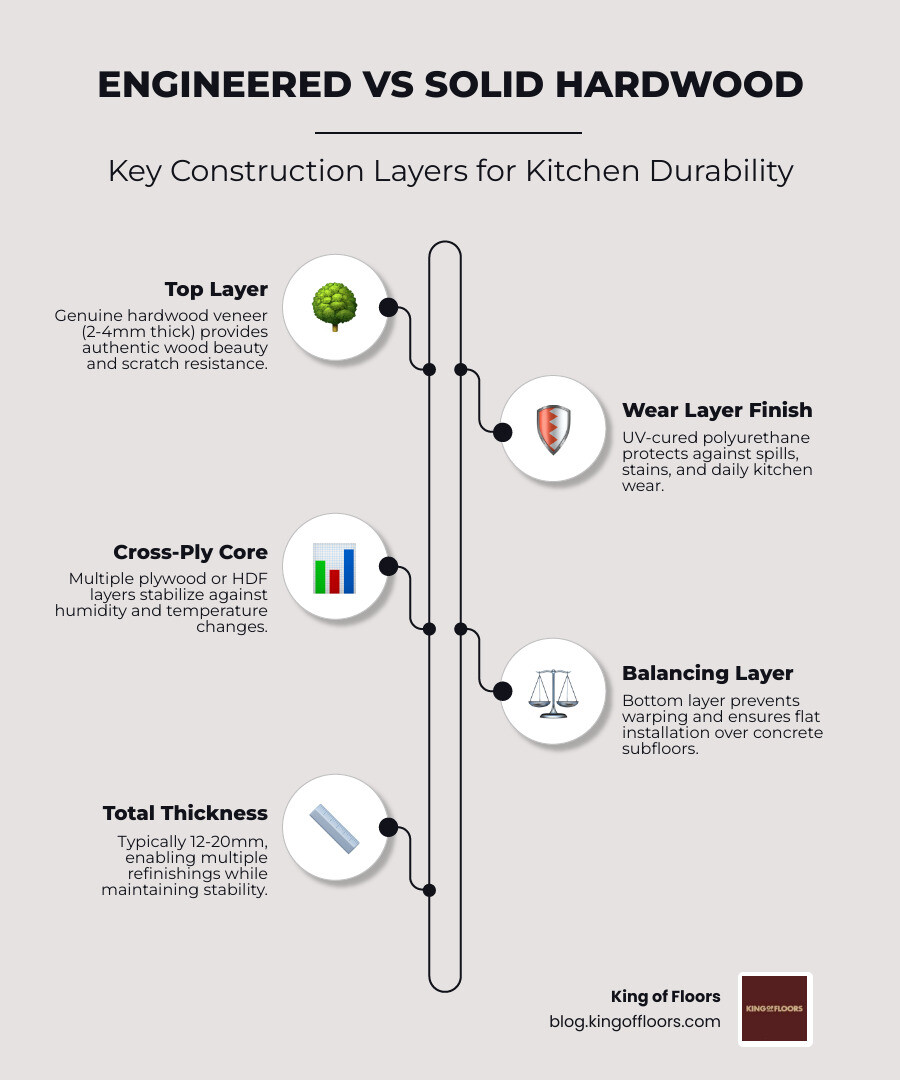
The answer lies in the construction. Unlike a solid plank of wood (which is basically a giant sponge that expands and contracts whenever the BC humidity shifts), an engineered hardwood kitchen floor is built for stability. It features a top layer (the “wear layer”) of genuine hardwood, such as Oak or Maple, bonded over multiple layers of cross-grained plywood or a high-density fiberboard (HDF) core.
This cross-grain structure is the secret sauce. It counteracts the natural tendency of wood to swell or shrink.
At King of Floors, we’ve seen how this stability prevents the dreaded “cupping” that ruins solid wood floors in humid environments. Because we are a family-owned business that has been around since 1984, we’ve seen these floors perform year after year in local homes.
If you want to dive deeper into the technical side, check out our engineered hardwood ultimate guide or read more about are hardwood floors good in the kitchen.
The Benefits of Engineered Hardwood in Kitchen Spaces
Choosing an engineered hardwood kitchen floor isn’t just about avoiding a disaster; it’s about elevating your home’s entire aesthetic. Here’s why our customers in the Lower Mainland keep coming back to it:
- Seamless Open-Plan Living: Modern BC homes often feature a “Great Room” where the kitchen, dining, and living areas are one big space. Using the same engineered wood throughout creates a flow that makes the home feel larger and more cohesive.
- Radiant Heat Compatibility: Many new builds in South Surrey and Cloverdale use radiant heating. Solid wood hates this, but the stability of engineered wood makes it perfect for kitchens with underfloor heating.
- Real Wood Value: Let’s be honest—nothing beats the feel of real timber under your feet. While vinyl has come a long way, it still doesn’t have the unique grain patterns and “warmth” of real wood. Plus, that 2.5% boost in home resale value is a nice bonus for your “future self” when it’s time to sell.
- Refinishing Potential: If you choose a product with a thick enough wear layer (typically 3mm or more), you can actually sand and refinish the floor later if it gets beat up. This gives it a much longer lifespan than a “one-and-done” floor.
For those on a tighter budget who still want that look, we often suggest looking at our laminate flooring range, which offers incredible durability at an even lower price point. You can also explore the 10 best engineered hardwood pros cons compared or our quick start guide to maple engineered flooring for more specific species advice.
The Risks: When Engineered Hardwood Kitchen Floor Projects Fail
We like to be straight with our customers. While we love an engineered hardwood kitchen floor, it isn’t indestructible. If you have a major flood—like a burst pipe behind the fridge—even the best engineered wood will struggle.
The main risks are:
- Standing Water: If a spill sits on a seam for 48 hours while you’re away for the weekend, the moisture can seep into the core. This leads to “seam swelling,” where the edges of the planks pop up.
- BC Winter Humidity: In the Lower Mainland, our winters are damp, but our indoor heating can be very dry. If the humidity in your home isn’t regulated, you might see minor gaps.
- The “Waterproof” Myth: Some brands claim to be “waterproof,” but often this is a 72-hour warranty on the surface finish, not the wood itself. If the core gets wet, the wood will react.
If you have a very busy household with three large dogs and kids who treat the kitchen like a water park, you might want to consider can you use engineered wood flooring in a bathroom as a benchmark for moisture resistance, or read up on the pros and cons of engineered hardwood to see if it fits your risk tolerance.
Choosing and Installing an Engineered Hardwood Kitchen Floor
Getting the floor into your house is just as important as the floor itself. For a kitchen, we almost always recommend a professional installation.
Installation Methods
- Glue-Down: This is the “gold standard” for kitchens. By gluing the planks directly to the subfloor, you reduce the chance of the wood shifting and create a much quieter, more solid-feeling floor.
- Floating (Click-Lock): Great for DIYers in Surrey or Langley, this method allows the floor to “float” over an underlay. It’s faster and cheaper but can feel a bit more “hollow” if you don’t use a high-quality underlay.
- Nail/Staple-Down: Best if you have a plywood subfloor. It’s a traditional method that provides great stability.
The Wear Layer Matters
When browsing our 10 million sq ft of in-stock inventory, pay attention to the thickness of the top veneer. A 1.2mm wear layer is fine for a guest bedroom, but for a kitchen, we recommend a 2mm to 4mm layer. This ensures the floor can handle the “oops” moments of daily life.
For a deeper dive into costs and quality, see our top rated engineered hardwood flooring a buyers guide and our engineered hardwood cost complete guide.
Selecting the Best Engineered Hardwood Kitchen Floor Species
Not all woods are created equal. For a kitchen, we love White Oak. It is naturally dense and has a grain pattern that hides small scratches and crumbs (because let’s be real, we don’t sweep every single day).
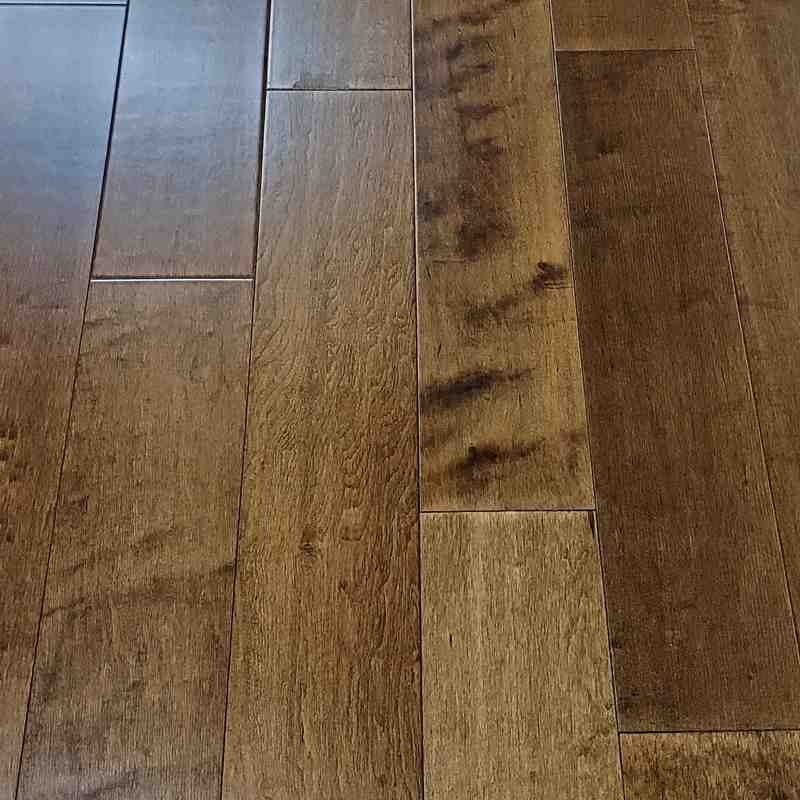
- Wire-Brushed Finish: This is a lifesaver for kitchen floors. The wire-brushing process removes the softer grain, leaving a textured surface that disguises scuffs and pet claw marks beautifully.
- Distressed Styles: If you want a “lived-in” look that actually looks better as it gets a bit of wear, go for a distressed finish. It’s perfect for a busy North Surrey or Fleetwood home.
- Reactive Tannins: Some premium European oaks use reactive stains that work with the wood’s natural tannins, creating deep, complex colours that won’t fade like a surface-level stain.
Check out the best engineered wood types for your home and learn why you should choose distressed engineered hardwood to see these styles in action.
Maintenance Tips for Long-Lasting Kitchen Flooring

Maintenance isn’t a chore; it’s an insurance policy for your investment. If you take care of your engineered hardwood kitchen floor, it will take care of you.
- Ditch the Steam Mop: We cannot stress this enough—never use a steam mop on wood. It forces moisture into the grain and can delaminate the layers.
- The “Damp” Rule: When mopping, your mop should be barely damp, not dripping. Use a pH-neutral cleaner specifically designed for wood.
- Spill Management: See a puddle? Wipe it up. Most engineered floors can handle a spill for a few hours, but don’t test your luck by leaving it overnight.
- Furniture Pads: Put felt pads under your kitchen chairs. The constant sliding of chairs is the #1 cause of “premature aging” on kitchen floors.
- Pet Care: Keep those dog nails trimmed! Even the toughest finish can be scratched by a 100lb Golden Retriever taking a sharp turn toward the treat jar.
For more detailed steps, read our essential guide to high quality engineered wood flooring.
Frequently Asked Questions about Kitchen Hardwood
Is an engineered hardwood kitchen floor better than vinyl?
It depends on your goals. If you want 100% waterproof peace of mind and are on a budget, vinyl is great. However, if you want authentic beauty, better resale value, and no repeating patterns (vinyl planks often repeat the same image every few boards), then engineered hardwood is the winner. See our full breakdown of engineered hardwood vs vinyl plank flooring.
Can you refinish engineered wood in a kitchen?
Yes, provided the wear layer is thick enough (usually 3mm+). Most homeowners find they only need to “screen and recoat”—which just refreshes the top clear coat—rather than doing a full sand-down to bare wood.
How do you protect wood floors from fridge leaks?
We recommend using an appliance tray or a leak mat under your refrigerator and dishwasher. These inexpensive plastic trays catch slow drips before they ever touch your beautiful wood.
Conclusion: Should You Choose Engineered Hardwood for Your Kitchen?
At the end of the day, an engineered hardwood kitchen floor is for the homeowner who refuses to compromise on style but lives a real, busy life. It brings a level of sophistication to your Surrey or Langley home that other materials just can’t match.
At King of Floors, we make this luxury accessible. Because we are direct importers, we cut out the middlemen and the fancy showroom markups. We pass those savings directly to you. With 10 million sq ft of inventory in our Surrey warehouse, you don’t have to wait weeks for shipping—you can start your renovation today.
| Feature | Engineered Hardwood | European Laminate |
|---|---|---|
| Material | Real Wood Veneer | High-Density Fiberboard |
| Water Resistance | Moderate (72-hour) | High (Water-resistant) |
| Resale Value | High (Real Wood) | Moderate |
| Price (CAD) | $4 – $10 / sq ft | $2 – $5 / sq ft |
| Feel | Warm & Natural | Durable & Hard |
Whether you are in Whalley, South Surrey, or over in Coquitlam, come visit us. We’re a bunch of “flooring nerds” who love a good joke and an even better deal. We’ll help you find the perfect plank that fits your kitchen and your budget.
Ready to transform your home?
Explore our Engineered Hardwood Collection at King of Floors or visit us in Surrey to see our massive in-stock selection for yourself!