
What Is Engineered Hardwood, Really?
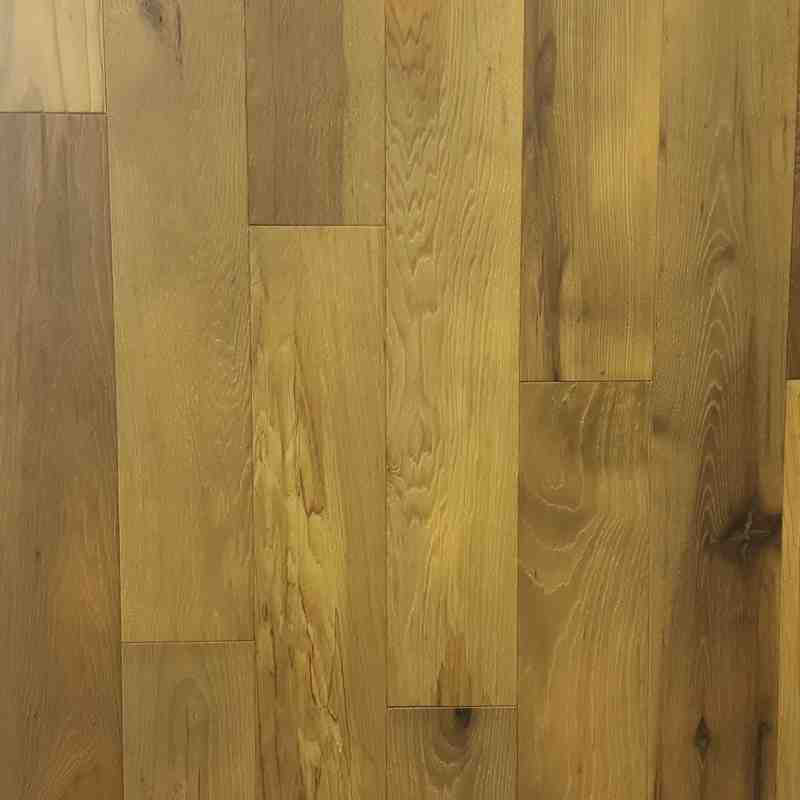
Engineered hardwood is a multi-layered flooring product made from a real wood veneer bonded to a stable plywood or high-density fiberboard (HDF) core. Unlike solid hardwood, which is a single piece of wood, engineered hardwood uses advanced construction to create a floor that’s more stable, moisture-resistant, and versatile.
Quick Facts About Engineered Hardwood:
- Construction: Real hardwood veneer top layer (3-7mm thick) over a stable core of plywood or HDF
- Lifespan: Typically 20 to 30 years with proper care
- Cost: $4.50 to $16 per square foot in Canadian dollars
- Installation: Floating, glue-down, or nail-down methods available
- Refinishing: Can be sanded and refinished 1 to 2 times depending on wear layer thickness
- Best For: All levels of your home, including basements and over concrete
- Moisture Resistance: More water-resistant than solid hardwood, but not waterproof
Flooring is the unsung hero of your home, setting the tone for your style, comfort, and property value. Engineered hardwood is a smart, versatile choice that brings the beauty of real wood with modern-day durability, ready to handle everything from muddy paws to wild kids.
I’m Lesley Upton, Inventory Control Manager at King of Floors, and I’ve been helping Surrey and Lower Mainland homeowners select the perfect engineered hardwood flooring since 2010. Over the years, I’ve seen how the right engineered hardwood can transform a space while standing up to everything BC life throws at it.
The Anatomy of an Engineered Hardwood Plank
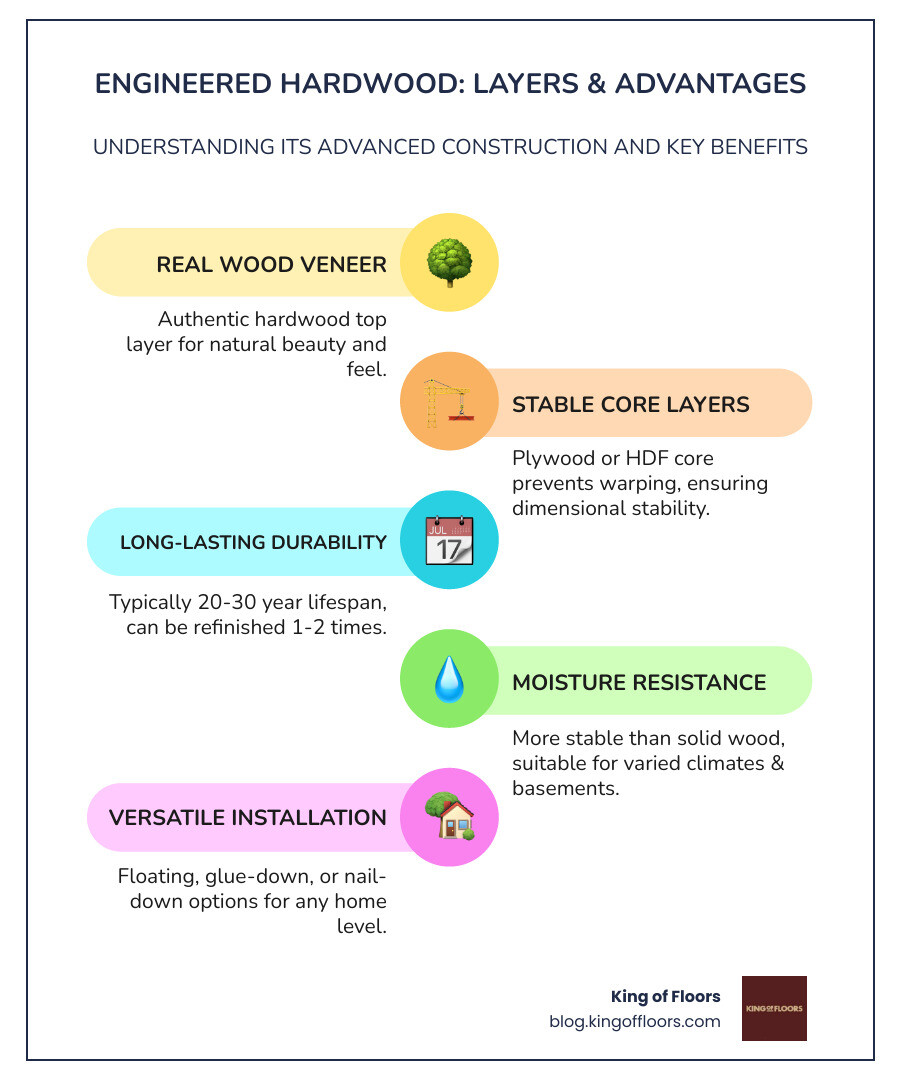
Think of engineered hardwood as a marvel of modern flooring. It’s constructed from several wood layers bonded together under intense heat and pressure. This multi-layer approach gives it incredible structural stability, preventing the separation, cupping, or warping that can plague solid wood in varying humidity, something we know all about in BC!
The top layer is a genuine hardwood veneer, giving you that authentic, luxurious look of real wood. Below it, a stable core of high-quality plywood or HDF ensures your floor remains flat and fabulous. Its robust design meets the American National Standard for Engineered Wood Flooring, ANSI/HPVA EF 2020, ensuring quality and performance.
How Does Engineered Hardwood Stack Up Against Solid Hardwood?
While both are stunning natural wood products, their differences lie beneath the surface. Here’s a quick breakdown:
- Dimensional Stability: Engineered hardwood truly shines in our damp BC climate. Its cross-hatched core provides superior stability, meaning it’s less likely to swell, split, or cup with moisture changes.
- Moisture Resistance: While not waterproof, engineered hardwood is significantly more water-resistant than solid hardwood, making it a great choice for basements or over concrete slabs.
- Lifespan: Engineered hardwood generally lasts 20 to 30 years with proper care. Solid hardwood can last longer but often requires more frequent refinishing.
- Sound & Acoustics: Some find engineered hardwood floors sound slightly more hollow than solid wood, but a quality underlayment can easily mitigate this.
- Eco-Friendlier Footprint: Engineered hardwood uses less of the tree per plank, making it a more resource-efficient choice. We even offer FSC-certified options from sustainably managed forests.
- Refinishing Potential: Solid hardwood can be refinished multiple times. Engineered hardwood can typically be refinished once or twice, depending on the thickness of its top veneer.
Here’s a quick look at how engineered hardwood compares to solid hardwood across key features like durability, cost, and installation.
| Feature | Engineered Hardwood | Solid Hardwood |
|---|---|---|
| Construction | Real wood veneer over stable plywood/HDF core | 100% solid wood throughout |
| Dimensional Stability | Excellent, less prone to warping/cupping | Good, but more susceptible to moisture changes |
| Moisture Resistance | More resistant than solid (but not waterproof) | Less resistant, not ideal for high-humidity areas |
| Lifespan | 20 to 30 years | 30 to 50+ years |
| Refinishing | 1 to 2 times (dependent on wear layer thickness) | Multiple times |
| Installation | Floating, glue-down, nail-down (DIY-friendly options) | Nail-down (typically requires professional) |
| Cost (CAD/sq ft) | $4.50 to $16 (materials only) | $5 to $28 (materials only) |
| Sound | Can be slightly more hollow, improved with underlayment | More solid underfoot, can creak as boards settle |
| Environmental Impact | Uses less raw wood, more efficient resource use | Requires more raw wood, but can be reclaimed/recycled |
| Resale Value | Positive, considered a premium flooring | Positive, considered a premium flooring, slight edge in prestige |
Want to dive deeper into multi-layered flooring? Discover more about premium engineered flooring options at King of Floors.
The Real-World Pros and Cons of Engineered Hardwood
When choosing flooring, you want the whole story. Here’s our honest breakdown of the benefits and limitations of engineered hardwood.
Why Homeowners in BC Love Engineered Hardwood
For homeowners across Surrey and the Lower Mainland, engineered hardwood is a go-to choice for good reason:
- Installs on Any Level: Thanks to its stable construction, it can be installed where solid hardwood can’t go: basements, over concrete, and even over radiant heating systems.
- DIY-Friendly Options: Many engineered options come in floating, click-lock versions, making installation much easier for DIYers compared to traditional nail-down solid hardwood.
- Adds Positive Resale Value: Real estate pros and homebuyers view engineered hardwood as a premium material that adds excellent value to your home.
- Cost-Effective Compared to Solid Hardwood: You get the look of real hardwood without the hefty price tag of solid wood, with prices starting around $4.50 per square foot.
- Stability in Our Climate: Its layered construction makes it far more stable in BC’s fluctuating humidity, meaning less worry about warping or gapping.
Curious about all the ins and outs? See the full list of pros and cons of engineered hardwood on our blog!
What to Know Before You Buy
While we’re big fans, we believe in giving you the full picture. Here are a few things to keep in mind:
- Refinishing Limits: Engineered hardwood can typically be sanded and refinished only once or twice. If the wear layer is less than 3/32 inches, it might not be sandable at all.
- Wear Layer Thickness Matters: The thickness of the top wood layer is crucial for durability and refinishing potential. Always ask about this when you’re shopping!
- Water-Resistant, Not Waterproof: This is an important distinction! Engineered hardwood is more water-resistant than solid, but it is not waterproof. Prolonged exposure to water can cause damage, so we don’t recommend it for full bathrooms or laundry rooms.
Still wondering about specific rooms? Our blog asks, Can you use engineered wood flooring in a bathroom? and offers some great insights. And for those considering refinishing, check out these wood flooring sand and finish guidelines.
Your Complete Buyer’s Guide: Style, Cost, and Care
Alright, you’re sold on engineered hardwood! Now for the fun part: picking the perfect one for your home. This is where your personal style meets practical needs.

How to Choose the Right Style and Finish
The beauty of engineered hardwood is its incredible versatility, offering all the visual charm of solid hardwood with a wider range of modern options:
- Plank Sizes: Engineered hardwood often comes in wider planks (up to 7.5 inches), which can make a room feel more expansive and modern.
- Thickness: Boards are often thinner (3/8 to 9/16-inch thick), which can be beneficial in renovations where door clearances are a concern.
- Wood Species: For busy households, consider harder species like Oak, Maple, and Hickory, which are more resistant to dents. For lower-traffic areas, softer species like Birch or Walnut offer beautiful grains.
- Finishes: The finish protects your floor and defines its look. Choose from smooth, hand-scraped/distressed, or wire-brushed textures. Sheen levels range from matte to hi-gloss, with lower glosses hiding scuffs better.
- Pet-Friendly and High-Traffic Options: For homes with pets, look for harder species like Hickory or White Oak with a durable, factory-applied aluminum oxide finish for superior scratch resistance. Why distressed engineered hardwood is a great choice is a must-read if you love this style!
Installation, Maintenance, and Making It Last
Getting your engineered hardwood installed is often simpler than you might expect, but if you don’t have the time or experience, we can recommend trusted installers to make the process stress-free.
- Installation Methods:
- Floating: DIY-friendly click-lock systems that float over an underlayment.
- Glue-Down: Planks are adhered directly to the subfloor for a solid feel.
- Nail-Down/Staple-Down: Planks are fastened to a wood subfloor.
- Cleaning and Maintenance: Keeping your floor pristine is easy:
- Sweep or vacuum regularly to remove grit.
- Damp-mop seasonally with an approved wood cleaner—never wet!
- Wipe up spills immediately and never use a steam cleaner.
- Use felt pads under furniture and mats at entryways to prevent scratches.
- Cost Factors: The price of engineered hardwood typically ranges from $4.50 to $16 CAD per square foot (materials only). This is influenced by:
- Wood species (rare vs. common)
- Plank size (wider planks can cost more)
- Finish (custom finishes add to the cost)
- Wear layer thickness (thicker is more expensive)
- Brand and construction quality
Before you jump in, make sure you’ve read our essential guide on Things to know before buying engineered flooring.
Why King of Floors Is Worth the Drive

Choosing the right flooring is a big decision, and we believe it should be an enjoyable one! That’s why we’ve built King of Floors into the ultimate destination for homeowners and contractors across Surrey and the entire Lower Mainland.
When we say “worth the drive,” we really mean it. Our single Surrey showroom is a colossal 85,000 sq ft facility. Imagine walking into a space where you can see, touch, and feel flooring options displayed on giant tables, giving you a true sense of what it will look like in your home. No tiny samples here!
We’re not just big; we’re stocked! We boast over 10 million sq ft of flooring in stock and ready for same-day pickup. That means no waiting weeks for your dream floors to arrive. If you see it, you can take it home today.
How do we offer such amazing variety and unbeatable prices? It’s simple: we’re direct importers. We buy by the container load, cutting out all the middlemen. This massive buying power translates directly into factory-direct, unbeatable prices for you on high-quality flooring, much of it made in Switzerland, Germany, Poland, and the USA. You get more bang for your buck, every single time.
You’ll find us conveniently located at 15350 56 Ave, Surrey, BC, V3S 5K7. We’re less than 20 minutes from all major bridge/tunnel crossings, making us easily accessible from Vancouver, Richmond, Langley, and beyond.
Your peace of mind matters to us. That’s why we offer a customer-friendly 90-day full refund return policy on unopened boxes, and we’re happy to work with certified, bonded installers to ensure your floor is laid perfectly.
Ready to explore the possibilities? Browse our engineered hardwood collection online, or see more on engineered hardwood at King of Floors on our blog.
FAQs About Engineered Hardwood
Can engineered hardwood be refinished?
Usually, yes! Engineered hardwood with a sufficiently thick wear layer (at least 3mm) can be sanded and refinished once or twice. Floors with thinner veneers may not be refinishable, so it’s important to check if this is a priority for you.
Is engineered hardwood good for basements?
Absolutely! Its multi-layered, stable construction makes engineered hardwood a top pick for below-grade spaces like basements. It handles humidity fluctuations much better than solid hardwood, reducing the risk of warping.
How do I clean engineered hardwood?
Keeping your engineered hardwood beautiful is simple. Sweep or vacuum regularly. For deeper cleaning, use a barely damp (not wet!) mop with a wood-specific cleaner. Always wipe up spills immediately and never use steam cleaners or harsh chemicals.
Is engineered hardwood pet-friendly?
Many options are! For homes with pets, we recommend choosing engineered hardwood from harder species like Hickory or Oak. Look for products with a durable, factory-applied finish for improved scratch resistance. Trimming pet nails also helps keep floors looking great.
How does engineered hardwood compare to laminate flooring?
This is a common question! The main difference is the surface. Engineered hardwood has a top layer of real wood, giving it an authentic grain and texture. Laminate flooring uses a high-quality printed image of wood with a protective wear layer.
While both are durable, laminate’s durability is measured on an Abrasion Class (AC) rating scale from AC1 (light residential use) to AC6 (heavy commercial use), and it often boasts superior scratch resistance. Engineered hardwood offers the natural beauty of real wood. Both are fantastic options, and we have a huge selection of both at King of Floors, so ask us which is right for you!