
What Is Engineered Hardwood Flooring?
Engineered hardwood floor refinishing is absolutely possible for most homes, but whether it makes sense for your floor comes down to one critical factor: the thickness of the real timber veneer on top of your planks.
Here is a quick overview to answer the most common questions right away:
| Veneer Thickness | Refinishing Options | Estimated Refinishes |
|---|---|---|
| Less than 2mm | Screen and recoat only (no sanding) | 0-1 |
| 2mm to 3mm | Light sanding with caution | 1-2 |
| 3mm or more | Full sand and refinish | 2-4 |
| 4mm to 6mm | Full sand and refinish, multiple times | Up to 10 |
So before you hire anyone or rent a sander, the single most important thing you can do is find out how thick your wear layer actually is.
Staring at scratched, dull planks and wondering if they have another life in them is one of the most common questions we hear at King of Floors. The good news is that engineered hardwood flooring is far more restorable than most people think. The catch is that it is not the same as solid timber, and treating it like one solid slab of oak can lead to a costly, irreversible mistake.
I’m Lesley Upton, Inventory Control Manager at King of Floors, and after more than 15 years of helping homeowners source and select flooring from factories around the world, engineered hardwood floor refinishing is one of the topics I get asked about most. In this guide, I will walk you through everything you need to know to make a confident, informed decision about your floors.
Welcome to May 2026, where home restoration is all about working smarter, not harder. If you are staring at your worn planks and wondering if they have another life in them, you are in the right place. We recommend understanding the unique build of your floors before you even think about renting a sander. Engineered hardwood is a different beast than solid timber, and treating it like a single slab of oak could lead to a very expensive mistake.
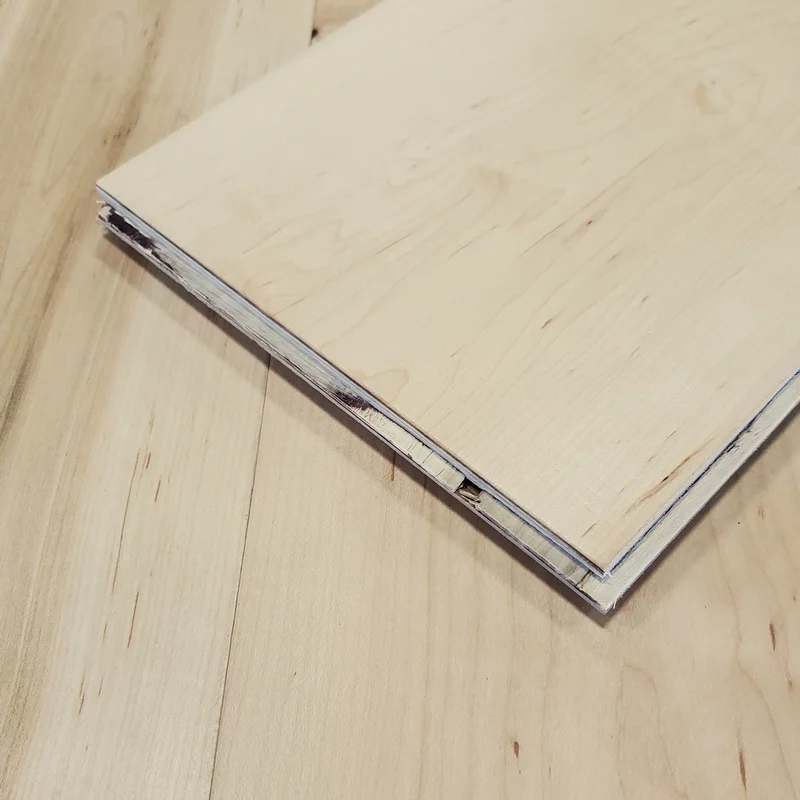
Unlike solid wood, which is one piece of timber from top to bottom, engineered floors are built like a high tech sandwich. You have a real wood veneer on top, bonded to a multi layer plywood or HDF core. This cross grain construction is why these floors do not cup or buckle as easily when the humidity shifts. If you want to dive deeper into the build, check out our A Comprehensive Guide to Top Engineered Wood Flooring.

The stability of this structure is its greatest asset. In the Lower Mainland and Surrey, where humidity can fluctuate, solid wood might expand and contract significantly. Engineered planks are designed to resist this movement. However, because the “good stuff”—the actual hardwood—is only on the surface, Engineered hardwood floor refinishing requires a much more delicate touch than solid wood. For more details on the construction, visit our Engineered Hardwood Ultimate Guide.
So, Can You Refinish Engineered Hardwood Floors?
The straight answer is yes, but it depends entirely on the thickness of that top real wood layer. If your veneer is too thin, one pass with a sander will chew right through to the plywood core. Most quality planks can handle a refresh, but you need to know your limits. For a look at the trade offs, see the Pros and Cons of Engineered Hardwood.
According to How to Refinish Engineered Hardwood Floors: Step-by-Step Guide – Best Home Gear Hub, the wear layer acts like the tread on a tire. Once you wear it down, you cannot simply keep sanding. Most engineered floors can be refinished 1 to 3 times at most before replacement is needed. However, if you were savvy enough to install a premium product with a 6mm wear layer, you could potentially refinish it up to 10 times, matching the lifespan of solid wood.
When You CAN vs. SHOULD NOT Refinish
Knowing when to sand and when to stop is the difference between a beautiful floor and a ruined one.
Ideal conditions for Engineered hardwood floor refinishing
We recommend proceeding if your wear layer is at least 3mm thick. This gives you enough “meat” to sand away the old finish and light scratches without hitting the glue line. If the floor is structurally sound but just looks a bit tired, a refinish is a fantastic way to save money.
You should consider refinishing when:
- The wear layer is 3mm or thicker.
- The damage is limited to surface scratches or a dulling topcoat.
- You want to change the stain color to match a new interior design.
- The structural integrity of the planks is solid (no major gaps or creaks).
For those with Premium Engineered Flooring, you have much more breathing room for restoration.
When to avoid Engineered hardwood floor refinishing
If your floor has a 1mm or 2mm veneer, put the sander away. You are better off with a light “screen and recoat” which just freshens the topcoat without removing wood. Also, if you see the layers of the wood peeling apart, known as delamination, refinishing will not help.
Avoid sanding if:
- The veneer is ultra thin (less than 2mm).
- There is deep water damage that has reached the plywood core.
- The floor has already been sanded down to its limit in the past.
- The planks are delaminating or show signs of severe structural failure.
Before making a purchase, it is worth reading Things to Know Before Buying Engineered Flooring to ensure you choose a product that fits your long term maintenance goals.
How Refinishing Works
Refinishing engineered wood is an exercise in restraint. You use a light orbital sander rather than a heavy drum sander. The goal is to remove the minimum amount of wood possible, usually just 1mm to 1.5mm. Once the old finish is gone, you apply a new stain and a protective topcoat. To keep that new look lasting longer, follow The Best Way to Clean Engineered Hardwood Floors.
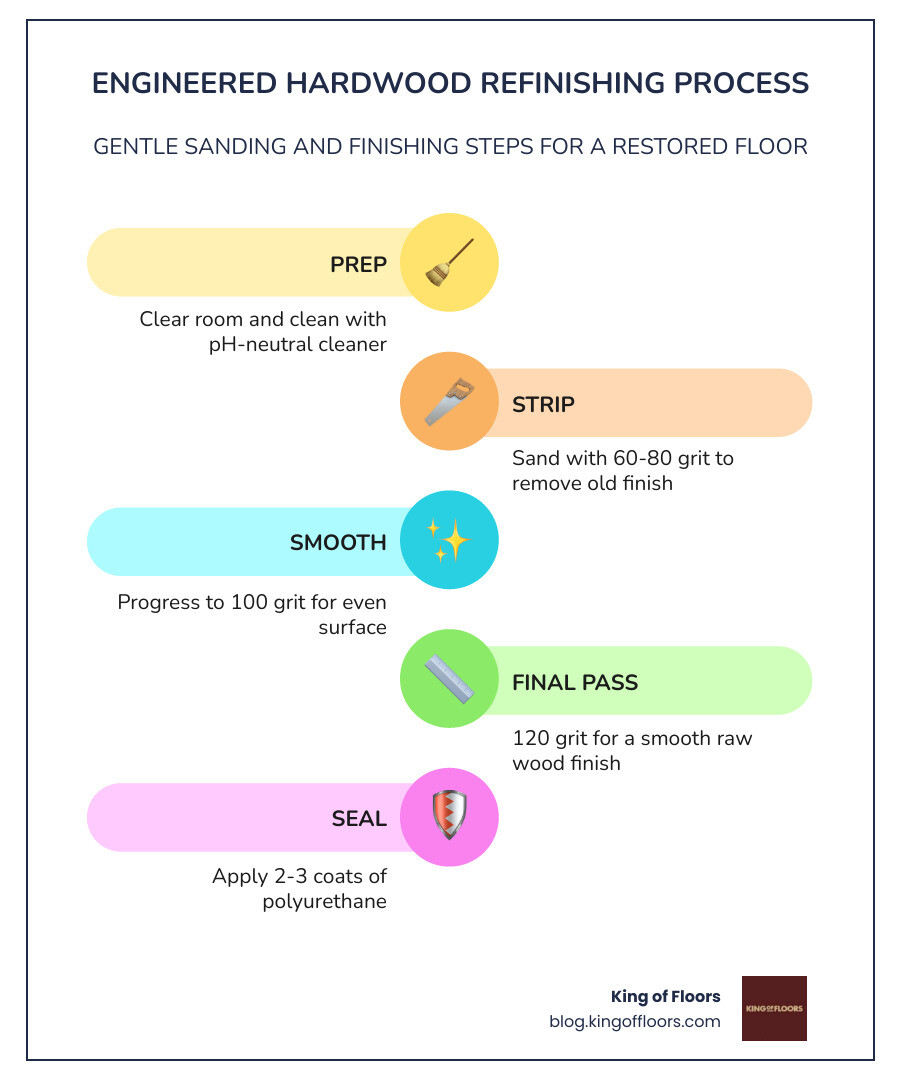
The process typically involves:
- Preparation: Clearing the room and cleaning the surface with a pH-neutral cleaner.
- Gentle Sanding: Using a grit progression like 60-80 grit to strip, 100 grit to smooth, and 120 grit for the final pass.
- Dust Removal: Thorough vacuuming is essential between every pass.
- Finishing: Applying 2 to 3 coats of polyurethane, allowing 24 to 72 hours for curing.
King of Floors Best Sellers
If you decide that your current floors are past their prime, it might be time for an upgrade. Our top picks for 2026 include the Astoria Maple for its warm tones and the Chalet Blanc Oak for that premium architectural look. These products are designed for durability and long term performance.
We offer a range of high quality options that are built to last:
- 190mm Astoria Maple Distressed Engineered T&G: View Astoria Maple. Its distressed finish is perfect for hiding future wear.
- 190mm Tofino Maple Distressed Engineered T&G: View Tofino Maple. A natural choice for coastal homes in South Surrey or White Rock.
- 190mm Natural Maple Distressed Engineered T&G: View Natural Maple. Versatile and clean.
- 189mm Chalet Blanc Oak Brushed Engineered T&G: View Chalet Blanc Oak. A brushed texture that adds incredible grain depth.
For more inspiration, check out A Comprehensive Guide to Top Engineered Wood Flooring.
Maple vs Oak Engineered Flooring
The species of wood you choose significantly impacts Engineered hardwood floor refinishing.
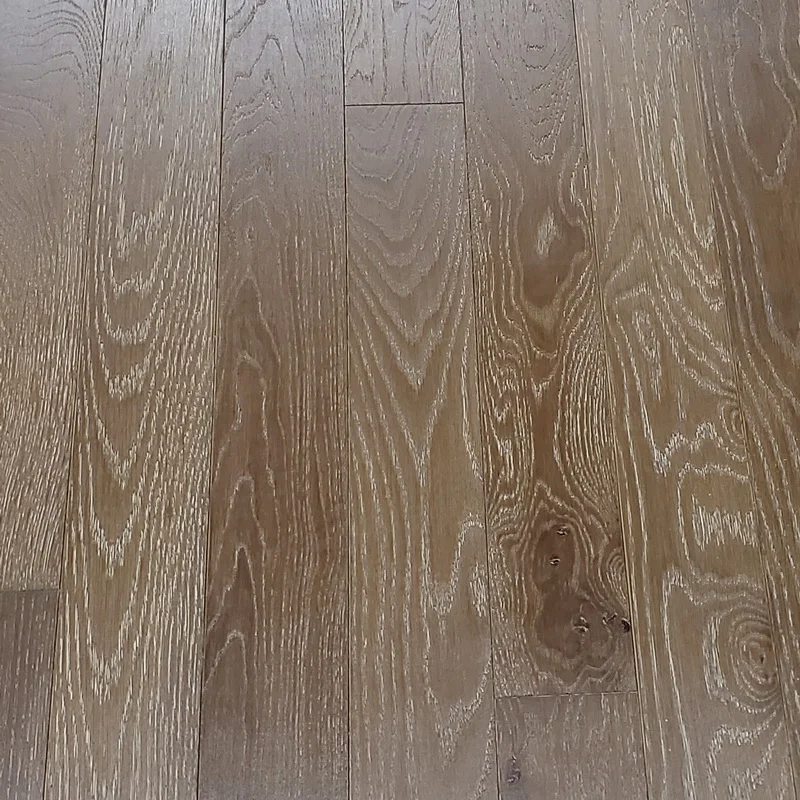
Maple is incredibly hard but has a very tight grain, which can make it tricky to stain evenly during a refinish. If you are not careful, the stain can look blotchy. Oak is more forgiving; its prominent grain hides sanding transitions much better and absorbs stain more uniformly. We recommend Oak if you are planning on changing the color of your floors down the road.

Explore our species specific guides here:
- A Quick Start Guide to Maple Engineered Flooring
- Engineered Oak Species Page
- Engineered Maple Species Page
How to Know If Your Floor Can Be Refinished
The easiest way to check is to pull up a floor vent or look at a transition strip where the edge of the plank is visible. Measure that top layer of real wood. If it is less than 3mm, be very cautious. If you cannot see the edge, you might have to check your original purchase records or product specifications.
If you are unsure, it is always best to have a professional inspection. They can determine if the floor has been sanded before and if there is enough material left to safely proceed.
Frequently Asked Questions about Engineered hardwood floor refinishing
How many times can I sand my engineered floors?
Most quality engineered floors can be refinished 1 to 3 times. If you have a premium 6mm wear layer, you might get up to 10 refreshes out of it, which is similar to solid wood flooring.
What happens if I sand too deep?
If you sand through the veneer, you will see the plywood layers underneath. This cannot be fixed and usually means the entire plank or floor needs to be replaced. This is why we recommend using a random orbital sander rather than a drum sander for DIY projects.
Is it cheaper to refinish or replace?
Refinishing is generally much cheaper than a full replacement, often saving you up to 60% compared to a total tear-out and new installation, provided the wood is still in good enough shape to handle the process.
Can I change the color of my engineered floor?
Yes, as long as you sand down to the raw wood veneer, you can apply a new stain color before sealing it. This is a great way to modernize your home in the Lower Mainland without a full renovation.
Do I need a professional for this?
While DIY is possible, the margin for error is very slim with engineered wood. One wrong move with a sander can ruin the floor permanently. We recommend hiring a pro who has experience specifically with engineered products.
Risks of DIY Engineered hardwood floor refinishing
The biggest risks include sanding through the veneer, creating uneven spots, or using the wrong grit progression. Equipment rental costs can also add up, and without professional grade dust containment, the mess can be significant.

Final Thoughts – Should You Refinish Engineered Hardwood Floors?
Refinishing your engineered hardwood is a great way to bring back that showroom shine without the cost of a full tear out. It is an environmentally friendly way to extend the life of your home’s surfaces while keeping that real timber feel underfoot. Just remember to check that veneer thickness first—3mm is the magic number for a safe sand and refinish.
If you find your floors are too thin for another round of sanding, or if you are ready to start fresh with a more durable product, come see us at King of Floors. We service Vancouver, Surrey, Langley, and the entire Metro Vancouver area. We have the best selection of durable engineered options to make sure your next floor lasts for decades.
Explore premium engineered flooring options here.
Browse our best-selling engineered flooring options.
Ready to start your project or need professional advice? Contact us for a quote.